The Langenbrück Flemish Castle Left to Forest Silence
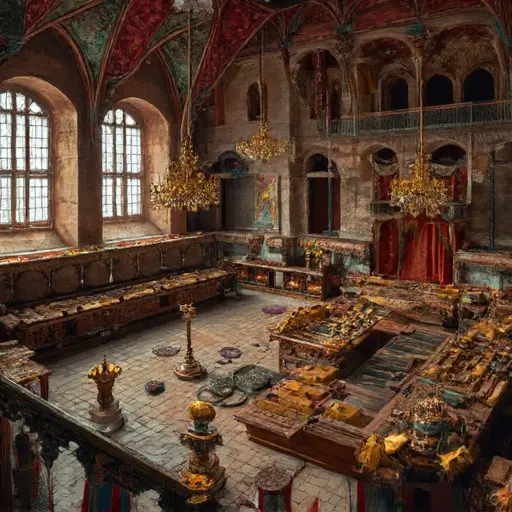
The Langenbrück Castle was constructed at the edge of a dense Flemish forest in the early twentieth century by a lineage of regional magistrates and textile merchants whose wealth had accumulated through river trade and cloth production. Designed in a concentrated quadrangular form, the estate emphasized vertical ornamentation and compact defensive elegance rather than sprawling grandeur. Stepped gables, octagonal turrets, and arcaded galleries were arranged with precise balance around a central courtyard that served as the administrative and domestic heart of the residence.
Multiple generations lived within the castle alongside clerks, stewards, and household staff who managed taxation records, agricultural leases, and trade documentation tied to nearby villages. For decades, the estate functioned as both residence and administrative hub, sustained by stable commerce and carefully maintained inheritance structures.
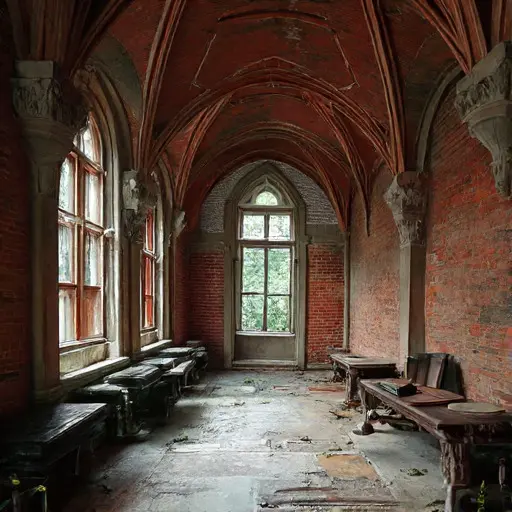
By the late 1920s, the Langenbrück Castle began to experience financial strain as regional textile markets weakened and river trade routes declined in importance. Maintenance costs for its highly ornamented stonework and multicolored façade rose steadily, requiring specialized craftsmen who became increasingly difficult to retain. Sections of the residence were gradually closed to reduce heating and maintenance expenses, leaving only portions of the quadrangular structure actively occupied. Administrative correspondence accumulated without timely response, particularly regarding tax obligations and inheritance planning. Moisture from the surrounding forest began to penetrate mortar joints and roof seams, accelerating the erosion of decorative surfaces and weakening the sharp contrast between ivory limestone, crimson brick, and emerald copper detailing. The once-cohesive household structure gradually fragmented into partial occupation and irregular oversight.
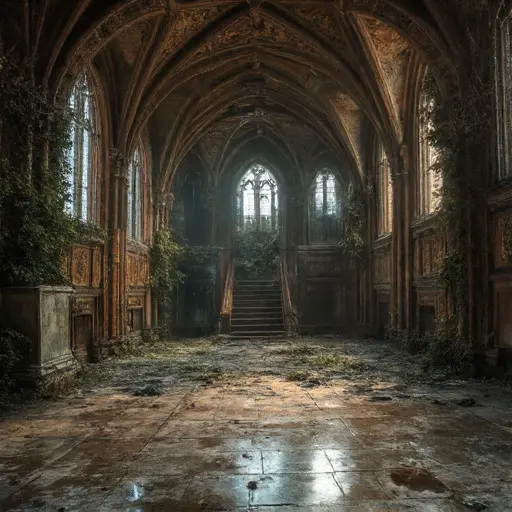
By the early 1940s, following prolonged financial collapse and unresolved inheritance disputes, the Langenbrück Castle was fully abandoned. No restoration efforts were undertaken, and legal entanglements prevented any unified ownership or redevelopment. The structure remained intact within the forest but deteriorated steadily under seasonal weathering, vegetation intrusion, and structural fatigue from its exposed masonry. Interior spaces were left in their final operational states, preserving furniture, documents, and household artifacts beneath layers of dust and humidity. Over time, the once vibrant Flemish Renaissance composition dissolved into quiet decay, leaving the castle as an uninhabited architectural remnant slowly reclaimed by forest growth and the passage of time.