The Sãoverda Manueline Palace Left in Forest Silence
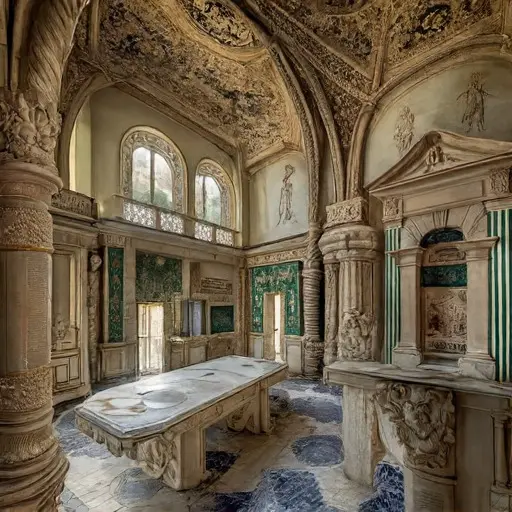
The Sãoverda Palace was constructed at the edge of a dense forest clearing in the early 1900s by a family whose wealth originated in coastal trade and colonial shipping enterprises. Designed in the Manueline revival style, the estate was intended to symbolize Portugal’s maritime legacy through architecture, embedding nautical symbolism into every structural element. Rope-carved stonework, anchor motifs, and stylized sea flora were integrated into both interior and exterior design, merging artistic expression with historical reference.
The household consisted of several generations of the founding family, supported by clerks responsible for trade documentation, forestry land management, and river-route logistics. Early operations were stable, with administrative work centralized in the maritime hall and correspondence processed through a strict bureaucratic system that mirrored naval organization.
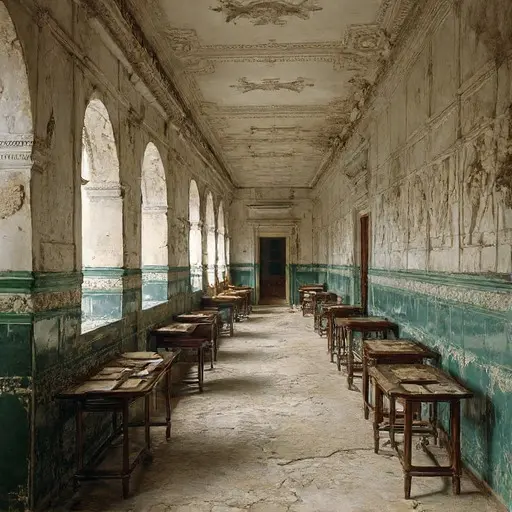
By the late 1920s, the Sãoverda Palace began to experience financial strain as coastal trade networks declined and maritime monopolies were absorbed into larger commercial entities. The estate’s elaborate Manueline detailing required constant maintenance due to its exposed forest-edge location, where humidity and vegetation accelerated material deterioration. Staff numbers were reduced, and portions of the palace were closed off to conserve heating and operational resources. Administrative correspondence accumulated without timely response, particularly regarding trade settlements and land taxation disputes. Moisture infiltration began weakening stone joints and tile adhesion, subtly eroding the clarity of azulejo imagery and the crisp definition of rope-carved ornamentation. The once-cohesive administrative system gradually fragmented into delayed and incomplete cycles of management.
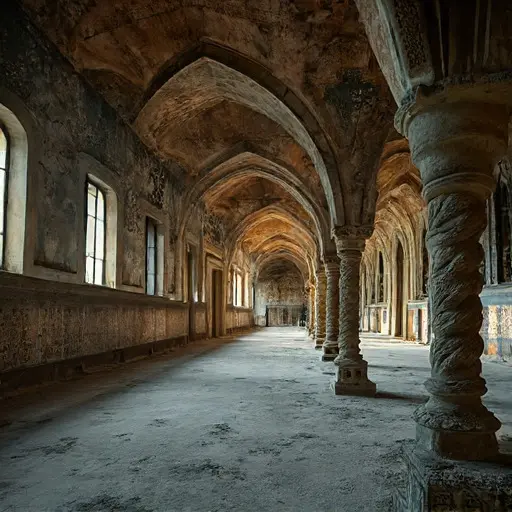
By the early 1940s, following prolonged financial collapse and unresolved inheritance fragmentation, the Sãoverda Palace was fully abandoned. No restoration efforts were undertaken, and legal disputes prevented any unified stewardship or redevelopment. The structure remained embedded within the forest edge but deteriorated steadily under seasonal weathering and vegetation encroachment. Interior spaces were left in their final state of use, preserving documents and furnishings beneath layers of dust and humidity. Over time, the once highly symbolic Manueline system dissolved into silent decay, leaving the palace as an uninhabited maritime relic slowly reclaimed by forest growth, moisture, and geological time.