The Bellamont Palazzo Left in Forest Stillness
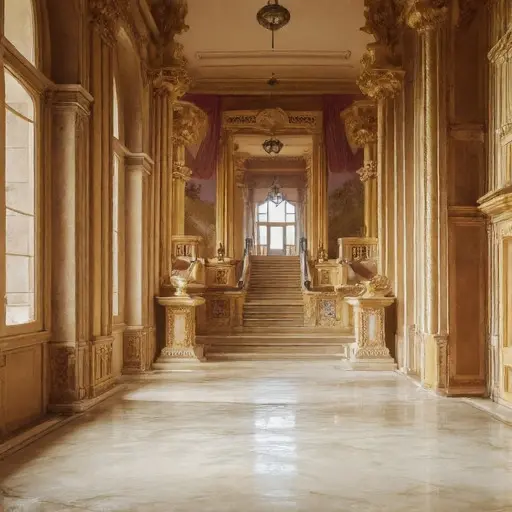
The Bellamont Palazzo was established at the edge of a forest clearing in the early 1900s by a financially conservative noble family seeking to express stability through classical Renaissance architectural order. The estate was designed as a carefully proportioned residence, emphasizing symmetry and controlled geometry as a reflection of disciplined governance. The household included two generations of family members and a small administrative staff responsible for managing agricultural holdings and forest resources.
Early life within the palazzo revolved around formal management of estates, with correspondence and record-keeping conducted in the entrance hall and adjoining loggias. Financial conditions remained stable in the early years, supported by land revenues and structured investments that allowed consistent maintenance of both residence and gardens.
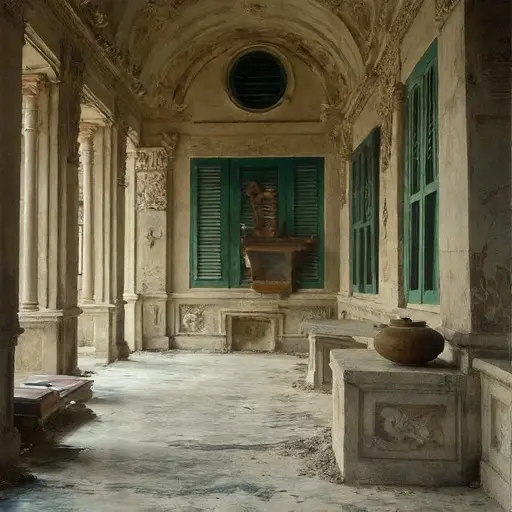
By the late 1920s, the Bellamont estate began to experience financial strain as agricultural revenues declined and the cost of maintaining its extensive Renaissance detailing increased. Maintenance schedules were reduced, and portions of the palace were closed to limit heating and labor expenses. Administrative correspondence accumulated without timely response, and estate management became increasingly delayed. The terraced gardens, once meticulously controlled, began to grow irregularly, with flowering hedges extending beyond their intended boundaries. Moisture from the surrounding forest began to affect stonework and fresco surfaces, subtly eroding the clarity of painted ornamentation and weakening the precision of the architectural ensemble. The residence transitioned from active governance to gradual administrative stagnation.
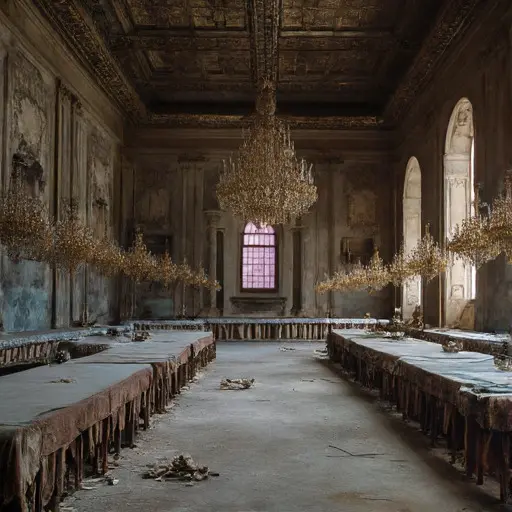
By the early 1940s, following prolonged financial contraction and fragmented inheritance disputes, the Bellamont Palazzo was fully abandoned. No restoration efforts were undertaken, and ownership conflicts prevented any coordinated stewardship of the estate. The structure remained intact within the forest clearing, gradually deteriorating under seasonal weathering and vegetation encroachment. Interior spaces were left untouched in their final operational state, with documents and furnishings preserved only by neglect. Over time, dust, moisture, and structural fatigue transformed the palazzo into a silent, uninhabited shell. It endures without return or renewal, standing as an unresolved relic of once-rigid Renaissance order slowly dissolving into forest time