The Montreval Château Left in Ornate Decay
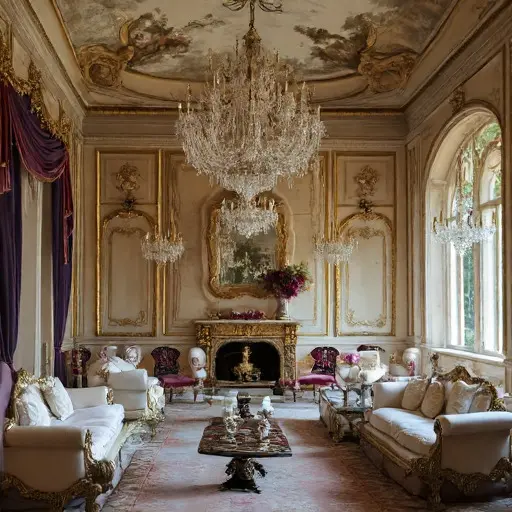
The Montreval Château was constructed at the edge of dense forest in the early 1900s by a French aristocratic family seeking to reassert influence through land ownership and ceremonial display. The household included a couple and two heirs, supported by a small staff responsible for maintaining the elaborate Rococo interiors and gardens. Life within the estate revolved around formal gatherings in the salon and administrative oversight of surrounding agricultural holdings.
Early financial records show stability supported by inherited wealth and regional rents, allowing the château to operate as both residence and symbolic center of prestige before decline becomes visible there
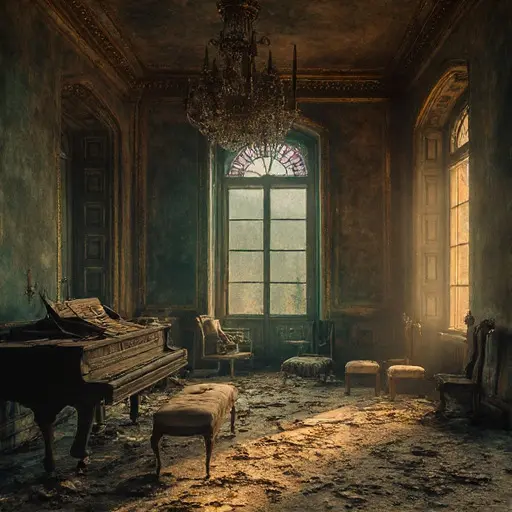
By the late 1920s, the Montreval estate faced mounting financial pressure as agricultural rents declined and the cost of maintaining Rococo ornamentation increased significantly. Staff were reduced and several wings closed to conserve heating fuel. Official correspondence from creditors accumulated in administrative rooms, often left unanswered for extended periods. The family increasingly withdrew from public gatherings, and the music room became unused except for storage of neglected instruments. Environmental moisture from the surrounding forest began to affect interior materials, dulling gilded surfaces and weakening plasterwork. Maintenance budgets collapsed entirely leading to irreversible structural and administrative decline across estate functions progressively
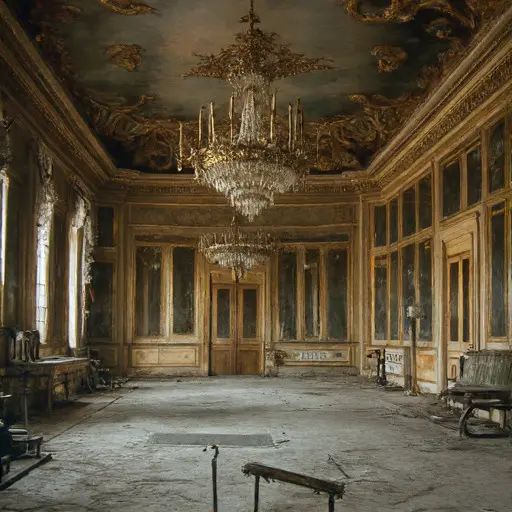
By the early 1940s, following prolonged financial collapse and the fragmentation of the Montreval family line, the château was fully abandoned. No restoration or redevelopment efforts were undertaken, and legal disputes over inheritance prevented any unified stewardship. The estate remained structurally intact but increasingly vulnerable to weathering and forest encroachment. Interiors were left in their final states of use, with furniture and documents untouched. Over time, moisture, dust, and seasonal decay transformed the once controlled Rococo environment into a deteriorating shell. The property persists without maintenance or occupation, standing as an unresolved relic of aristocratic decline without restoration or return