The Valemere Château Left in Forest Silence
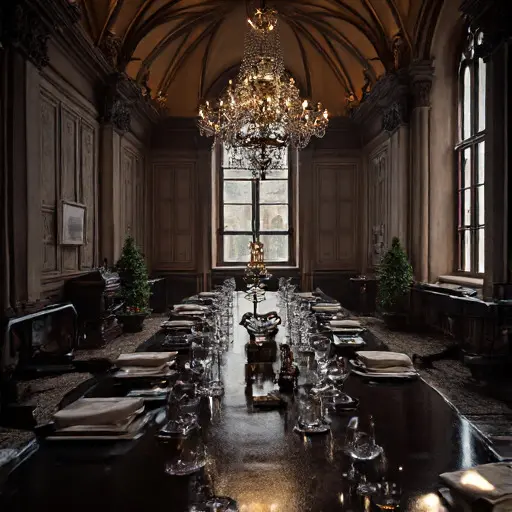
The Valemere Château was constructed at the edge of a dense European forest in the early 1900s by a minor aristocratic family seeking to restore their diminished standing through land ownership and careful estate management. Built in the Gothic Revival style, the residence was intended to project continuity and authority, its vertical architecture symbolizing permanence. The household consisted of a couple and their heirs, supported by a small staff who maintained strict routines across the château’s formal spaces.
The dining hall served as the center of social and administrative life, where estate affairs were recorded alongside ceremonial meals. Early records describe a household still financially stable, though increasingly dependent on agricultural yields and seasonal timber revenue from surrounding lands.
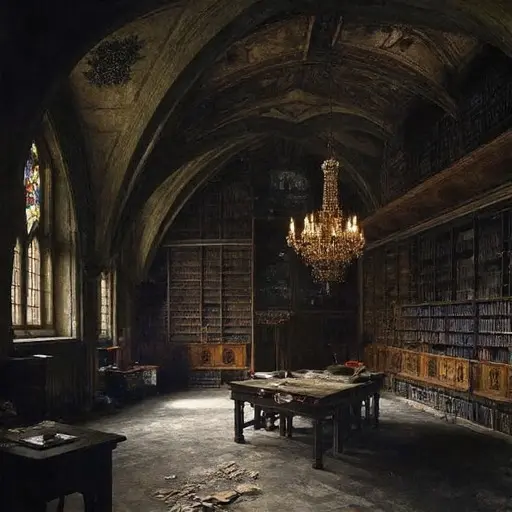
By the mid-1920s, the Valemere Château began to show structural and financial strain as agricultural income declined and maintenance costs for the elaborate Gothic architecture increased. The family reduced staff and closed off portions of the estate to conserve heating and resources, leaving entire wings unused for long periods. Official correspondence from creditors and regional authorities accumulated in the library, often left unread for weeks. The once carefully curated library became a holding space for unresolved financial documents and estate disputes. Dust began to settle across stone carvings and wooden surfaces, while humidity from the forest edge slowly infiltrated interior spaces, dulling the vibrancy of stained glass and weakening the sense of controlled aristocratic order that once defined the household.
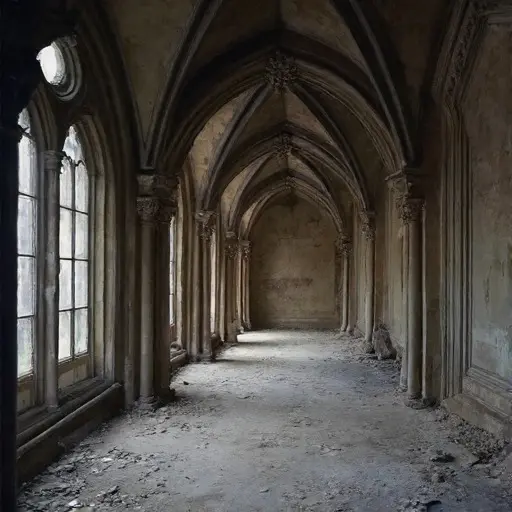
By the early 1940s, following prolonged financial insolvency and the fragmentation of the family line, the Valemere Château was fully abandoned. No restoration efforts were undertaken, and legal disputes over inheritance prevented any unified claim to the property. The structure remained standing deep within the forest, gradually deteriorating as weather, vegetation, and time continued their slow reclamation of its interiors. Rooms were left frozen in their final states of use, with correspondence and furnishings untouched. The château endures as an uninhabited relic of collapsed aristocratic ambition, neither restored nor repurposed, its empty halls remaining in unresolved abandonment under the steady pressure of encroaching nature.