Blackwood Manor Left Abandoned After Generations of Decline
Completed in 1904 at the edge of a dense beech forest, Blackwood Manor was commissioned by industrial timber merchant Edmund Blackwood after decades of commercial success. Built in the Victorian High Gothic style, the imposing limestone residence became home to Edmund, his wife Eleanor, their three children, and two elderly relatives. Although the manor’s exterior projected permanence, its life centered within richly furnished rooms where family dinners, business meetings, and quiet evenings unfolded beneath carved oak ceilings. Servants maintained every corridor, fireplaces burned throughout winter, and meticulous household ledgers reflected a disciplined estate supported by profitable woodland contracts and careful financial management.
<img src=”https://beyondvisit.
com/wp-content/imagecontent/uploads/abandoned victorian house 61572214.webp” alt=”” />
The drawing room represented the confidence of a family whose fortunes seemed secure. Yet after the First World War, demand for Blackwood timber steadily weakened as larger industrial suppliers dominated regional markets. Edmund accepted costly loans to modernize equipment, expecting business to recover. Instead, profits continued shrinking while taxes rose and maintenance expenses mounted. Household staff were gradually dismissed, repairs were postponed, and sections of the manor that had once hosted frequent gatherings began remaining locked for weeks at a time.
Financial Strain Overtakes the Estate
The economic instability of the 1920s accelerated the family’s decline. Following Edmund’s death in 1927, inheritance disputes divided ownership among surviving relatives who disagreed over whether to sell or preserve the estate. Legal costs consumed what remained of the household income. Bills from craftsmen, coal merchants, and tax collectors accumulated unanswered on writing desks, while leaking roofs stained ceilings above rarely used bedrooms. Eleanor attempted to maintain appearances by occupying only a handful of rooms, but the manor had become far too large for its diminished circumstances.
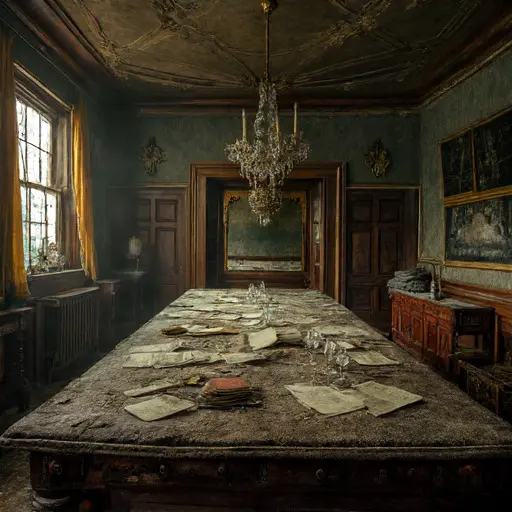
Throughout the 1930s, maintenance became increasingly selective. Entire wings were closed to reduce heating costs, furniture was covered with linen sheets, and valuable paintings quietly disappeared through private sales. Rainwater entered through damaged slate roofs, encouraging rot behind decorative wood paneling. Household records show repeated notices demanding payment of overdue taxes, while local craftsmen refused additional work after earlier invoices remained unpaid. Even the remaining occupied rooms grew colder and darker with each passing winter.
The House Falls Silent
The final departure came during the early years of the Second World War. Eleanor moved into a smaller residence with distant relatives after the estate entered prolonged legal receivership. Remaining possessions were removed hurriedly, though many everyday objects were simply abandoned where they had last been used. With no caretaker, broken windows admitted moisture, insects, and nesting birds. Interior plaster collapsed, staircases weakened, and silence replaced the routines that had once sustained the household for nearly four decades.
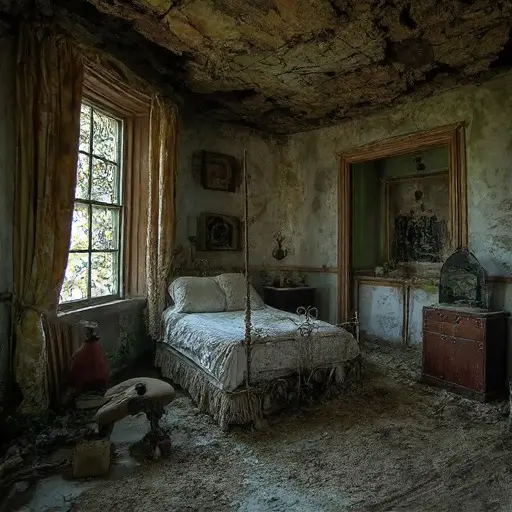
No restoration followed the manor’s collapse. Ownership remained entangled in unresolved legal claims long after the surviving heirs had died, preventing meaningful preservation. Weather steadily advanced through broken roofs and shattered windows, reducing carefully crafted interiors to damp, silent shells. Today the house remains abandoned within the surrounding beech forest, standing as an unfinished record of financial failure, family division, and decades of gradual neglect from which it never recovered.