The Aelthorne Cathedral Estate Left in Quiet Abandonment
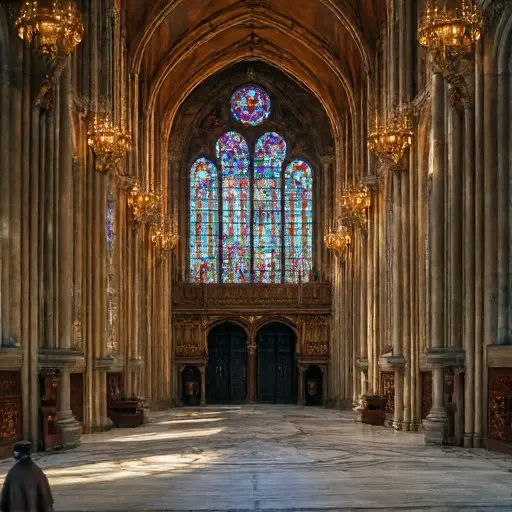
Completed in 1887, the Aelthorne Estate was commissioned by the Harrington-Aelthorne family, a lineage of industrial patrons and ecclesiastical benefactors who sought to merge spiritual architecture with aristocratic domestic life. The result was neither conventional mansion nor cathedral, but a hybrid estate designed to evoke the feeling of a sacred civic monument repurposed as a private residence. Craftsmen from across Europe contributed to its construction, shaping limestone vaults, bronze ribbing, and stained glass panels that transformed daylight into controlled, symbolic illumination.
During its early decades, the estate functioned as both home and semi-public ceremonial space. Religious concerts, scholarly gatherings, and philanthropic receptions were held in the central nave-like hall. The cloisters housed private study collections, while the conservatory wing supported botanical research and rare plant cultivation. Despite its grandeur, the estate required constant structural and artistic maintenance due to the complexity of its materials and layered architectural systems.
Early Decline
Following the turn of the twentieth century, shifting cultural priorities and declining family fortunes began to strain the estate’s upkeep. The cost of maintaining stained glass assemblies, bronze tracery, and structural stone vaulting increased significantly. Several peripheral cloister sections were closed to reduce heating and maintenance demands, and parts of the conservatory were sealed after minor structural instability was detected in the glass-and-bronze framework.
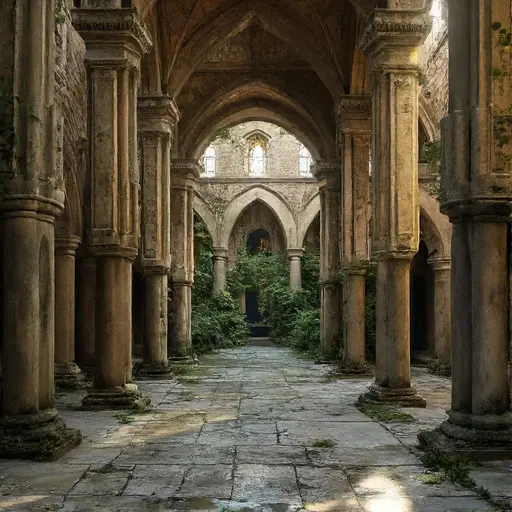
By the 1930s, inheritance disputes fractured ownership among multiple descendants, each with conflicting views on preservation and financial responsibility. Legal proceedings delayed critical repairs to roof vaulting and stained glass structures, allowing moisture ingress to damage selected interior sections. The estate’s caretaking staff diminished steadily as wages became irregular, leaving only a small team responsible for essential oversight of the main cathedral hall.
Final Abandonment
After the Second World War, rising taxation and unresolved legal ownership led to the complete withdrawal of remaining caretakers. The estate was secured but never transferred, as no institution or private buyer could sustain the cost of its preservation. Furnishings, records, liturgical artifacts, and architectural drawings were left precisely where they had been last used, as if awaiting eventual return that never occurred.
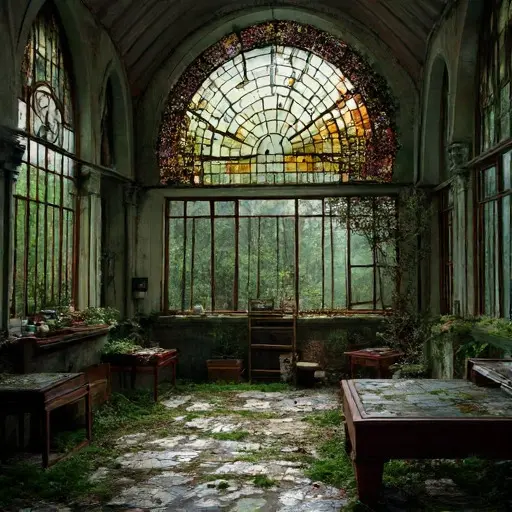
The Aelthorne Estate remains abandoned and unrestored to this day. Ownership remains legally unresolved in historical records, and no restoration initiative has ever been undertaken. Deep within the forest clearing, the monumental cathedral-mansion continues to stand in silence, its sacred architecture gradually softened by time, vegetation, and the absence of human presence.