The Castellmere Estate Left After Industrial Aristocracy Faded
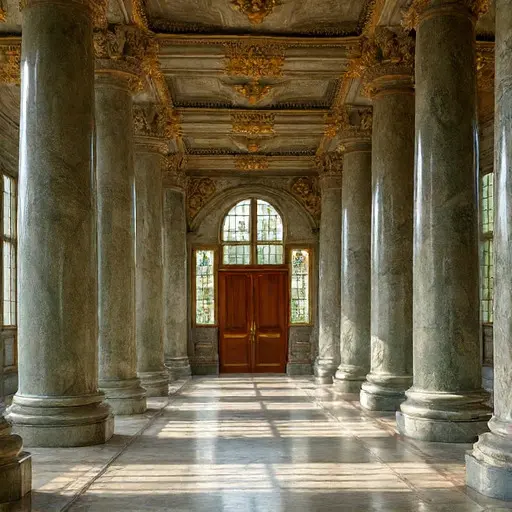
The Castellmere Estate was first occupied in 1893 by the Ravelin-Dorne consortium, a family of industrial aristocrats who sought to merge Renaissance architectural order with the emerging aesthetics of mechanical engineering. Built as a private palace complex within a controlled forest clearing, the estate functioned as both residence and administrative hub for industrial holdings. Early occupation was defined by rigid ceremonial life, structured gatherings, and carefully maintained architectural systems that reinforced hierarchy through spatial design.
Within the central loggia, guests moved beneath coffered stone ceilings and between Corinthian columns that framed controlled sightlines into terraced gardens. Light filtered through tinted glazing in subdued emerald and amber tones, casting restrained color gradients across polished stone surfaces. The estate was maintained with precision, reflecting both aristocratic discipline and industrial ambition.
Early structural strain
By the early 1910s, the mechanical reinforcement systems embedded within the estate’s architecture began to require increasingly complex maintenance. Copper ribbing along roof structures showed early fatigue, and sections of the arcaded industrial gallery experienced minor alignment shifts due to ground settlement in the terraced foundations. Maintenance costs escalated as both ornamental stonework and integrated structural metal systems demanded simultaneous preservation.
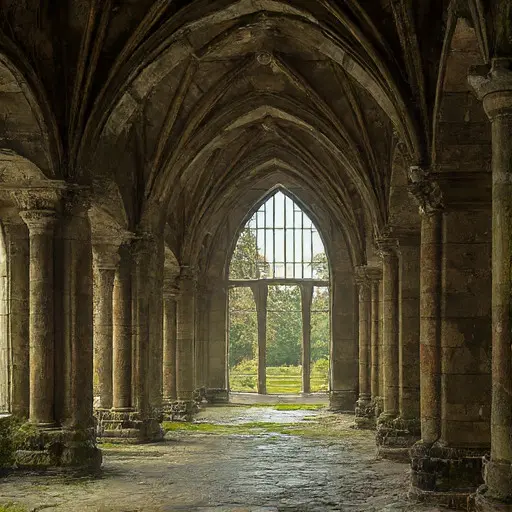
Following the 1930 economic downturn, industrial revenue collapse severely impacted the estate’s maintenance capabilities. Entire wings, including portions of the winter conservatory and upper residential suites, were sealed due to instability and rising upkeep costs. Legal disputes over inheritance and corporate ownership prevented coordinated restoration, leaving large sections of the estate unmonitored and unused.
Final abandonment phase
By the late 1940s, the Castellmere Estate was fully vacated after prolonged financial dissolution and unresolved ownership claims. Doors were sealed with furnishings left intact, and structural maintenance systems were permanently deactivated. Without oversight, vegetation began reclaiming the geometric terraces and ceremonial pathways, softening engineered precision into organic irregularity.
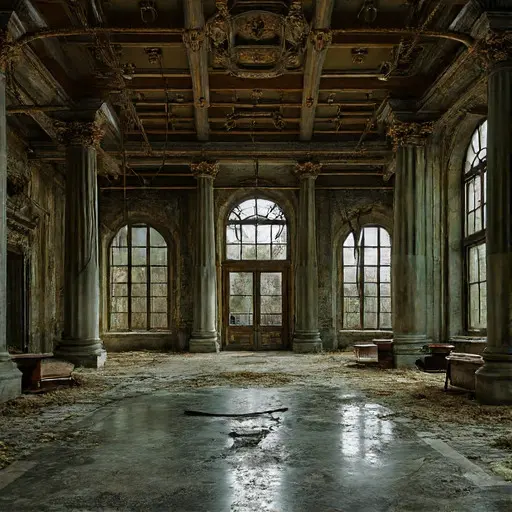
The Castellmere Estate remains abandoned with no record of restoration or reoccupation following its final evacuation. Ownership disputes were never resolved, leaving the property in legal limbo. It continues to stand within the forest clearing, slowly fading as its Renaissance Revival–industrial architecture is reclaimed by nature and time.