The Viremont Manor Left Quiet After Collapse
The Viremont Manor was first occupied in 1906 by the Delacroix-Bennet family, arriving from a declining industrial region of northern France seeking stability and cultural refinement in the forest estate. The residence embodied revivalist ambition, its cobalt and saffron brickwork carefully maintained, while interior halls reflected strict domestic order. Early years were defined by structured routines, correspondence with financiers, and preservation of inherited artifacts displayed across salons and galleries.
<img src=”https://beyondvisit.com/wp-content/imagecontent/uploads/abandoned victorian house 92595984.
webp” alt=”” />
Within the main salon, the household maintained a rigid schedule of gatherings centered on correspondence, music, and estate accounting. Stained glass bays cast geometric patterns across walnut furniture and upholstered seating, reinforcing controlled aesthetic order. The conservatory wing, visible through interior thresholds, was curated with imported plants and brass fittings. At this stage, the manor functioned as residence and cultural archive, sustained by steady financial inflow from overseas investments.
Early financial strain
By the 1920s, shifting political instability and failed banking ventures began to erode the Delacroix-Bennet fortunes. Maintenance schedules were delayed, and sections of the eastern wing were sealed off to reduce heating costs. Correspondence shifted from cultural exchange to urgent financial negotiations, and staff numbers were quietly reduced. Dust began settling in unused corridors, marking the first fracture in the manor’s stability.
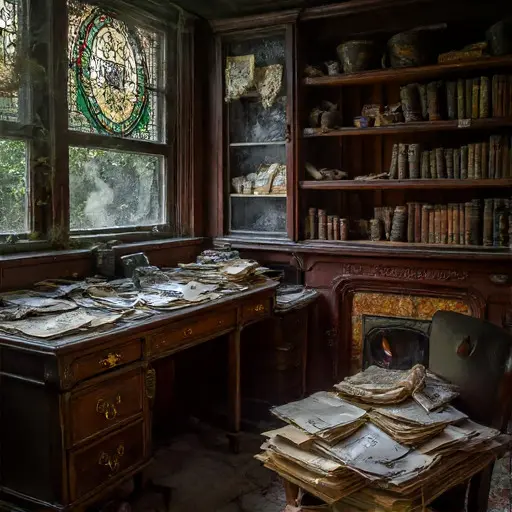
Following the 1929 financial crash, the manor entered rapid contraction. Entire wings were locked and left unheated, and the family consolidated into fewer core rooms. Decorative maintenance ceased, leaving stained glass dimmed by dust and brass fixtures dulled by neglect. Legal disputes over asset liquidation delayed resolution, accelerating the estate’s stagnation.
Final abandonment phase
By the late 1940s, the Viremont Manor was fully abandoned after inheritance disputes and withdrawal of remaining financial support. Doors were sealed, and access to conservatory and arcaded loggia was barred following structural damage. Furniture remained in place beneath dust layers, and no restoration attempts were recorded. The estate became a legally unresolved property, its interiors frozen as nature pressed closer through broken seals.
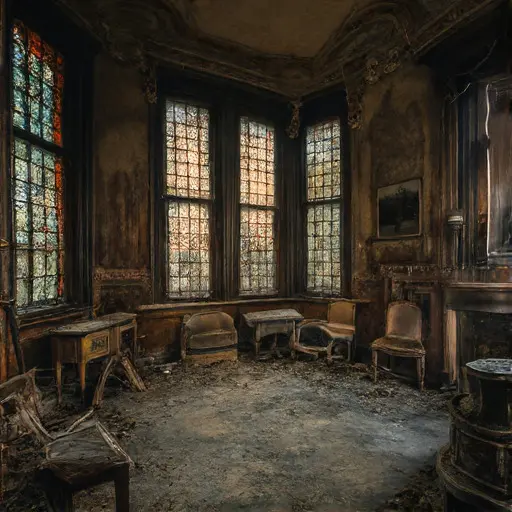
The Viremont Manor remains abandoned with no evidence of restoration or reoccupation following its final evacuation. Ownership disputes dissolved without resolution, leaving the estate in legal limbo. The structure continues to deteriorate within the forest clearing, its interiors sealed and untouched, standing empty and slowly reclaimed by time.