The Butterscotch Manor in the Meadow Clearing
Exterior Composition
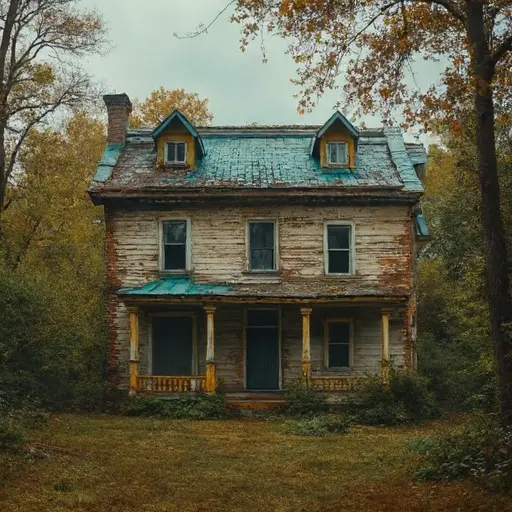
An abandoned Victorian family manor rests within a wide forest meadow clearing, designed as a comfortable 2-story rural residence with balanced proportions and understated elegance. The structure is built from butterscotch-yellow brick combined with white-painted wooden cladding, creating a bright yet weathered façade that still holds warmth despite long abandonment.
The roof is a steep steel-blue slate gable system with multiple intersecting ridges and small dormer windows.
Time has softened its edges, and scattered lichen growth now spreads across portions of the slate, giving the roof a muted, organic texture.
The front façade centers on a simple rectangular entry door painted deep navy blue. A modest wooden surround frames the entrance with minimal Victorian detailing, while a shallow covered stoop extends outward, supported by plain white timber posts with subtle chamfered edges.
Above the entrance sits a narrow second-floor window aligned directly over the door. Its faintly frosted green-blue glass is cracked but still partially intact, catching soft daylight in muted fragments. Across the façade, tall sash windows are evenly spaced, framed in white trim, some missing panes and others darkened with age, revealing quiet, unlit interiors.
Interior Stillness
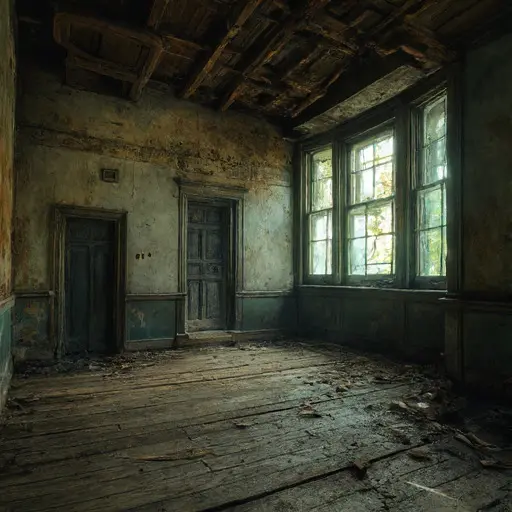
Inside, the manor remains structurally intact but entirely emptied of life. Rooms are defined by simple domestic geometry—rectangular layouts, modest ceiling heights, and exposed timber beams that run in steady structural lines.
Plaster walls have softened with age, revealing faint irregular textures beneath. Wooden floorboards are worn in central paths, suggesting long use now frozen in silence. Light filters through broken sash windows, scattering dim patterns across dust-covered surfaces without creating strong contrast or illumination.
Doorways connect rooms in a practical family layout, each space opening into another dim, unoccupied chamber. The overall interior feels paused rather than ruined—an ordinary household left untouched but no longer lived in.
Grounds and Meadow Reclamation
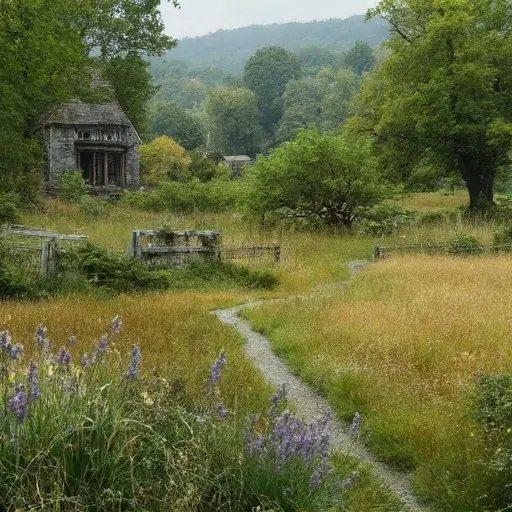
The surrounding grounds form a gently overgrown meadow garden where Victorian landscaping is still faintly readable beneath natural reclamation. Circular flower beds outlined in worn stone remain partially visible, softened by grasses and creeping vegetation.
A collapsed white wooden fence leans into tall meadow grass, its structure fading into the landscape. A faint gravel path curves toward the forest edge, gradually dissolving beneath wild growth.
Wildflowers in pale lavender, soft cream, and muted gold scatter across the meadow, blending cultivated design with natural spread. The forest forms a calm boundary around the clearing, composed of tall deciduous trees under soft neutral daylight.
The manor remains clearly visible at the center—quiet, grounded, and structurally intact—an abandoned Victorian home gently absorbed into a peaceful forest meadow.