The Kuroyama Mansion Left Vacant After Family Succession Failed
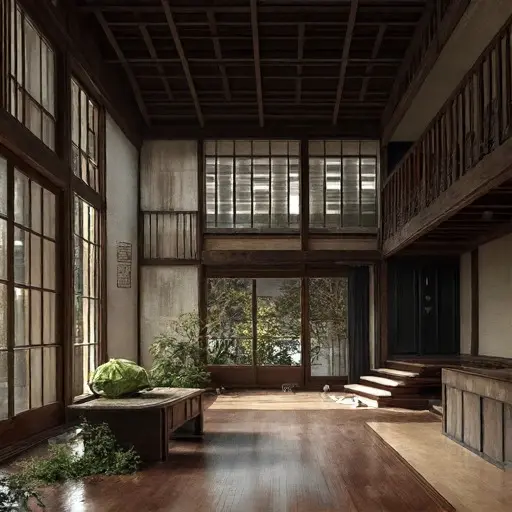
Kuroyama Mansion was completed in 1906 for the Kuroyama family, prosperous silk merchants who had embraced the modernization of the Meiji era while preserving traditional customs. Located within a secluded forest basin, the residence reflected both ambitions. Western architectural ideas appeared in its formal entrance, dormer windows, and reception rooms, while layered Japanese rooflines, timber construction, and sliding partitions maintained a strong cultural identity.
Rather than symbolizing wealth alone, the mansion represented a family attempting to balance generations during a rapidly changing period.
Its rooms served practical purposes. Hiroshi Kuroyama managed silk contracts and regional trade from a Western-style office, while his wife Akiko supervised household affairs and preserved family records in adjoining Japanese rooms. Their two sons were expected to inherit both the estate and the business, ensuring continuity between traditional values and modern commerce. For nearly two decades the arrangement proved successful, and the mansion remained carefully maintained throughout the prosperous years before the global economic downturn.
The years of gradual withdrawal
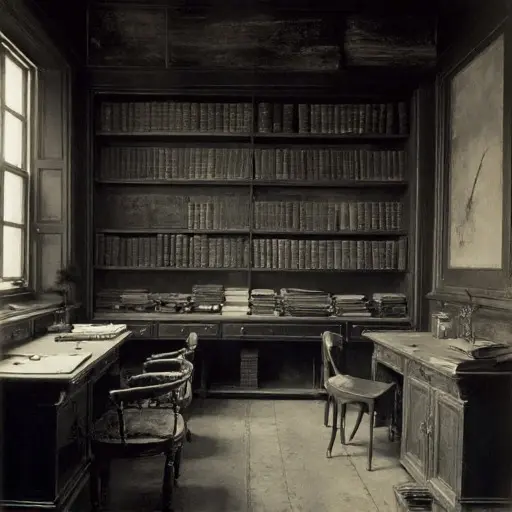
The collapse of silk prices during the worldwide depression sharply reduced the family’s income. Export agreements disappeared, warehouses remained full of unsold inventory, and long-standing buyers shifted toward cheaper industrial fabrics. Although the Kuroyamas attempted to preserve the estate by dismissing servants and closing unnecessary rooms, expenses continued to exceed earnings.
Maintenance slowly became selective. The Western reception rooms remained presentable for occasional visitors, while private family quarters were closed to conserve fuel. Roof repairs were postponed after winter storms, taxes accumulated, and correspondence increasingly consisted of payment demands rather than business opportunities. When Hiroshi died unexpectedly in 1936, disagreements emerged between his sons regarding whether to sell the property or continue operating the failing enterprise.
The outbreak of war further divided the family. One son entered military service while the other relocated to the city seeking employment that could support his own household. Their mother remained in only a few heated rooms, surrounded by ledgers documenting debts that could no longer be repaid. The mansion’s unusual blend of architectural traditions, once celebrated as a symbol of progress, gradually became too expensive for a shrinking family to maintain.
Silence settles over the forest basin
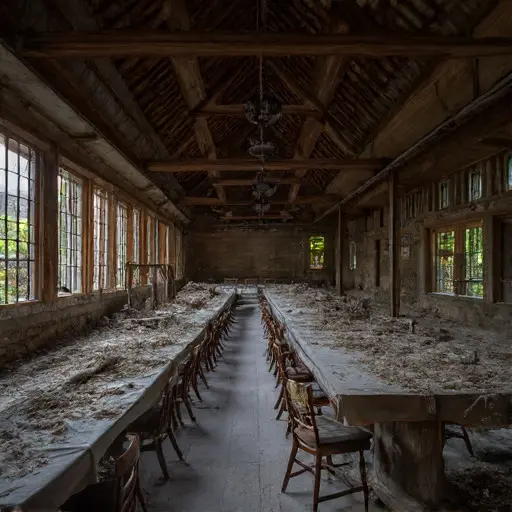
By 1948 the remaining heirs had permanently settled elsewhere. Utility services ended after prolonged unpaid accounts, creditors recovered little of value, and no purchaser wished to assume responsibility for a hybrid estate requiring extensive repairs. Legal ownership became increasingly uncertain as inheritance documents remained incomplete and taxes continued to accumulate.
The surrounding forest expanded only gradually, leaving the mansion fully visible within its quiet clearing. No restoration was attempted, no descendants returned to reclaim the property, and no institution accepted responsibility for its preservation. Kuroyama Mansion still stands abandoned, its Western and Japanese architectural traditions preserved together in silence, slowly weathering beneath the same calm overcast skies that have watched its long and irreversible decline.