The Valemont Château Left Vacant After Aristocratic Line Collapse
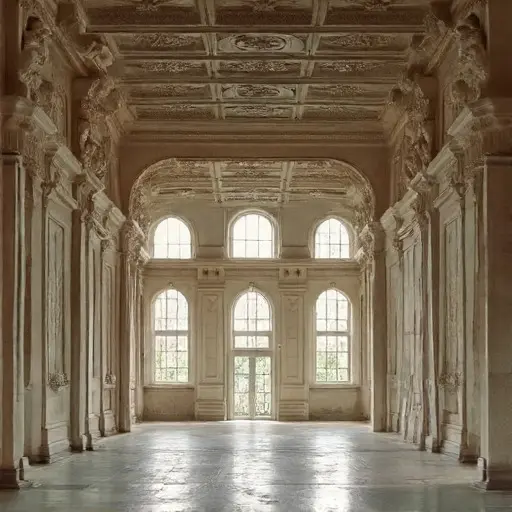
The Valemont Château was completed in 1789 for the de Rouvier family, a minor aristocratic lineage overseeing forest boundary rights and ceremonial land stewardship within the surrounding region. Designed in strict Baroque symmetry, the château was intended as both a residence and symbolic administrative seat, reflecting order, lineage, and permanence. Its pale limestone façade, enriched with sculpted pilasters, curved cornices, and decorative reliefs, was carefully composed to project balance and continuity rather than excess.
Inside, the household operated under rigid ceremonial structure. Étienne de Rouvier managed estate documentation and regional land permissions, while his wife Marguerite oversaw household governance and correspondence with other noble estates. The château functioned less as a commercial center and more as a symbolic institution, where rituals of administration and inheritance reinforced social continuity. For generations, it remained stable, sustained by inherited land rights and carefully preserved aristocratic privilege.
Early signs of decline
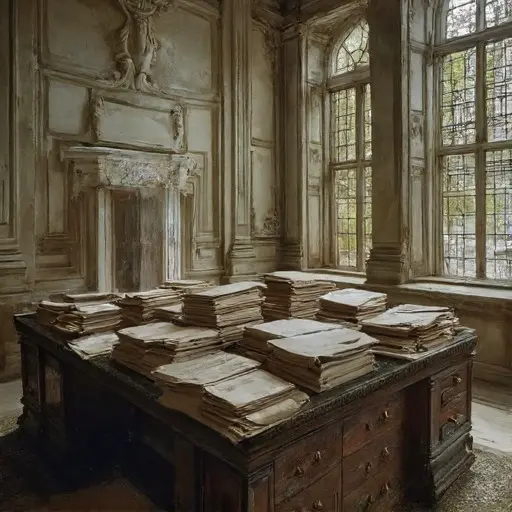
By the early 1930s, the decline of hereditary estates and redistribution of land governance significantly reduced the château’s administrative relevance. Legal reforms diminished noble authority over forest boundaries and regional land oversight, leading to reduced funding and diminished maintenance capacity. As a result, structural upkeep slowed, and restoration of decorative stonework and iron balconies was increasingly delayed or abandoned.
Within the château, daily operations became minimal. Entire wings were closed off to conserve resources, and ceremonial rooms were left unused. Correspondence became infrequent, and administrative continuity weakened across generations. Outside, the forest remained calm and evenly spaced, but subtle vegetation growth began to appear across courtyard stonework and architectural crevices.
Final abandonment phase
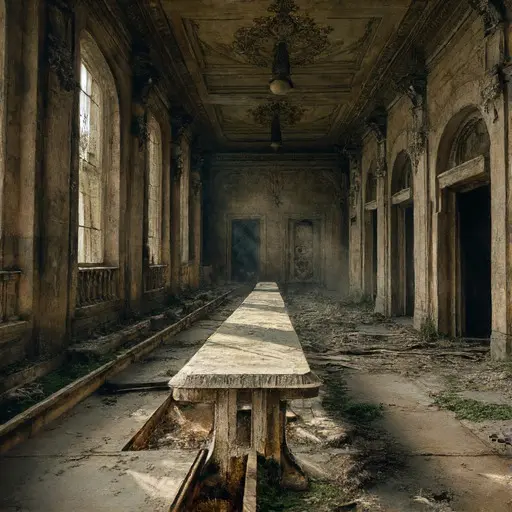
By the late 1940s, Valemont Château was no longer actively inhabited. The de Rouvier lineage had effectively dissolved, with remaining descendants relocating and abandoning claims to the estate. Legal ownership records became fragmented, and no formal transfer of stewardship was completed. Maintenance ceased entirely, allowing natural weathering and vegetation to gradually integrate into the structure.
The château remains physically intact within the forest clearing, preserved in its symmetrical grandeur yet softened by time, moss, and structural settling. No restoration or reoccupation has occurred. It persists as an abandoned aristocratic monument, quietly dissolving into its surroundings while retaining the echo of its former ceremonial order.