The Blackridge Manor Left Vacant After Coastal Timber Decline
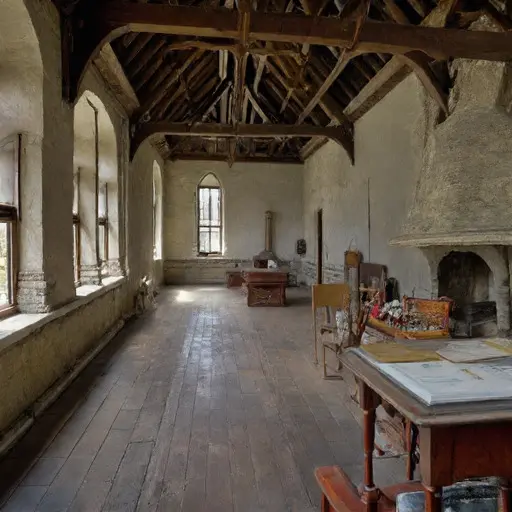
The Blackridge Manor was completed in 1905 for the Carrington family, administrators overseeing coastal timber extraction and bluffside land regulation. Positioned along a high forested cliff where pine stands meet open ocean horizon, the manor was deliberately constructed to reflect both geological stability and environmental responsiveness. Its interlocking volumes of basalt and limestone created a visual gradient from grounded darkness to elevated lightness, reinforcing the idea of a structure emerging from the cliff rather than simply resting upon it.
Inside, the Carrington household maintained a structured administrative life. Henry Carrington managed coastal timber contracts and shipping records, while his wife Margaret oversaw correspondence with forestry offices and maintained household coordination. The manor functioned as both residence and operational center for coastal resource management, with documents circulating between study rooms and mapping offices. For decades, the estate remained stable, supported by steady demand for timber and regulated maritime export routes.
Early signs of decline
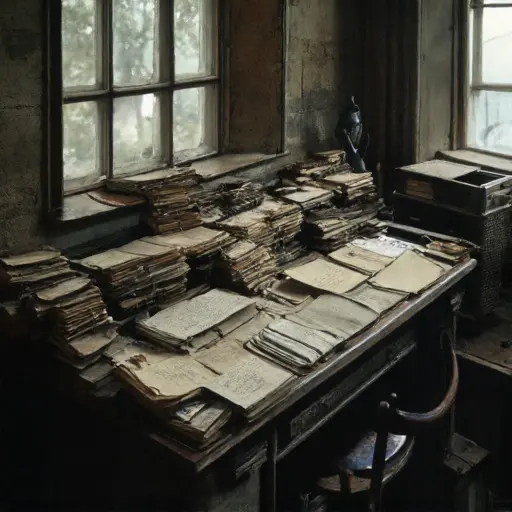
By the early 1930s, changes in coastal resource regulation and consolidation of timber rights under centralized maritime authorities began to reduce the Carrington family’s administrative role. Contract volumes declined, and independent oversight of bluffside forestry was gradually phased out. Maintenance within the manor slowed, with repairs to stonework and roofing deferred indefinitely. Sections of the interlocking structure were closed off to conserve heating, and interior circulation between wings became less frequent.
As operational responsibilities diminished, the manor’s internal rhythm began to stagnate. Documents that once moved efficiently through multiple rooms accumulated in static piles, and the study gradually lost its function as an active administrative hub. Outside, coastal winds intensified seasonal wear on the building, while pine forests and salt air continued their slow, persistent pressure against the structure.
Final abandonment phase
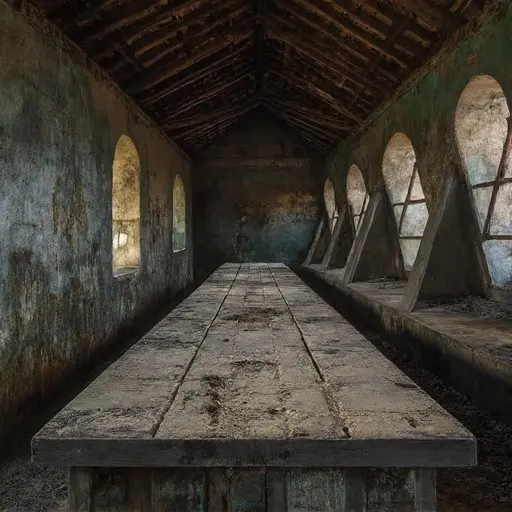
By the late 1940s, Blackridge Manor was no longer actively occupied. The Carrington descendants had relocated to inland administrative centers, and no sustained return to the estate was recorded. Utility services were discontinued after extended arrears, and the structure was left without oversight. Coastal air and fog entered through aging seals, accelerating interior decay and weakening timber elements throughout the interlocking volumes of the building.
No formal transfer of ownership was completed, and records regarding the estate became fragmented over time. The manor remained physically intact on the coastal bluff, but no restoration or reoccupation occurred. It persists as an abandoned structure shaped by wind, salt, and time, its architectural precision slowly softened by the relentless coastal environment.