The Windrow Queen Anne House Left Vacant Above the Vineyard Slopes
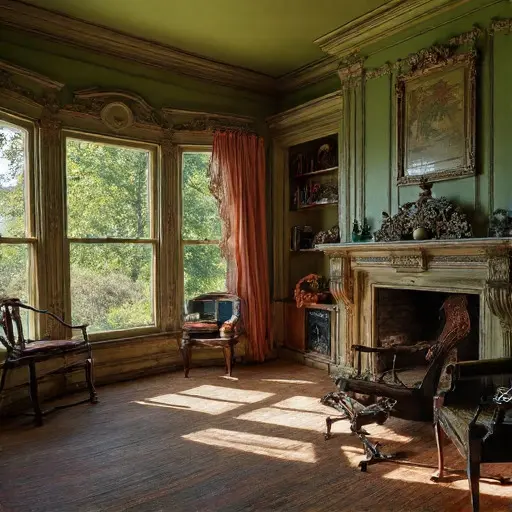
Windrow House was constructed in 1886 for the Caldwell family, who managed a mid-sized vineyard operation across the steep ochre-clay hillsides overlooking a broad agricultural basin. Unlike formally planned estates, the residence evolved continuously over generations, expanding as the family’s needs changed and vineyard operations grew in complexity. The result was a richly detailed Queen Anne structure defined by organic accretion rather than strict architectural uniformity.
The original core of the house featured a dominant front-facing gable and a compact symmetrical footprint. Over time, additions transformed it into a sprawling hillside residence: a round corner turret with a conical roof, projecting bays that captured shifting vineyard light, enclosed sleeping porches for seasonal use, and a series of service wings stepping down the slope behind the main structure. Despite its complexity, the house retained a coherent domestic identity rooted in continuous family occupation.
The exterior was finished in a historically plausible but visually distinctive palette. Clapboard siding in faded sage green formed the base layer, while decorative trims retained traces of dusty coral, cream, and weathered burgundy. Beneath peeling layers of paint, earlier color schemes remained partially visible, creating a subtle stratigraphy of architectural history across the façade. This visual layering mirrored the generational expansion of the household itself.
Inside, the Caldwell family maintained a lifestyle closely tied to vineyard cycles. Thomas Caldwell oversaw cultivation and distribution logistics, while his wife Margaret managed household operations and correspondence with regional wine merchants. Seasonal harvest periods brought extended family members into residence, filling the house with temporary but recurring activity that reinforced its evolving structure.
Early economic pressure
By the early 1920s, regional agricultural consolidation and changing market conditions began affecting smaller vineyard operations. Larger commercial producers increasingly dominated distribution networks, reducing profitability for hillside estates like Windrow House. Although production continued, revenues gradually declined, making extensive upkeep of the property more difficult to sustain.
Gradual contraction of household activity
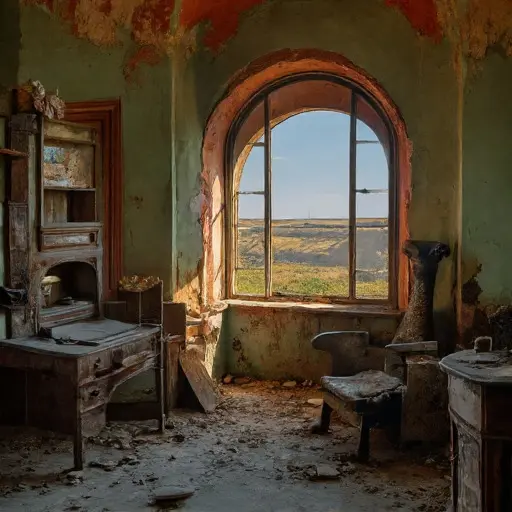
As financial pressures increased, sections of the house were gradually closed to reduce maintenance costs. Enclosed porches and upper sleeping rooms became seasonal rather than permanent living spaces. The most remote service wings were left unused, their staircases and corridors falling into quiet disrepair while the main gable structure remained occupied.
The vineyard itself experienced parallel decline. Portions of the hillside were no longer cultivated, and rows of vines were abandoned as labor shortages and market pressures intensified. Wild grasses began to intermingle with cultivated land, though the immediate surroundings of the house remained relatively controlled, preserving its visual clarity.
Final abandonment phase
By the late 1940s, Windrow House was no longer inhabited year-round. The remaining family members relocated to urban centers, maintaining only occasional visits during transitional seasons. Eventually, even these visits ceased as estate management responsibilities were dissolved and remaining vineyard holdings were sold or absorbed into larger agricultural operations.
The house left behind
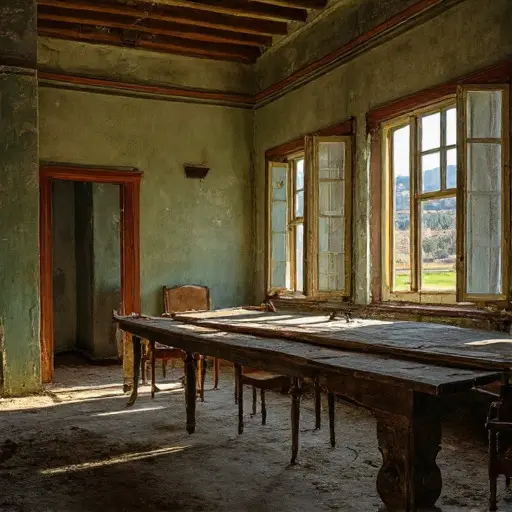
By the early 1950s, Windrow House stood fully vacant. No formal ownership disputes persisted, and no restoration efforts were initiated. The vineyard estate surrounding it had largely ceased operation, leaving the house isolated on the hillside. The structure remains intact and structurally sound, quietly enduring above the abandoned vineyards, a Victorian family home that expanded across generations before being gently left behind.