The Blackwater Lock Cottage Left Vacant After Canal Drainage Works
Blackwater Lock Cottage was built in 1892 to house the family of Henry Mallory, a canal lock supervisor responsible for managing a small rural waterway system that once ran through a shallow valley. The house was positioned deliberately beside the canal’s edge, allowing direct oversight of water levels, lock mechanisms, and towpath traffic along the adjacent rural road. Constructed from dark hand-cut stone, the cottage was designed in a restrained Gothic Revival style that emphasized vertical proportion, durability, and functional clarity.
The building’s composition was defined by steep, disciplined geometry. A sharply pitched slate roof rose into a single central ridge, while a modest pointed-arch doorway anchored the façade below. Above it, paired lancet windows aligned precisely, reinforcing the vertical rhythm of the structure. Unlike more ornate Victorian homes, decorative detailing was minimal, limited to hood molds and subtle stone projections that served structural rather than ornamental purposes.
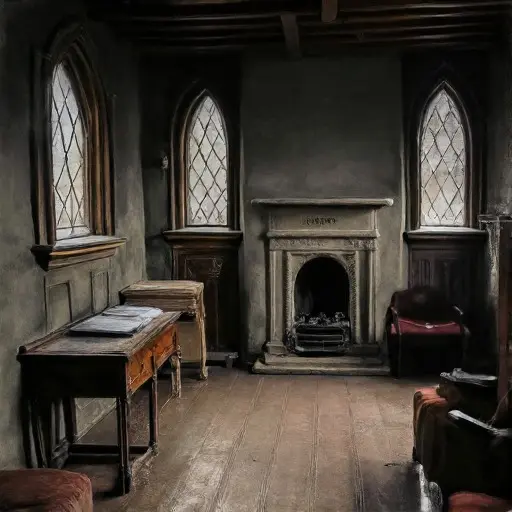
Inside, the Mallory household maintained a quiet routine tied closely to canal operations. Henry Mallory monitored lock schedules and maintenance reports, while his wife Anne managed correspondence with canal authorities and recorded water flow conditions during seasonal changes. The interior layout mirrored the exterior discipline, with rooms arranged along a clear vertical and axial logic.
Early infrastructural decline
By the early 1920s, regional transport networks began shifting toward rail and road systems, reducing reliance on small rural canals. As traffic diminished, maintenance of the waterway system became increasingly infrequent. Eventually, the canal adjacent to Blackwater Lock Cottage was officially decommissioned, and water was drained from the channel, leaving behind a cracked clay bed lined with reeds and scattered stone fragments.
Gradual withdrawal from canal operations
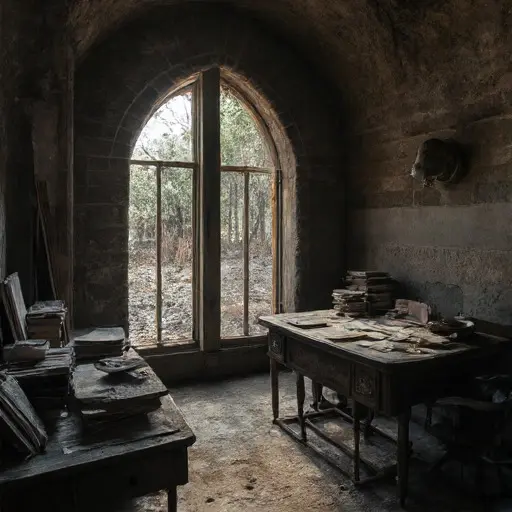
As canal operations ceased, the cottage’s role as a supervisory residence gradually disappeared. Maintenance teams were reassigned, and lock systems upstream were dismantled or permanently closed. Without operational necessity, the house transitioned from functional infrastructure housing to isolated residential structure.
Occupancy declined steadily during this period. Rooms once used for administrative coordination were closed, and heating was reduced to a minimal portion of the building during colder months. The surrounding landscape changed in parallel, with the former canal bed becoming a shallow linear depression filled with dry vegetation and erosion-softened edges.
Final abandonment phase
By the late 1940s, Blackwater Lock Cottage was no longer inhabited. Canal authority records were archived or discontinued, and no responsibility remained for the decommissioned waterway or its associated buildings. Utility services were terminated, and no restoration efforts were undertaken. Despite this, the structure remained intact, its stonework and slate roof preserving its Gothic form with quiet resilience.
The house left behind
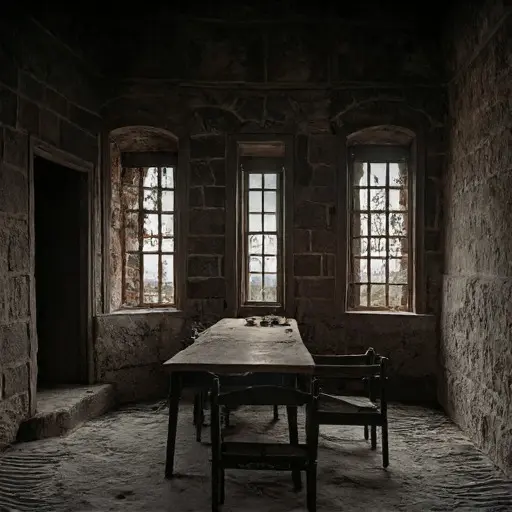
By the early 1950s, no ownership claims or restoration efforts had been made for Blackwater Lock Cottage. The canal system it once served had fully disappeared from active use, and no institutional responsibility remained. The house continues to stand in the shallow valley, structurally intact and unchanged in purpose, quietly enduring in a landscape that has ceased all movement around it.