The Brackenmere House Left Beside the Quiet Lake Rise
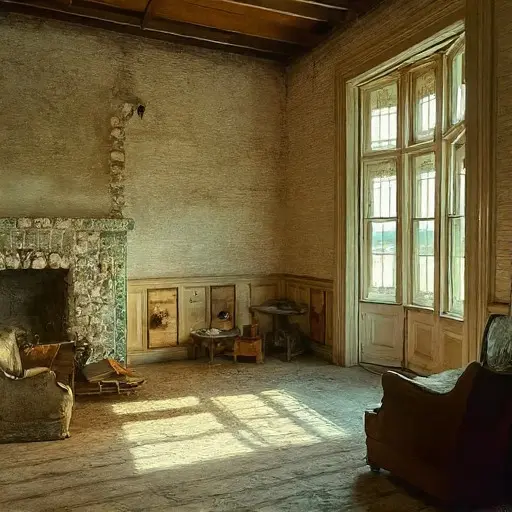
Brackenmere House stood on a gentle rise above a calm inland lake, where the shoreline curved in soft, natural asymmetry and reeds moved slowly through shallow water. Built in 1893 for the Dalton family, the residence was designed with restraint and horizontal balance rather than the vertical emphasis typical of Victorian architecture. Its form suggested stability and familiarity, a home intended for long-term domestic continuity rather than architectural display.
The structure was constructed from pale sand-colored brick interwoven with bands of faded teal ceramic tiles. These ceramic accents, once decorative highlights, had softened over time into muted tonal variations that blended naturally with the surrounding masonry. The exterior showed gradual, even aging: mortar lines had softened, brickwork near the base carried faint staining from lake humidity, and sun exposure had gently faded surface tones into a cohesive, time-washed palette.
The house was organized around a wide central hall that projected slightly forward, flanked by two shorter wings extending outward like outstretched arms. This layout reinforced a sense of balance and openness, with each wing supporting domestic functions such as dining, study, and family rooms. The proportions remained stable and reassuring even as years passed, with no dramatic structural shifts or expansions altering its original intent.
Windows were large, evenly spaced, and framed in painted wood that had mellowed into a warm gray-green. Their glass panes remained largely intact but carried a thin layer of mineral deposition that softened reflections of water and sky into layered, indistinct impressions. A small glass-enclosed sunroom extended from one side of the house, its panes clear but lightly fogged at the edges, indicating seasonal humidity rather than neglect or damage.
Inside, the Dalton household maintained a quiet domestic rhythm shaped by lake life. Edward Dalton managed correspondence and local agricultural accounts, while his wife Margaret oversaw household organization and seasonal planning. The house functioned as both residence and modest administrative center, with rooms arranged for comfort, routine, and steady observation of the surrounding landscape.
Early financial strain
By the late 1920s, regional agricultural markets began to fluctuate, affecting the Dalton family’s income from surrounding farmland and lake-adjacent trade. While the house itself remained in good condition, maintenance schedules became less frequent as economic pressures increased. Exterior surfaces near the lake showed slightly accelerated weathering due to constant humidity, though no structural instability developed.
Gradual decline within the lakeside residence
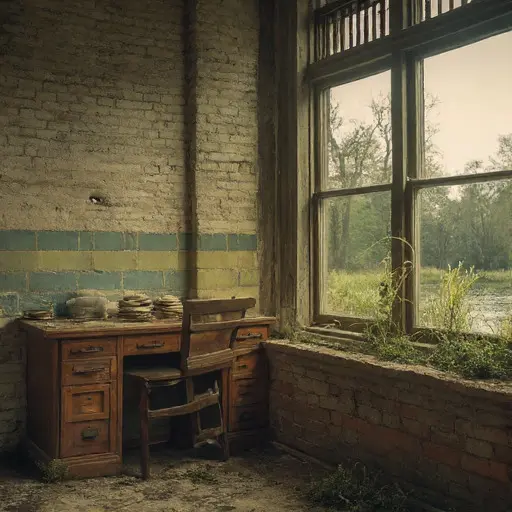
As financial strain increased, the house gradually shifted from full-time residence to seasonal occupation. Certain rooms were closed off during colder months to reduce heating costs, while maintenance of exterior features became less frequent. The structure itself remained stable, but the rhythm of daily life within it slowed noticeably.
Over time, family presence diminished as younger members relocated to nearby towns for work and education. The house was visited less frequently, used primarily during warmer seasons or for short administrative stays. By the early 1940s, occupancy had become intermittent, with long periods of silence between returns.
Final abandonment phase
By 1947, Brackenmere House was no longer permanently inhabited. Utility services were gradually reduced and eventually discontinued after extended periods of non-use. Despite this, the structure remained intact and structurally sound, its materials well-suited to the mild lakeside climate. The surrounding landscape continued its slow, steady rhythm, with reeds, grasses, and water movement remaining unchanged.
The house preserved in lakeside stillness
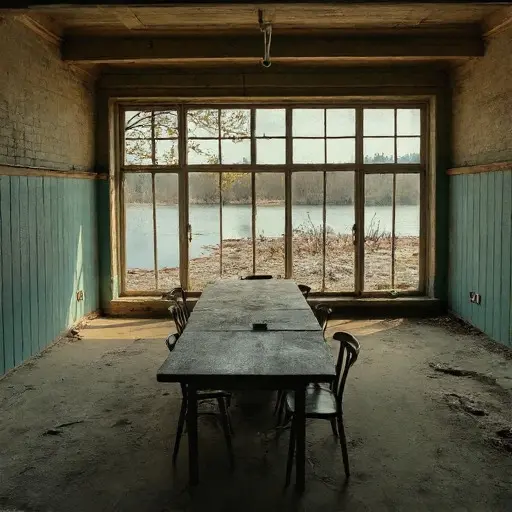
By the late 1940s, no formal ownership disputes or restoration efforts altered Brackenmere House. Legal responsibility remained unresolved but inactive, and no party returned to reoccupy the property. The house stands today on its lakeside rise, quietly preserved in structural stability, slowly weathering under gentle light and moisture, holding the memory of lived-in continuity without interruption or return.