The Westbridge Canal House Left in Quiet Suspension
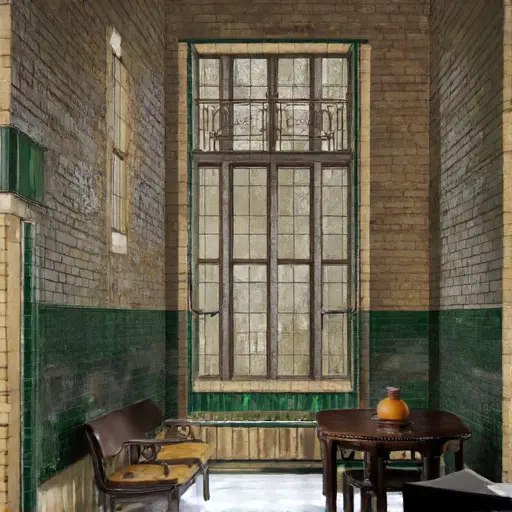
Westbridge Canal House stood along a slow-moving canal that curved through a quiet residential quarter, where water mirrored façades in softened, fragmented reflections. Built in 1896 for the Ellery family, the residence was designed with disciplined restraint rather than ornamental excess. Pale buff brick formed the main structure, while bands of deep green glazed tiles ran horizontally across the exterior, creating a calm visual rhythm that echoed the steady movement of the canal below.
The front façade centered on a modest entry bay that projected slightly outward, framed by narrow pilasters tapering into a simple cornice. Above it, tall sash windows aligned in strict vertical order, their glass subtly rippled by age and humidity. These distortions softened reflections of sky, trees, and canal water into layered gradients rather than sharp images. Window frames, originally painted muted slate blue, had weathered into a silvery tone that blended seamlessly with the surrounding light.
A small iron balcony rested above the entrance, its railing formed from simple repeating loops rather than elaborate Victorian filigree. This understated detail reinforced the house’s architectural restraint, suggesting a family preference for function and clarity over decorative display. The roofline was shallow and cleanly pitched, punctuated by subtle dormers that emerged like quiet interruptions in an otherwise continuous surface. Chimneys at the rear corners rose evenly, their brickwork softened but structurally intact.
Inside, the Ellery household maintained a steady domestic rhythm shaped by canal-side life. Frederick Ellery managed small-scale transport logistics and goods movement along the waterway, while his wife Clara oversaw correspondence and household organization. The house functioned as both residence and administrative point for canal-related trade, with rooms arranged in efficient alignment rather than ceremonial hierarchy.
Early financial strain
By the late 1920s, canal transport declined as rail and road infrastructure expanded across the region, reducing reliance on slow waterborne goods movement. The Ellery family’s income gradually diminished as trade contracts were reassigned to faster logistics networks. Maintenance of the house remained consistent at first, but over time minor repairs were deferred. Moisture from the canal environment slowly affected mortar joints and softened exterior brick edges, though the structure remained fundamentally sound.
Gradual decline within the canal-side residence
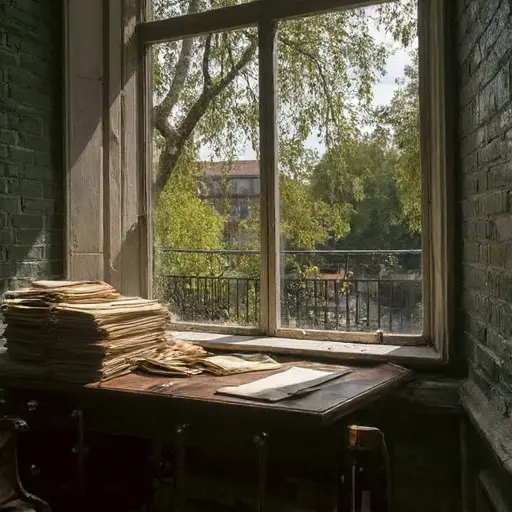
As financial strain increased, the house began to experience gradual internal contraction of use. Rooms facing the canal remained central to daily activity, while rear spaces saw reduced maintenance and less frequent occupation. The household’s involvement in canal logistics decreased as larger regional transport systems absorbed most remaining trade routes.
Over time, the Ellery family’s presence diminished. Younger members moved toward urban employment opportunities, leaving fewer occupants to maintain the residence. By the early 1940s, the house was intermittently occupied, used primarily for record-keeping and occasional seasonal return.
Final abandonment phase
By 1947, Westbridge Canal House was no longer permanently inhabited. Utility services were discontinued after prolonged nonpayment, though the structure itself remained stable due to its robust masonry construction. The canal continued to flow steadily beside it, maintaining the same slow reflective rhythm that had defined the district for decades.
The house left beside the waterline
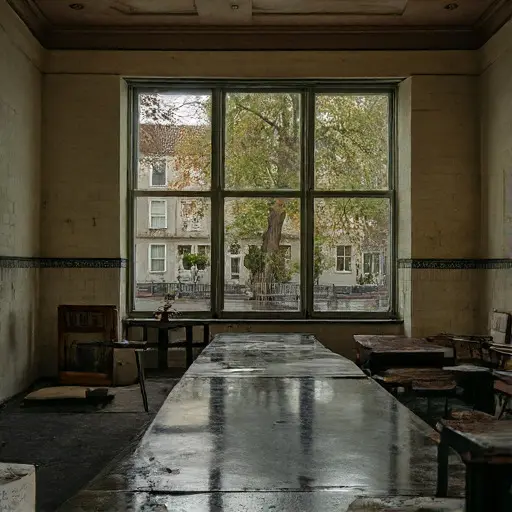
By the late 1940s, no formal ownership disputes or restoration efforts altered Westbridge Canal House. Legal records remained unresolved, but no party reoccupied or maintained the property. The house remains beside the canal, preserved in structural calm, slowly weathering under mild moisture and steady light, as the water continues to reflect a world that no longer interacts with its interior.