A house half-written by wind and forest
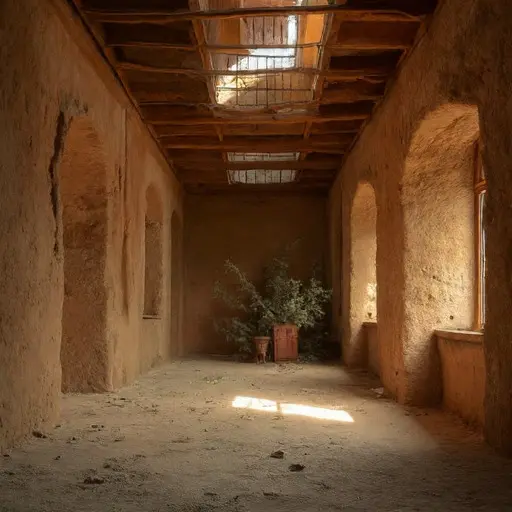
Inside the central hall, the architecture feels as if it has grown out of sediment rather than construction. Rammed earth walls rise in thick stratified bands—ochre, rose, sienna, and clay gray—each layer subtly different in density and hue, like compressed seasons. Light enters through narrow skylight channels carved into the roof folds, producing thin, precise shafts that slide across textured surfaces without ever fully settling.
The floor is compacted and slightly uneven, carrying the softness of sand underfoot, as though the building is still negotiating its place within the dune.
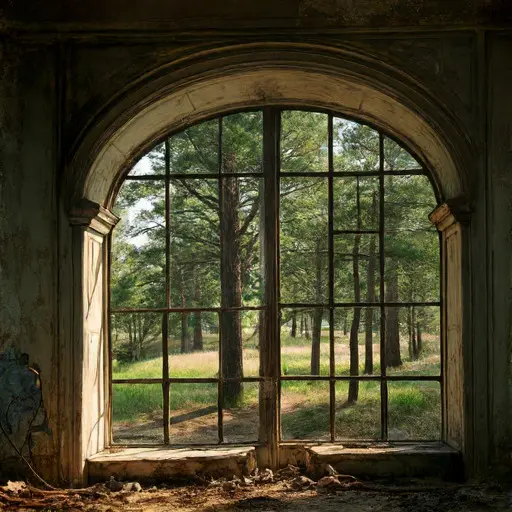
A recessed gallery runs along the sheltered forest-facing side, where the architecture opens fully away from the dune’s windward pressure. Tall arched windows and narrow horizontal slits alternate along the wall, each deeply inset into limestone and rammed earth mass. Through the glass, pine groves appear in layered fragments—vertical trunks softened by drifting sand light and distance haze. Bronze and weathered iron frames hold the openings in place, their surfaces dulled by constant airborne abrasion. Inside, the space feels calm but never sealed, as if the forest is always present just beyond the threshold.
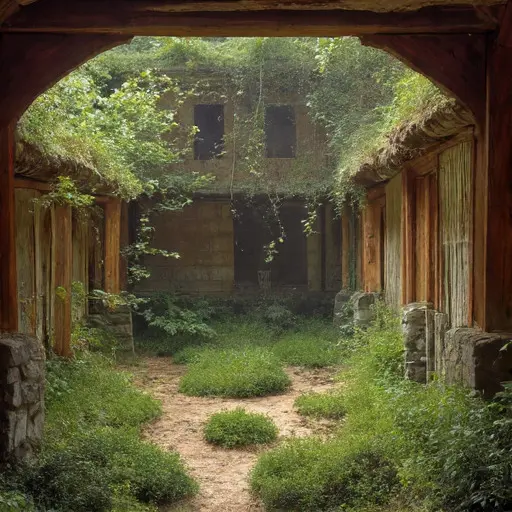
Between structural segments, a sequence of small courtyards opens like protected breaths in the long horizontal form of the house. These pockets are partially enclosed by stone retaining walls and timber windbreaks, shaped to redirect drifting sand rather than resist it. Low grasses and hardy shrubs occupy the courtyards, bending subtly with the wind that threads through the dune corridor. Light filters in unevenly from above, softened by airborne sand, giving every surface a muted, golden diffusion. The courtyards feel less like outdoor rooms and more like pauses in the landscape where architecture briefly loosens its grip on form.