The Arboretum House Abandoned After Botanical Funding Collapse
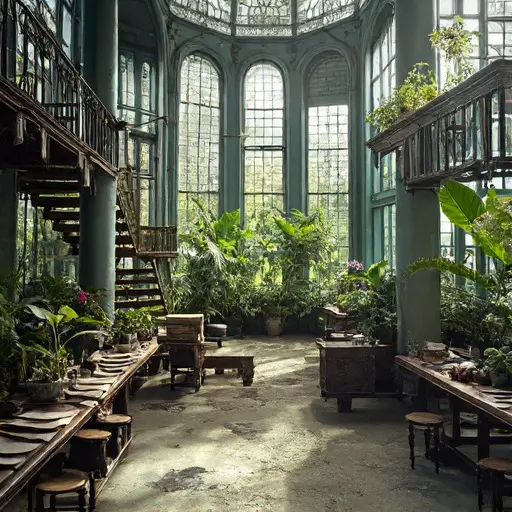
The Arboretum House was completed in 1898 as the centerpiece of a vast enclosed botanical estate developed by the Whitmore family. Hidden beneath a monumental glass canopy spanning several acres, the residence occupied the center of a carefully controlled environment where architecture and horticulture were intended to exist as a unified system. The house served not only as a family home but also as the administrative headquarters of an ambitious botanical collection containing rare trees, exotic flowering plants, and experimental species gathered from across the world.
Constructed from pale turquoise glazed brick and cream-colored stone, the building possessed an unusual luminosity even under the filtered light of the canopy above. Four projecting corner pavilions anchored the structure, their steep polygonal roofs clad in blue-green copper that gradually weathered into muted tones of teal, silver, and jade. Tall conservatory windows extended across entire floors, creating a layered interplay between the house, the surrounding vegetation, and the glass architecture enclosing both.
For more than two decades, the estate thrived. Teams of gardeners maintained planting beds, elevated iron walkways, and specialized growing zones throughout the arboretum. Family records describe a self-contained landscape where daily life unfolded beneath filtered daylight, protected from harsh weather and seasonal extremes.
Financial pressures within the enclosure
The first signs of decline emerged during the 1920s. Rising maintenance costs associated with the enormous canopy placed increasing pressure on the estate’s finances. The glass structure required continual repairs, while heating, irrigation, and horticultural management demanded significant resources.
When several family investments performed poorly after 1929, available funds diminished rapidly. Botanical programs were reduced, and specialized staff positions were eliminated. Although the house itself remained occupied, maintenance of the larger arboretum became increasingly selective.
Sections of elevated walkways were closed. Certain planting collections were abandoned. Small roof leaks within portions of the canopy went unrepaired, allowing moisture patterns to alter the carefully controlled environment for the first time.
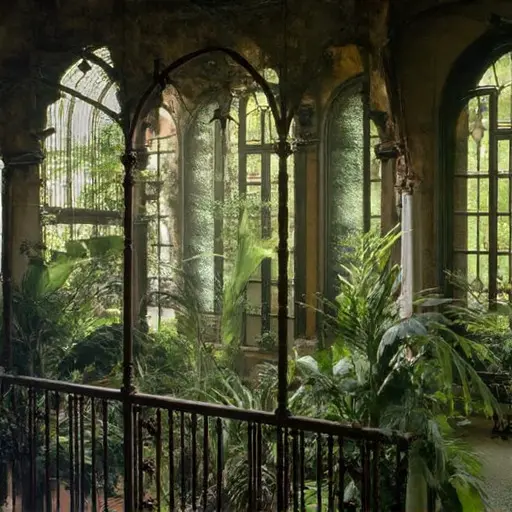
Throughout the 1930s, occupancy steadily decreased. Younger members of the Whitmore family relocated elsewhere, unwilling to assume responsibility for the increasingly expensive estate. Entire wings of the house were closed to reduce heating costs. Conservatory rooms once used for botanical research became storage areas for records, equipment, and unused furnishings.
As staffing declined, vegetation began growing beyond its intended boundaries. The arboretum remained beautiful, but its order gradually softened. Elevated iron bridges disappeared into increasingly dense foliage, and ornamental planting beds merged into broader masses of unmanaged growth.
The final years of occupation
By the early 1940s, only a handful of family members remained within the house. Financial records indicate repeated failures to secure outside funding for restoration of the canopy and surrounding botanical infrastructure. Several attempts to transfer ownership to academic institutions collapsed due to maintenance liabilities.
Following the death of the final resident caretaker in 1944, the property entered legal uncertainty. Estate taxes went unpaid, repairs ceased entirely, and no successor management plan emerged.
Without intervention, the enclosed ecosystem continued evolving independently. Plants adapted to the changing conditions beneath the aging canopy, while the house itself slipped into silence.
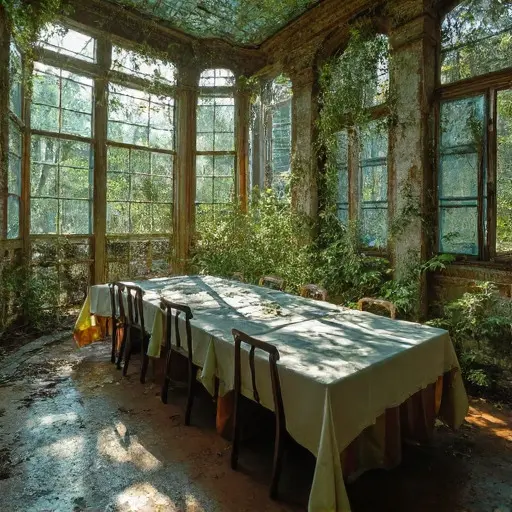
By 1950, the Arboretum House stood completely abandoned within its immense glass enclosure. No restoration program was undertaken, no heirs returned to reclaim the estate, and no institution assumed responsibility for the property. The canopy survived, preserving the unusual ecosystem that had developed beneath it, while the house remained at its center, vacant and slowly deteriorating. Today it continues to stand within the enclosed arboretum, surrounded by mature vegetation and filtered green light, its future unresolved and its rooms permanently empty.