The Bluewater Island House Left Empty After Family Dispersal
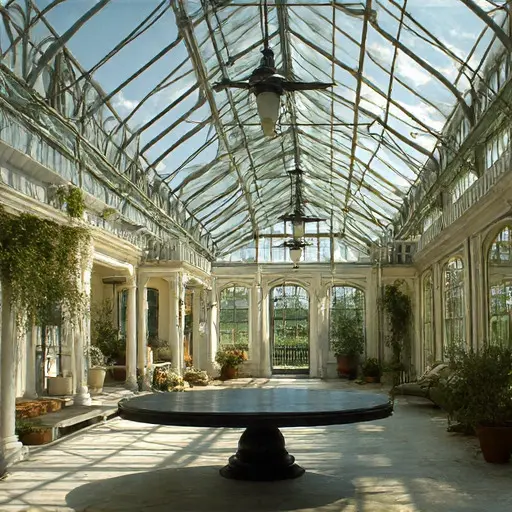
The Bluewater Island House was built in 1892 on a narrow island situated near the center of a small freshwater lake. Originally constructed as a modest Victorian residence, it expanded steadily through successive generations of the Fairchild family. Rather than extending outward across limited island space, additions were stacked vertically, producing a distinctive composition of projecting bays, enclosed winter gardens, stair towers, and glazed galleries.
By the early twentieth century, the house had evolved into a complex architectural landmark. Finished in smooth mineral-rendered plaster colored a soft powder blue, with pale ivory stone accents framing windows and circulation spaces, the structure reflected softly in the surrounding lake. Its most recognizable feature was an octagonal stair tower whose spiraling windows illuminated the interior circulation routes that connected generations of additions.
The island’s isolation was balanced by a long stone causeway linking it to the mainland. For decades, this crossing served as the estate’s lifeline, allowing supplies, visitors, and family members to move easily between the house and nearby communities.
Economic and family changes
The first signs of decline appeared during the late 1920s. Agricultural investments owned by the Fairchild family suffered losses, reducing available income for maintaining the increasingly complex property. The house’s layered architecture required constant repairs, particularly the extensive glazed conservatories and interconnected roof systems.
As financial strain increased, maintenance of the causeway was reduced. Seasonal flooding and gradual subsidence weakened portions of the stone crossing. Moss, reeds, and lake vegetation began encroaching upon sections once kept clear. Although still passable, access became increasingly difficult during wet seasons.
At the same time, younger members of the family sought employment elsewhere. Several relocated permanently to larger cities, leaving only a shrinking number of residents within the house.
Rooms slowly closed
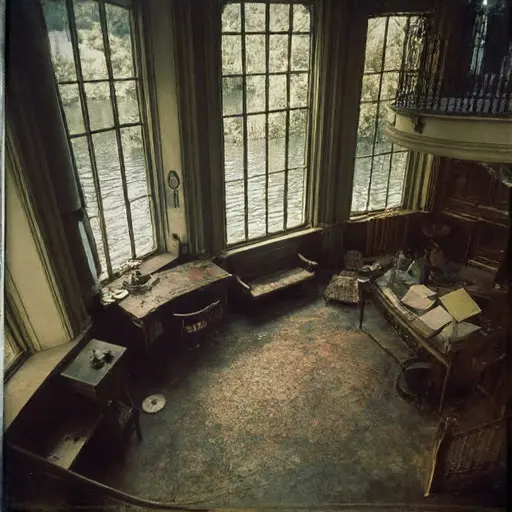
Throughout the 1930s, the Fairchild household continued to contract. Rooms within the upper levels were gradually closed to reduce heating expenses. Conservatories that once housed decorative plant collections were left largely unattended, and sections of the roof system received only temporary repairs.
Household ledgers from the period reveal mounting unpaid bills for glazing replacement, roof maintenance, and structural inspections. The complexity that had once distinguished the house became a burden. Every addition required attention, and resources were no longer sufficient to preserve the entire structure.
As residents departed, activity became concentrated in only a few lower rooms. The upper galleries and winter gardens remained intact but increasingly silent. The island itself became more isolated as deterioration of the causeway limited reliable access.
Final abandonment
By the early 1940s, only two elderly family members remained in residence. Following their deaths within a short span of years, ownership passed to distant heirs who showed little interest in maintaining an aging island property requiring extensive repairs.
Legal disputes over inheritance delayed any sale or redevelopment. Property taxes went unpaid, maintenance ceased entirely, and no caretaker was appointed. The causeway deteriorated further, making regular access increasingly impractical.
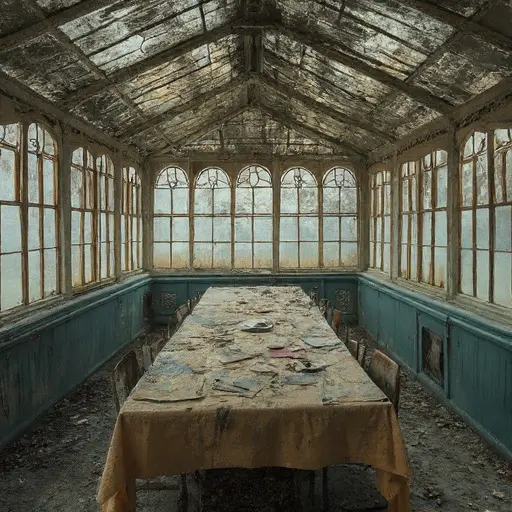
The house frozen beside the lake
By the mid-1940s, the Bluewater Island House stood completely vacant. No restoration program was initiated, and no heirs returned to occupy the property. Legal ownership remained unresolved for years, while the deteriorating causeway further isolated the island from the mainland. Today the house remains abandoned beside the still freshwater lake, its conservatories, stair tower, and layered additions slowly weathering under moisture and time. No successful recovery occurred, and the once-expanding family residence continues to stand empty within its reflective landscape.