The Alderfen Marsh House Left Vacant After Wetland Decline
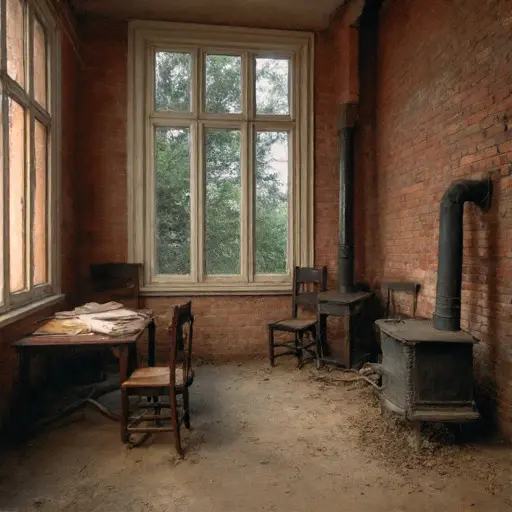
The Alderfen Marsh House was built in 1903 by the Whitlock family, who settled at the edge of the wetland basin to manage modest drainage maintenance and seasonal reed harvesting. Constructed on a slightly raised brick plinth, the house was designed specifically to withstand periodic flooding and persistent ground moisture. Its pale red brickwork, now softened into muted clay and dusty rose tones, reflected the subdued palette of the marsh environment, where land and water intermingled in slow, shifting patterns.
The household was functional and restrained, shaped by the demands of living within a saturated landscape. Edward Whitlock oversaw drainage channels and reed harvesting routes, while his wife Margaret managed household records and correspondence with nearby inland markets. The central façade of the house faced the marsh directly, emphasizing its connection to water management and seasonal land use. For many years, the property remained stable, supported by modest but consistent agricultural and material output from the wetland.
Early financial strain
By the late 1920s, demand for marshland materials such as reeds and peat declined as industrial alternatives became more widely available. Maintenance of drainage systems became increasingly expensive, and seasonal flooding grew more difficult to manage. Income gradually decreased, forcing the Whitlock family to reduce upkeep on both the house and surrounding infrastructure. Sections of the boardwalk were repaired less frequently, and parts of the marshland system fell into partial disuse.
Inside the house, maintenance slowed to essential repairs only. The muted sage green front door became worn and uneven from repeated exposure to damp air, and interior paintwork dulled further under constant humidity. Rooms remained in use but gradually lost their earlier sense of careful upkeep.
Gradual decline in the household
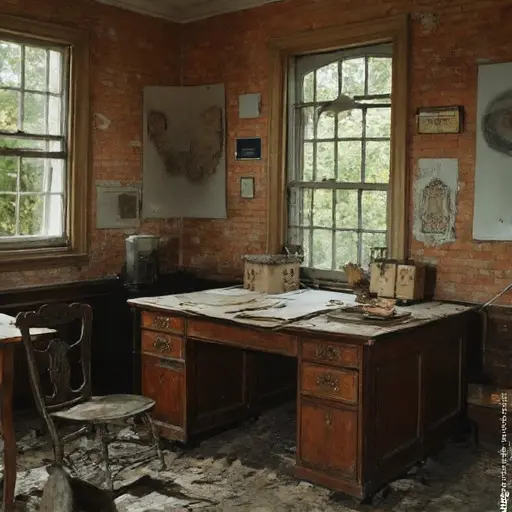
As financial strain increased, marshland operations were gradually reduced. Drainage channels were left partially unattended, and reed harvesting became sporadic. Vegetation began to reclaim sections of the boardwalk, which required intermittent repairs before eventually falling into neglect. The path leading from the house to firmer ground became less defined, blending into the surrounding reeds and shallow pools.
Family members eventually left the marshland property during the 1930s, seeking more stable employment in inland towns. Their departure marked a turning point in the house’s use, shifting it from an active wetland management residence to a partially maintained structure sustained by diminishing oversight.
Final abandonment phase
By the early 1940s, the Alderfen Marsh House was no longer fully inhabited. Utility services were gradually discontinued following prolonged financial arrears. Without maintenance, moisture penetrated deeper into the structure, affecting plaster, woodwork, and interior fittings. The boardwalk remained partially intact but increasingly unstable, with sections softened by constant damp exposure and shifting ground beneath.
Final deterioration
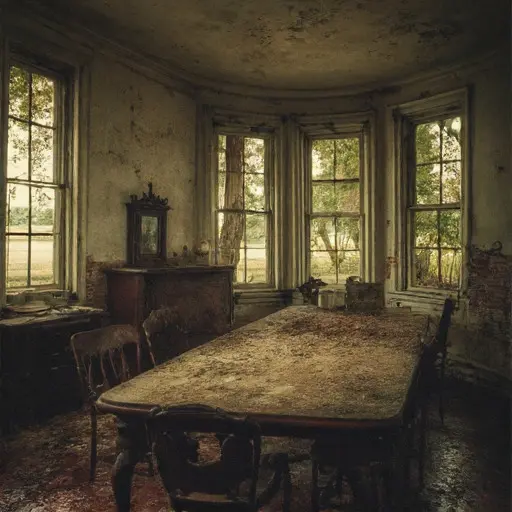
By the mid-1940s, no formal ownership or active maintenance of the Alderfen Marsh House remained. Legal notices were repeatedly returned undelivered, and no heirs reestablished residence. The structure persisted at the edge of the marsh in a state of quiet abandonment, slowly weathering under persistent moisture, wind, and encroaching vegetation. No restoration or reoccupation followed. The house remains empty today, standing within the wetland’s soft, open expanse, gradually dissolving into the rhythm of reeds, water, and slow-moving air.