The Aldermead Canal House Left Vacant After Riverside Decline
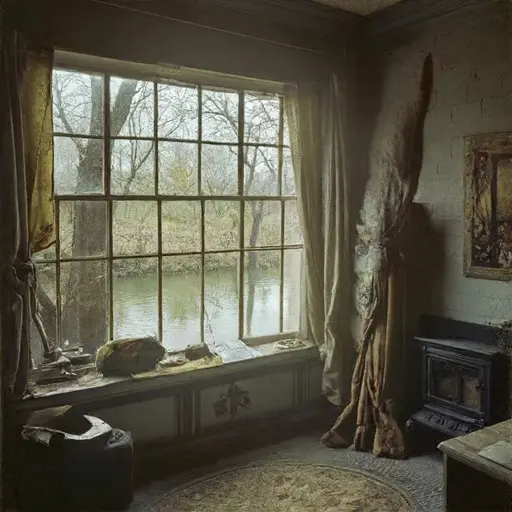
The Aldermead Canal House stood along a gentle bend in the waterway, built in 1904 by the Henslow family as a modest riverside residence closely tied to canal transport and local trade. Though it carried subtle Victorian influences, its design was primarily functional, shaped by daily life along the water rather than architectural ambition. The pale gray brick exterior had been chosen for durability in the damp canal climate, gradually weathering into soft tones of ash, stone, and muted beige over time.
The household relied on small-scale canal commerce and maintenance work. Arthur Henslow managed mooring coordination and goods transfer schedules, while his wife Margaret oversaw household records and correspondence with nearby settlements. The extended ground-floor room facing the canal served as both a domestic space and informal working area, where deliveries were recorded and visiting boatmen were received. For many years, the home remained steady, sustained by consistent but modest river activity.
Early financial strain
By the late 1920s, canal transport began to decline as rail and road networks expanded across the region. Fewer boats passed through the bend, and local trade diminished significantly. Income became irregular, and maintaining the property became increasingly difficult. Repairs to damp-stressed brickwork and timber structures were delayed, and the wooden landing platform began to show signs of wear from reduced upkeep and fluctuating water levels.
Inside the house, maintenance shifted toward essential repairs only. Paintwork faded, and unused rooms were gradually closed to conserve heat and resources. The canal-facing windows, once central to household activity, increasingly served only as quiet outlooks onto a slowing waterway.
Gradual decline in the household
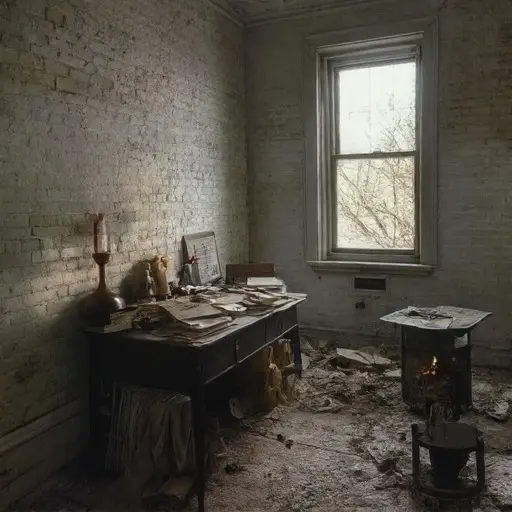
As canal traffic continued to diminish, the household’s income declined further. Mooring activity became sporadic, and the small landing platform saw fewer visitors each year. Grass and reeds began to encroach upon the wooden structure, while maintenance of the utility shed slowed until it was rarely used. Inside, correspondence from suppliers and local authorities became infrequent, and recordkeeping lost its earlier regularity.
The Henslow children eventually left for nearby towns, seeking employment in industries less dependent on canal trade. Their departure marked a significant reduction in household activity. Several rooms on the upper floor were closed entirely, and the family concentrated their remaining efforts on maintaining only the most essential living spaces.
Final abandonment phase
By the early 1940s, the Aldermead Canal House was no longer fully inhabited. Utility services were gradually discontinued following prolonged financial arrears. Without maintenance, moisture from the canal began to penetrate deeper into the structure, affecting interior plaster and wooden fittings. The landing platform remained, but it was no longer regularly used, its boards weathered and uneven.
Final deterioration
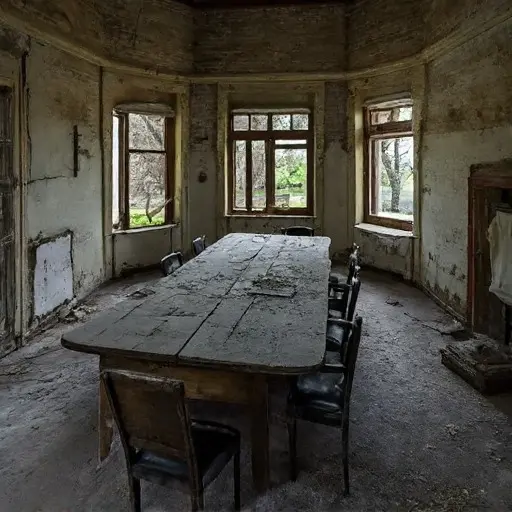
By the mid-1940s, no formal ownership or active maintenance of the Aldermead Canal House remained. Legal notices were repeatedly returned undelivered, and no heirs reestablished residence. The structure persisted beside the canal bend in a state of quiet abandonment, slowly weathering under water, wind, and vegetation. No restoration or reoccupation followed. The house remains empty, its rooms open to the canal breeze, continuing to deteriorate as the waterway flows steadily past its silent foundation.