The Canal-Side Victorian Townhouse Left Vacant
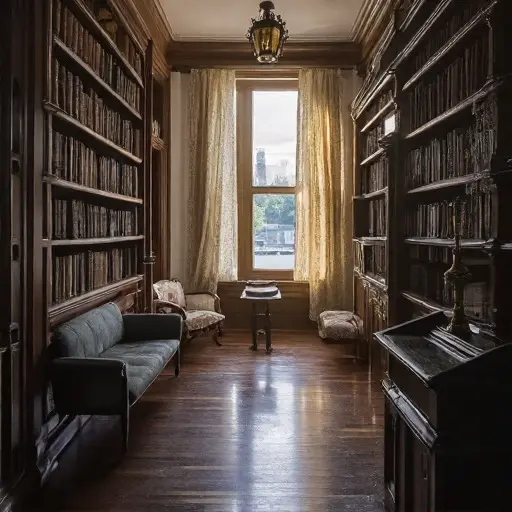
The townhouse stands along the canal as if it has not fully accepted its own isolation. Inside, the upper-floor sitting room still holds the discipline of occupation: furniture aligned with architectural precision, textiles smoothed flat, and household objects arranged with habitual care. Light enters through the tall sash windows in steady vertical bands, reflecting the canal’s slow movement outside and casting faint ripples of brightness across the floorboards.
Nothing appears disturbed at first glance, but the silence is unusually complete—no footsteps, no fire in the grate, no sound of domestic routine. Even the air feels paused, as though the house is waiting for instructions that will not return.
Small details hint at the beginning of interruption rather than collapse: a half-read letter resting on the writing desk, a teacup cooled beside it, and a hallway door left slightly ajar where it should have been closed. Yet the structure remains intact, its order still convincing enough to suggest presence rather than absence.
The first signs of absence
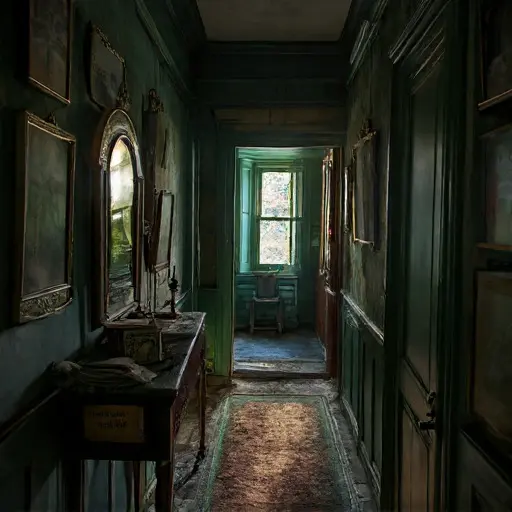
The change begins not with destruction but with omission. Mail accumulates on the hallway table, its edges bending slightly with moisture from the canal air drifting through imperfect seals. The lower floors of the townhouse, once the most active, begin to feel least used. Carpets show faint compression where footsteps have stopped repeating their patterns. The rhythm of maintenance breaks first in small administrative ways—unanswered correspondence, unwashed glassware, a clock that runs a few minutes slow without correction.
The canal outside continues its steady motion, indifferent and consistent, reflecting the building’s strict vertical geometry back into itself. But inside, time begins to lose synchronization. Each floor seems to inhabit a slightly different version of the same day.
Final abandonment
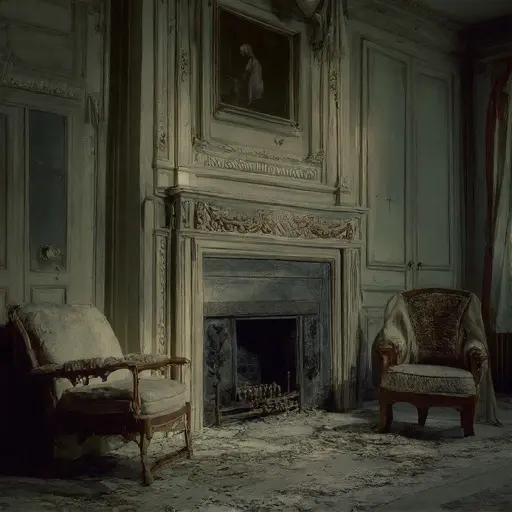
By the time the townhouse is fully abandoned, nothing has been removed in haste. Instead, everything remains in place with unsettling completeness, as though departure itself was incremental and unresolved. Dust settles evenly across surfaces, softening the sharpness of Victorian geometry. The canal light still enters through the windows each day, but no longer interacts with movement inside the rooms.
Doors remain open or closed exactly as they were left, never corrected. The building does not collapse into ruin; it simply stops participating in life. Even the structural soundness of the walls and floors gives the impression that occupation might resume at any moment, yet no return occurs.
The townhouse persists along the canal in quiet suspension, neither decayed nor inhabited, holding its final state without resolution. It remains standing in full integrity, overlooking the water, abandoned without climax or conclusion, as if the act of leaving was never fully completed and no one ever came back to finish it.