The Delta Courtyard Chain Manor Left Vacant Along the River Plain
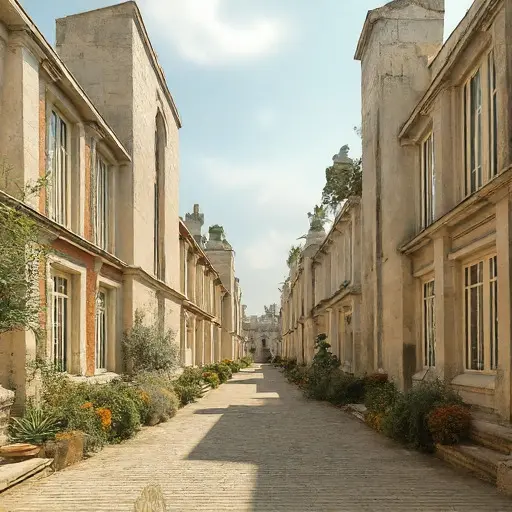
The Delta Courtyard Chain Manor was constructed during the late Victorian period along a wide river delta plain where multiple shallow channels divide and rejoin across fields of reeds, wild grass, and smooth stone. Unlike traditional estates designed as centralized residences, this manor was conceived as a sequential domestic system—an ordered chain of courtyard-based living units aligned in a precise linear arrangement across the landscape. Each segment was built over time as the family expanded, yet all were connected through short enclosed corridors that preserved continuity between otherwise independent architectural blocks.
Each courtyard unit is a self-contained Victorian structure composed of pale limestone and soft cream brick. The architectural language remains consistent throughout the estate: tall sash windows, restrained stone ornamentation, and modest pitched roofs define each segment. However, subtle material variations distinguish each block. Some sections feature pale blue-painted window frames, while others incorporate soft coral stucco accents or muted green ironwork details. These variations create a measured rhythm of identity along the otherwise uniform procession of buildings.
At the core of each segment lies a courtyard open to the sky, forming a repeating sequence of enclosed outdoor rooms. These courtyards serve different domestic functions across the estate. One contains a dry ornamental fountain basin filled with smooth river stones, another is paved with geometric stone tiles now partially overtaken by grass, while others remain open and bare, functioning as quiet sunlit voids that separate clusters of interior rooms. The repetition of these courtyard spaces establishes a strong architectural cadence across the entire manor.
The roofs across the chain are unified in form but staggered in height, stepping gently along the linear progression of courtyard units. Chimneys rise at irregular intervals, marking individual household segments within the larger estate structure. This staggered roofline creates a subtle horizontal skyline that mirrors the rhythm of the courtyards below.
Inside each block, rooms are arranged along the courtyard edges, with windows consistently oriented inward. This design produces a continuous visual corridor where interior spaces open directly into successive courtyards, allowing light to travel uninterrupted through the entire sequence of structures. Even in abandonment, this alignment preserves a sense of coherence, as if the manor still functions as a connected domestic system awaiting reoccupation.
Gradual decline along the delta chain
By the early 1930s, shifting settlement patterns in the river delta reduced the need for extended family compounds organized in linear formations. As maintenance demands increased across multiple courtyard units, the outer segments of the chain became increasingly difficult to sustain. Waterlogging in low-lying sections and sediment shifts along the delta channels contributed to uneven structural stress across the estate.
Fragmentation of courtyard sequence habitation
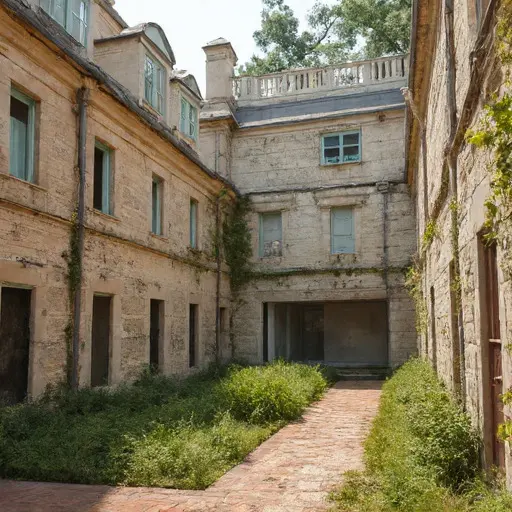
As occupancy declined, abandonment spread unevenly along the chain. Outer courtyard units were the first to be vacated, while central segments remained in intermittent use for longer periods. The linear structure, once designed for expansion and continuity, became increasingly fragmented as individual blocks ceased operation while adjacent sections remained partially inhabited.
Eventually, the manor ceased functioning as a unified residential system. Remaining occupants left in stages, leaving behind a structurally ordered but functionally broken sequence of courtyard-based dwellings extending across the delta plain.
Final abandonment of the courtyard chain manor
By the late 1940s, the Delta Courtyard Chain Manor was fully vacated. No redevelopment occurred due to its rigid linear configuration, which resisted subdivision or adaptive reuse. The structure remained stable but unused, its limestone blocks and brick courtyards weathering evenly under persistent sunlit conditions.
Final linear stillness
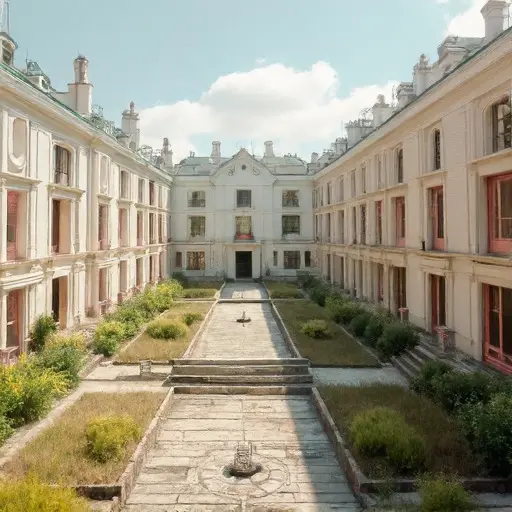
By the mid-1940s, no active ownership or functional use remained for the Delta Courtyard Chain Manor. The surrounding delta landscape remained open and undisturbed, with no redevelopment following due to the rigidity of its sequential courtyard design. The structure persists today as a stable but uninhabited linear estate, its ordered procession of courtyards preserved in quiet, sunlit stillness along the river plain.