The Halewick Strata Manor Left Vacant After Coastal Replanning
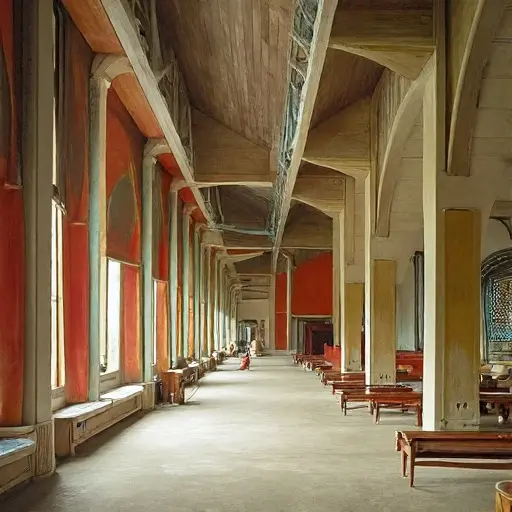
The Halewick Strata Manor was constructed in 1908 along the outskirts of a planned coastal expansion district where experimental residential forms were briefly encouraged as part of regional architectural modernization efforts. Unlike traditional Victorian estates, the manor was designed as a segmented horizontal system, composed of layered façade bands rather than conventional stacked floors. Its pale stone base, plaster middle band, and timber upper band were intended to represent a new model of modular domestic organization adapted to large-scale worker housing and administrative residency.
From its completion, the structure stood out for its strict horizontal rhythm and material stratification. The lowest band, built of pale hand-cut stone, formed a continuous arcade of shallow arches filled with tall rectangular windows. Above it, broad plaster panels in faded aqua, coral, and cream created a shifting visual field punctuated by oversized windows of varying proportions. The upper timber band, painted in washed lilac, mint green, and pale sky blue, completed the layered composition with a continuous clerestory ribbon that emphasized linear continuity over vertical hierarchy.
The manor functioned for several decades as a mixed residential facility for administrative staff and seasonal coastal workers. Its internal organization mirrored its exterior logic, with rooms arranged in elongated sequences rather than compact clusters. Movement through the building followed its horizontal logic, reinforcing the sense that architecture here was structured as a continuous strip rather than discrete compartments.
Gradual decline of coastal district planning
By the late 1920s, the coastal expansion initiative that supported structures like the Halewick Strata Manor began to dissolve. Economic priorities shifted toward centralized urban housing, and experimental modular estates were gradually deprioritized. As institutional support declined, occupancy within the manor decreased, and maintenance of its complex façade banding became inconsistent.
Fragmentation of linear habitation
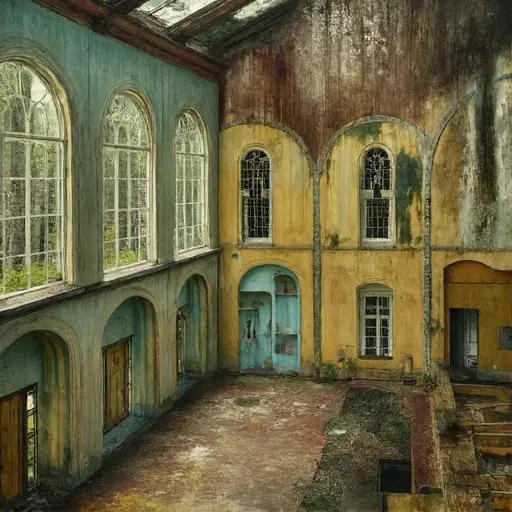
As the coastal district’s infrastructure plans were revised, the Halewick Manor was gradually phased out of its original function. Portions of the structure remained in limited use for a time, but entire segments were progressively left unoccupied. The strict horizontal organization that once defined its efficiency became increasingly difficult to maintain as staffing and maintenance resources diminished.
Eventually, the manor ceased to operate as a coordinated residential facility. Its remaining occupants departed in stages, leaving behind a structure that retained architectural integrity but no longer served any functional purpose within the region’s reorganized housing system.
Final abandonment of the striped manor
By the early 1940s, the Halewick Strata Manor was fully vacated. No redevelopment project was undertaken, as its rigid segmented design did not align with newer housing models. The structure remained physically stable, but exposure to weather and time began to soften its painted surfaces and wooden elements. Windows stayed dark and open, reflecting only the surrounding forest and overcast sky.
Final linear stillness
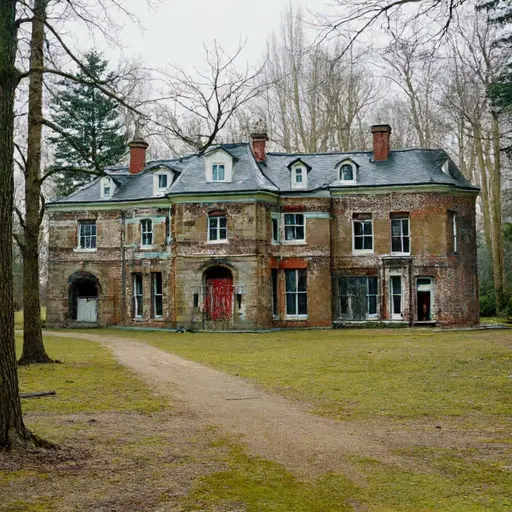
By the mid-1940s, no active ownership or functional use remained for the Halewick Strata Manor. The coastal district had fully transitioned to newer housing systems, leaving the structure outside any redevelopment cycle. No restoration followed, and the building was left intact but unused. Over time, its layered bands continued to weather uniformly under soft daylight, while the surrounding vegetation remained sparse and unobtrusive. The manor persists today as a quiet study in horizontal architectural repetition, abandoned yet structurally complete, holding its linear rhythm in permanent stillness.