The Alderhollow Terrace Manor Left Abandoned on the Hillside Slope
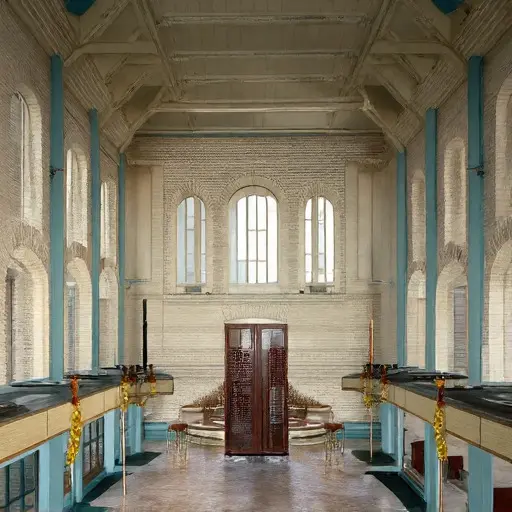
Alderhollow Terrace Manor was constructed in 1896 as a hillside adaptation of Victorian domestic architecture, designed specifically to integrate with the natural slope of a gently rising forest edge. Unlike traditional manor houses, the structure was conceived as a terraced architectural stack embedded directly into the land rather than placed upon it. Built from pale limestone, cream brick, and muted plaster finishes, it extended horizontally across the hillside in three stepped tiers, each responding to a different elevation of terrain.
The original owner, land surveyor and estate planner Charles Alderhollow, intended the manor to demonstrate how domestic architecture could follow geological form rather than impose upon it. The lowest tier contained garden-facing rooms, the middle tier housed primary living and administrative spaces, and the upper tier served as private quarters and storage areas. A narrow stair tower provided vertical circulation, while a glass corridor extended toward a detached conservatory at the edge of the estate.
For several decades, the manor functioned as both residence and experimental landscape dwelling. The surrounding grounds were carefully cultivated into layered gardens that echoed the building’s stepped structure. Residents moved through the house in a horizontal progression that followed the hillside rather than a central vertical axis, creating a unique domestic rhythm tied to terrain.
Early decline through structural complexity
By the 1920s, the terraced design that once defined the manor’s innovation began to create maintenance challenges. Water drainage across the stepped roofs required constant adjustment, and the long horizontal circulation paths made heating and upkeep increasingly expensive. As family resources diminished, sections of the upper and lower tiers were gradually closed off to reduce costs.
A house shaped by slope and separation under strain
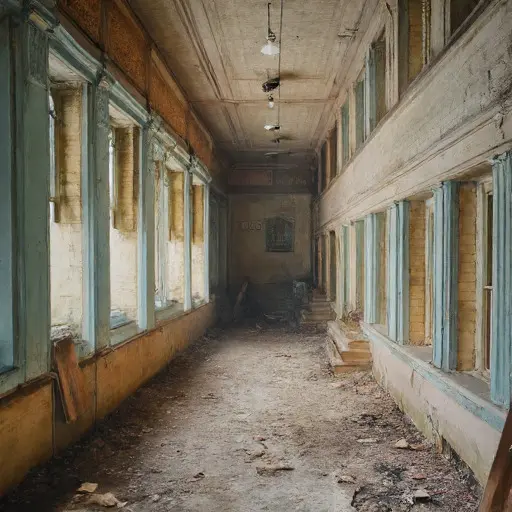
After the death of the estate’s founder in 1932, ownership of the property became divided among descendants living in different regions. Disagreements over whether to preserve, subdivide, or sell the terraced manor resulted in prolonged legal delays. During this period, maintenance slowed significantly, and portions of the glass corridor and conservatory connection began to deteriorate.
As financial support declined further during the late 1930s, entire sections of the manor were abandoned in sequence from top to bottom. The upper tier was first to be vacated due to heating inefficiencies, followed by portions of the middle tier as structural repairs became too costly. Vegetation began to encroach on exterior embankments, softening the boundaries between garden and hillside.
Final abandonment of Alderhollow Terrace Manor
By 1942, the last occupants had departed, leaving the manor intact but unused. No unified ownership resolution was reached, and the estate remained legally fragmented among distant heirs who never returned to the property. The glass corridor leading to the conservatory remained structurally standing but unused, gradually clouding and reflecting only the surrounding forest.
The quiet dissolution into the hillside
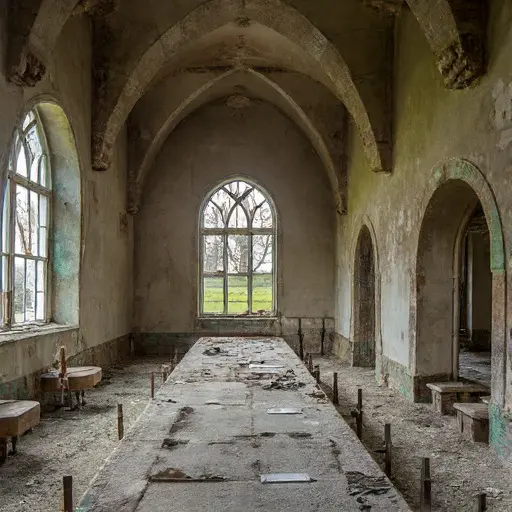
No restoration ever followed the abandonment of Alderhollow Terrace Manor. Legal ownership remained unresolved, and the estate gradually slipped out of administrative attention. The conservatory connection deteriorated slowly, and vegetation reclaimed the sloped gardens until the terraced geometry became softened by grass and wild growth. Today the manor still rests along the hillside in quiet structural completeness—no repairs completed, no return recorded, and no resolution reached—its stepped architecture continuing to echo the shape of the land long after its inhabitants departed.