The Halden Spanhouse Left Vacant After Stream Erosion
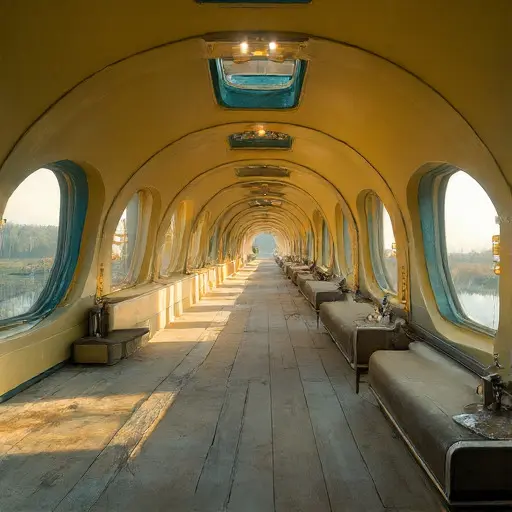
The Halden Spanhouse was constructed in 1908 as part of a rural infrastructure housing initiative designed to merge utility architecture with permanent habitation. Built directly across a shallow meadow stream, the structure was engineered as a continuous arched bridge that also served as a home for maintenance personnel overseeing water flow regulation and land drainage systems. Its soft-ochre exterior blended functional design with modest Victorian styling, while forest-blue trim marked structural intervals and access points along its length.
Unlike traditional estates, the house was defined less by rooms and more by segmented spans following the curve of its own engineered form.
The surrounding meadow was chosen for its steady water flow and low elevation variance, allowing the structure to function as both residence and monitoring station. Grass grew thick along the banks, and seasonal flooding patterns were observed from within the elevated span. For several decades, the Spanhouse operated as an essential but uncelebrated piece of rural infrastructure, housing engineers and their families in a shared environment shaped by water management and landscape control.
Gradual reduction of utility purpose
By the late 1920s, improvements in regional water control systems reduced the need for on-site monitoring structures like the Halden Spanhouse. Automated flow regulation and centralized infrastructure management rendered the estate increasingly obsolete. Staffing levels were gradually reduced, and entire segments of the structure were left unused as operational demands declined. Maintenance of the bridge exterior slowed, and weather exposure began to soften the once-precise engineering lines.
Slow transition from infrastructure to dwelling
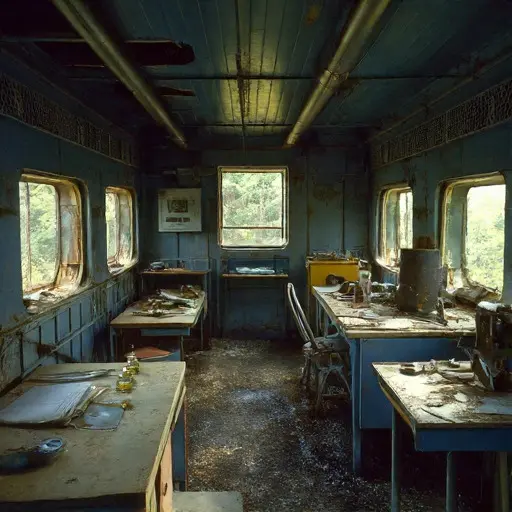
As operational use declined further, inhabited sections of the Spanhouse became isolated from one another. Entire spans were closed off due to reduced staffing and structural neglect. Without regular upkeep, moisture began affecting both wooden and metal components, and grass along the banks grew higher, encroaching toward the base of the structure. The bridge-like form remained stable, but its purpose as a coordinated infrastructure residence steadily dissolved.
Former residents gradually departed as work assignments ended or relocated to centralized facilities. What remained was a partially occupied structure still physically intact but functionally fragmented, its identity shifting from engineered system to abandoned dwelling.
Final abandonment of the span
By the early 1940s, the Halden Spanhouse had been fully vacated. No further maintenance was authorized, and administrative oversight was withdrawn. The structure remained physically stable due to its original engineering, but interior spaces were left open to weather, wind, and seasonal moisture. The stream continued flowing beneath the arches, carrying sediment and sound through the empty structure.
Final structural stillness
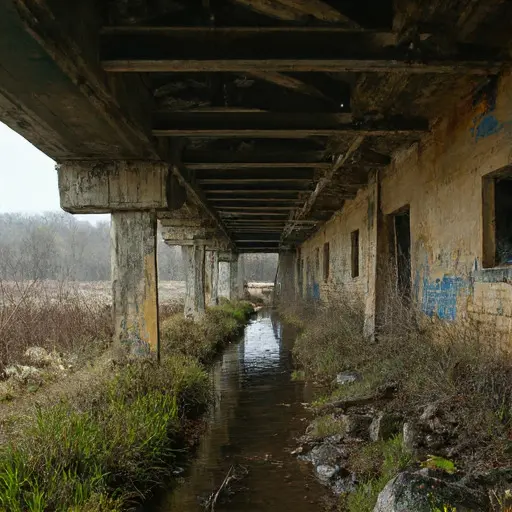
By the mid-1940s, no ownership or operational responsibility remained for the Halden Spanhouse. With infrastructure systems fully modernized elsewhere, the structure was left without purpose or caretaker. No restoration efforts followed, and no new function was assigned. The surrounding meadow gradually absorbed the edges of the site, with grass and streambank growth softening the engineered boundaries. The bridge-house remains standing today as a quiet remnant of forgotten utility, its arches spanning a flowing stream that continues beneath an empty, weathered shell of former purpose.