The Inverted Canopy Estate Suspended Above the Meadow Basin
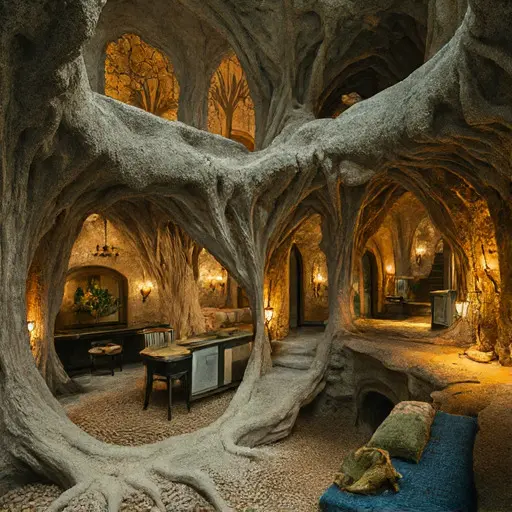
When first documented, the Inverted Canopy Estate was described as “a forest turned inside its own memory.” It was not constructed upward from the ground but instead organized around a central elevated stone core from which all branching chambers descended. Early inhabitants adapted to its reversed logic with surprising ease, treating downward movement as natural extension of domestic life.
Rooms were assigned not by floor, but by depth within the suspended canopy, creating a hierarchy defined by descent rather than elevation.
Early Instability in the Hanging Branch System
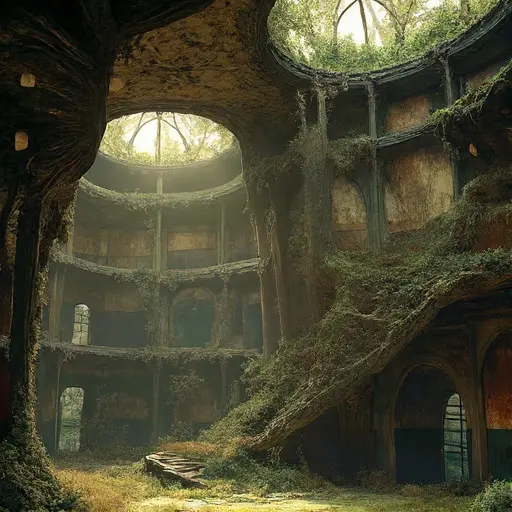
As time progressed, maintaining the inversion became increasingly difficult. The architecture depended on precise tension between branching elements and the central core, and even minor structural shifts created cascading imbalances throughout the system. Maintenance efforts focused on stabilizing vascular lines, but environmental pressure from wind and soil movement gradually altered the equilibrium.
Final Abandonment of the Reversed Forest Structure
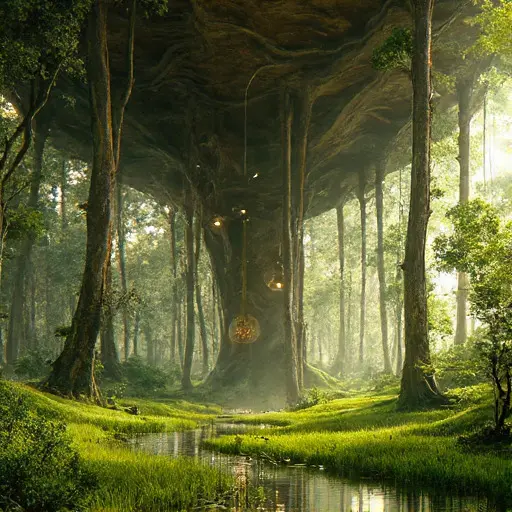
No official abandonment was recorded; instead, occupation simply diminished as maintenance became unsustainable. Residents left gradually, moving away from the lower hanging chambers first until only the central core remained intermittently used. Eventually, even that was left untouched, and the estate continued existing without human adjustment.
Today, the Inverted Canopy Estate persists as a reversed ecosystem frozen in architectural form. Its downward branches still hang above the meadow basin, its hollow chambers still channel wind upward, and its structure remains both functional and impossible. It stands as a memory of direction inverted—where forests once grew downward into imagination and never returned.