The Butterfly Manor Left Empty After the Family Dispersed
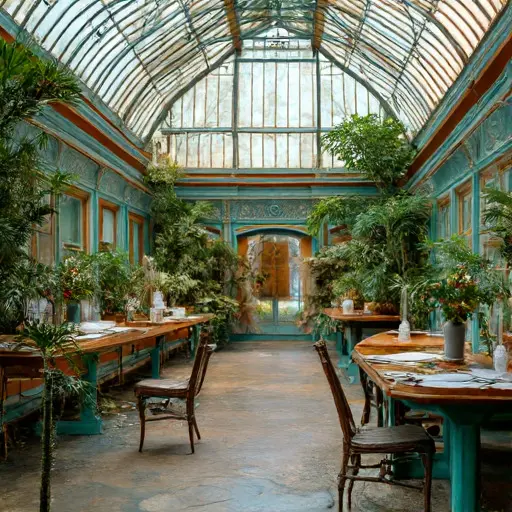
The Butterfly Manor was completed in 1911 by the Hartwell family on a lakeside meadow overlooking a calm stretch of water bordered by reeds and flowering grasslands. Designed in the shape of a colossal butterfly, the unusual residence reflected the family’s fascination with natural forms rather than wealth or grandeur. Its symmetrical wings housed bedrooms, parlors, and studies, while the central conservatory served as both gathering place and administrative center.
Thomas Hartwell, his wife Eleanor, and their four children settled into the estate shortly after construction. The family earned its living through a combination of agricultural leases, lake transport contracts, and seasonal horticultural sales. For many years, records indicate the estate remained financially stable. Household ledgers show consistent maintenance expenditures, regular wages paid to local workers, and steady improvements to gardens and grounds surrounding the house.
The first signs of decline appeared after the end of the First World War. Transportation patterns shifted, reducing demand for the family’s lake-related business. Agricultural income became less predictable, and several unfavorable seasons reduced profits. Although the household remained functional, maintenance spending gradually decreased.
Over the following decade, small signs of neglect emerged throughout the estate. Repairs were postponed. Decorative elements damaged by weather remained unrestored. The ruined lakeside pergola, once used for family gatherings and celebrations, was left unrepaired after storm damage in the late 1920s.
The Gradual Retreat
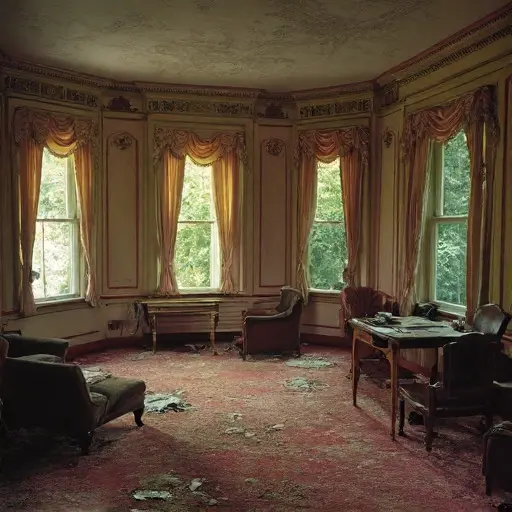
By 1934, the Hartwell children had largely departed. Two relocated to cities seeking employment, while another married and settled elsewhere. The youngest left shortly before the outbreak of the Second World War. The mansion, originally designed for a large family, became increasingly difficult for Thomas and Eleanor to maintain alone.
To reduce expenses, entire sections of the western wing were closed. Heating was limited to a handful of rooms. Maintenance crews were dismissed. Financial records reveal growing tax obligations and unpaid service accounts. Several rooms remained furnished but unused for years.
As the decade progressed, deferred maintenance accelerated deterioration. Roof leaks developed in less frequently occupied sections. Moisture damaged ceilings and interior woodwork. Utility interruptions became increasingly common. The family’s remaining income proved insufficient to support both daily living expenses and preservation of the unusual structure.
The Final Years
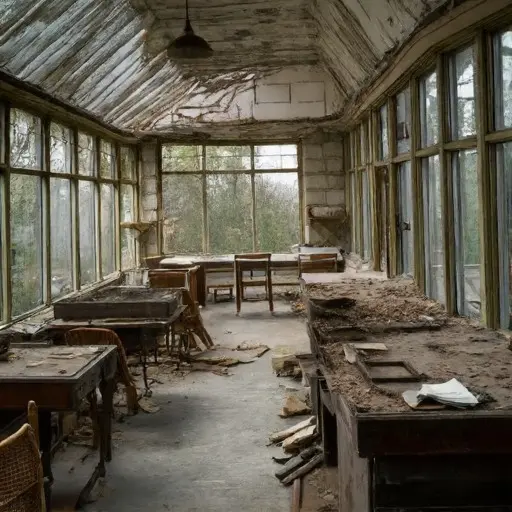
Thomas Hartwell died in 1943 after a prolonged illness. Eleanor remained briefly but lacked the financial means to continue operating the estate. She departed in 1945 to live with relatives, taking only personal possessions and essential documents.
The property entered a prolonged period of legal uncertainty. Outstanding debts, unpaid taxes, and fragmented inheritance claims prevented a straightforward transfer of ownership. No heir possessed both the resources and desire to restore the increasingly deteriorated mansion. As years passed, legal proceedings stalled and the house remained vacant.
The Butterfly Manor never regained occupants. No restoration project was undertaken, and no family member returned to reclaim the property. The meadow gradually expanded into former garden areas, while lake winds moved freely through hollow windows and abandoned rooms. Today the butterfly-shaped mansion still stands beside the water, empty and deteriorating, its ownership unresolved and its future uncertain as time continues its slow work of erasure.