The Valemont Mansion Left Vacant After Vineyard Decline
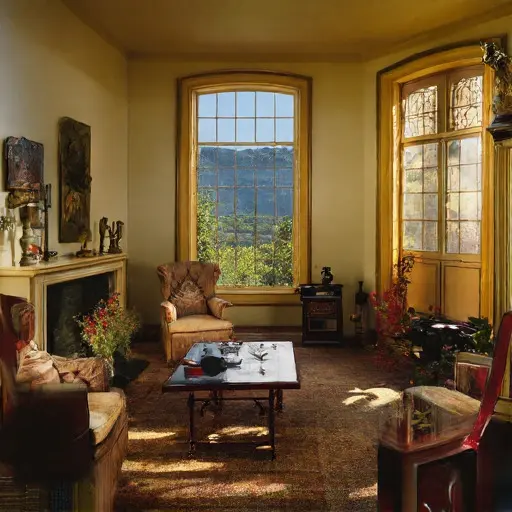
The Valemont Mansion was established in 1905 by the Rousselle family, who managed hillside vineyard operations across the upper terraces of the region. Though designed with Victorian influences, the house was modest in scale and purpose-built for agricultural oversight rather than display. Its citrine-cerulean exterior and plum-ivory trim were chosen to harmonize with the shifting colors of the vineyard slope, blending the residence into the cultivated landscape rather than elevating it above it.
Positioned along the upper ridge, the mansion overlooked carefully structured grape rows that curved with the natural contour of the hill.
Inside, life was guided by seasonal agricultural cycles. Henri Rousselle oversaw vineyard yields, irrigation schedules, and distribution records, while his wife Camille maintained household operations and coordinated correspondence with regional wine distributors. The home functioned as both residence and agricultural office, with records of harvests stored alongside domestic inventories. In its early decades, the mansion reflected a stable integration of labor, land, and family routine.
Early financial strain
By the late 1920s, vineyard profitability began to decline due to shifting trade networks and increasing competition from larger wine-producing estates. Revenue fluctuations led to reduced staffing and deferred maintenance across both the vineyard and the mansion. Repairs to irrigation channels were delayed, and sections of the hillside terraces began to show signs of neglect as wild grass gradually replaced carefully maintained rows. Within the house, plum-ivory trim dulled under dust accumulation, and unused rooms were closed off to conserve heating during colder seasons.
Gradual decline in the household
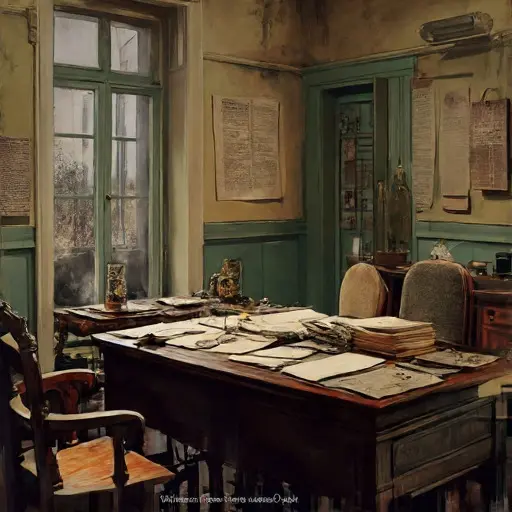
As financial strain increased, vineyard operations were scaled back significantly. Entire terrace sections were left untended, allowing wild grass to grow between stone-walled rows of aging vines. Irrigation channels fell into partial disrepair, and the rhythmic structure of cultivation began to dissolve into uneven, natural reclamation. Inside the mansion, correspondence from distributors arrived less frequently, and records of harvest output became irregular.
Family presence also diminished over time. Younger members relocated to urban centers seeking stable employment outside agriculture, and their visits became increasingly rare until they ceased altogether. The mansion gradually transitioned from an active agricultural hub to a partially maintained residence sustained by memory and inertia.
Final abandonment phase
By the early 1940s, the Valemont Mansion was no longer fully inhabited. Utility services were reduced and eventually disconnected following prolonged financial arrears. Without upkeep, vineyard terraces became increasingly overgrown, with creeping vegetation blending cultivated rows into wild hillside growth. The structure remained intact, but its role within the agricultural system had effectively ended.
Final deterioration
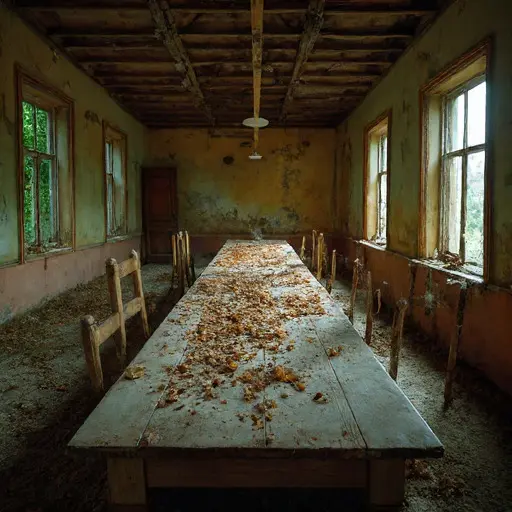
By the mid-1940s, no formal ownership or maintenance of the Valemont Mansion remained. Legal notices regarding the estate were repeatedly returned undelivered, and no heirs reestablished control of the property. The mansion persisted on the vineyard terrace in a state of quiet abandonment, slowly weathering as cultivated land fully merged with natural hillside growth. No restoration or reoccupation followed, and the structure remained an empty remnant of a once-functioning agricultural estate absorbed back into the landscape.