The Harringstone Quarry Manor Left Vacant After Works Closure
→ 
The Harringstone Quarry Manor was completed in 1896, carved directly into the vertical face of Stonefall Quarry’s eastern wall. Built for the quarry superintendent’s family, it was designed as both residence and observation point over the extraction works below. For three decades, the house functioned as an administrative anchor—until the quarry abruptly ceased operations in 1927 after a regional limestone contract collapsed.
What followed was not immediate abandonment, but a slow withdrawal of maintenance, labor, and purpose.
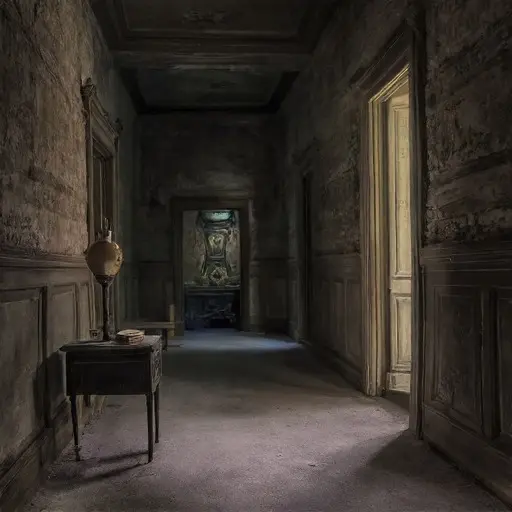
By the early 1930s, the manor’s embedded geometry—once its greatest strength—became a liability. Water began seeping through the exposed rock seams behind the structure. Without quarry engineers to manage drainage, dampness spread through interior walls. Rooms closest to the quarry face were sealed off one by one, their doors locked and never reopened. The family that remained shifted inward, compressing their lives into fewer and fewer spaces.
SUBHEADING: First Years of Decline and Sealing of Rooms
→ 
Financial records from 1934 show the Harringstone estate attempting to lease portions of the quarry wall for renewed extraction, but negotiations failed repeatedly due to unstable rock conditions around the embedded residence. As a result, income collapsed entirely. Servants left first, followed by extended family members who had once overseen administrative operations.
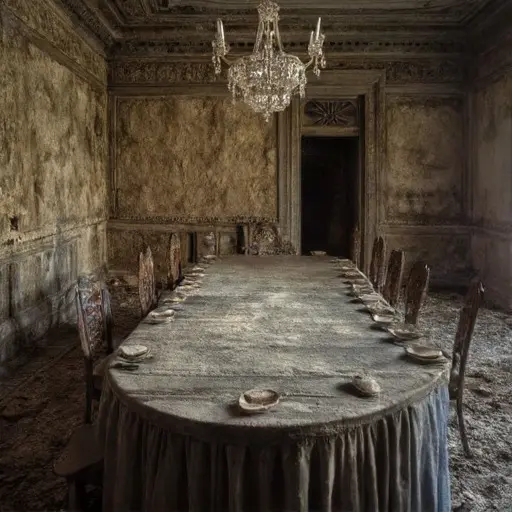
By 1938, only two occupants remained: the widowed matriarch and her youngest son. They confined themselves to the upper carved chambers, abandoning the lower galleries entirely. Furniture was covered in cloths, corridors were blocked with timber boards, and iron railings along recessed quarry balconies were left to rust in place. The house did not fall into ruin all at once—it was systematically withdrawn from.
SUBHEADING: Final Occupation and Structural Silence
→ 
The final recorded use of the manor ends in 1942. After that, correspondence ceases entirely. Local records suggest the last remaining resident may have left during wartime relocation programs, though no formal sale or transfer of ownership was ever completed. The quarry itself remained inactive, leaving the house suspended in administrative and physical limbo.
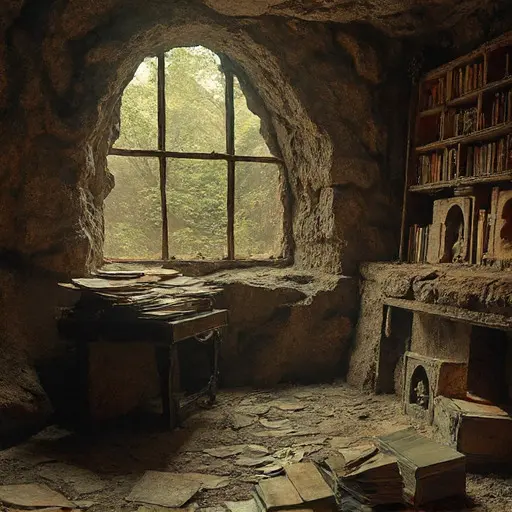
In the decades that followed, the Harringstone Quarry Manor persisted as a sealed architectural incision in the rock face. No restoration efforts were ever approved, and no demolition was attempted due to the instability of the surrounding cliff wall. Water continued to move through unseen channels behind the structure, subtly reshaping interior surfaces. Paint faded into mineral-stained parchment tones. Iron fittings oxidized into deep rusted browns.
The manor remains embedded in the quarry wall today, unoccupied and unresolved. No heirs returned, no redevelopment occurred, and no preservation order was ever finalized. It stands as a fully intact Victorian structure slowly being reclaimed by the stone that originally held it in place, its rooms preserved only in form, not in function, and its abandonment complete without conclusion.