The Stone Arch Manor Left Empty After Inheritance Dispute
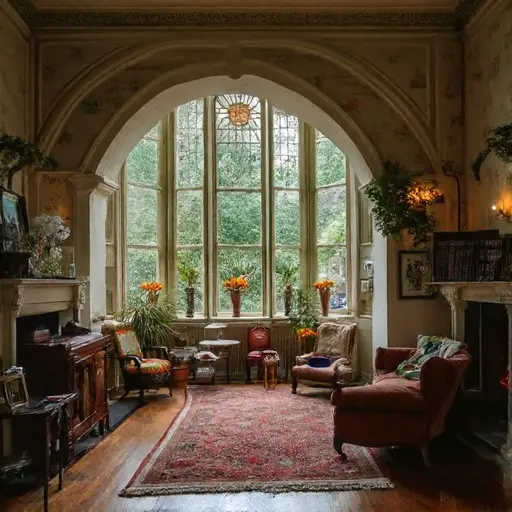
Stone Arch Manor was completed in 1908 in a secluded meadow where an ancient limestone arch stood beside a narrow stream. Rather than building around the formation, local merchant Thomas Harrow commissioned a residence that incorporated the arch into its very center. Two curved wings wrapped around the stone opening, while enclosed corridors and balconies connected the house across the natural passage.
Thomas lived there with his wife Eleanor and their children, Samuel and Beatrice. The family became known locally for maintaining the extensive circular garden surrounding the house. Flowering plants, climbing roses, and carefully arranged pathways transformed the property into one of the most distinctive homes in the district.
The stone arch itself became the symbolic heart of family life. Seasonal gatherings, afternoon teas, and celebrations often took place beneath its towering limestone span. The stream flowing beneath the arch added a sense of tranquility that visitors frequently remarked upon.
For nearly twenty years, the house remained prosperous and carefully maintained. Ledgers from the period show steady income from Thomas’s agricultural supply business, allowing constant upkeep of both the residence and its gardens.
FINANCIAL PRESSURES AND FAMILY DIVISION
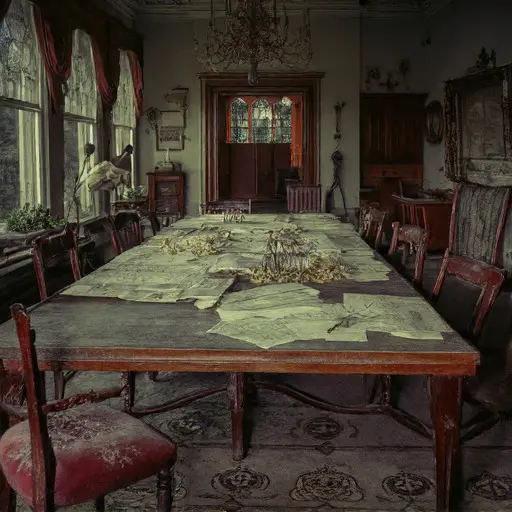
The first difficulties emerged after Thomas Harrow’s death in 1929. Ownership of the manor became divided between Samuel and Beatrice, who disagreed over the future of the estate. Samuel wished to sell portions of the surrounding land to offset debts, while Beatrice argued for preserving the property intact.
At the same time, agricultural markets weakened throughout the region. Revenue from leased farmland declined sharply, reducing the estate’s ability to cover taxes, maintenance, and household expenses.
As legal disagreements continued, routine repairs were postponed. Roof sections received only temporary fixes. Several guest rooms were closed to reduce heating costs. Garden staff were dismissed one by one, leaving only minimal maintenance of the grounds.
Correspondence discovered decades later revealed increasing concern over unpaid invoices and mounting legal fees. By 1935, entire sections of the house stood unused for months at a time. The flower gardens remained beautiful, but they increasingly relied on natural growth rather than active cultivation.
When Samuel relocated to the city in 1937, responsibility for the property fell largely to Beatrice. Maintaining the unusual house alone proved difficult. Areas once filled with family activity became quiet and seldom visited.
THE HOUSE THAT NATURE KEPT
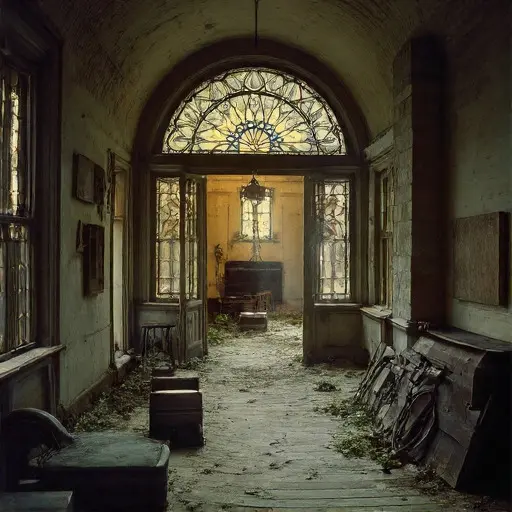
Beatrice Harrow died in 1946 without resolving the ownership dispute. Several distant heirs possessed partial claims to the estate, but none were willing to assume responsibility for its debts and ongoing maintenance.
The legal proceedings dragged on for years. During that period, the house remained empty. Unpaid taxes accumulated, repairs ceased entirely, and the gardens gradually shifted from formal cultivation to natural overgrowth.
Unlike many abandoned properties, Stone Arch Manor did not suffer sudden destruction. Its decline was quiet and gradual. Roses continued blooming along the walls. Wisteria spread across trellises. The stream flowed beneath the arch exactly as it had for centuries.
By the end of the 1940s, the manor was officially vacant. No restoration followed, and no heir returned to reclaim it. Today the house remains abandoned around the ancient stone arch, standing silent amid flowers, flowing water, and unresolved ownership, slowly deteriorating while nature preserves the memory of those who once lived there.