The Rivermarch Mill Cottage Left Vacant After Floodway Closure
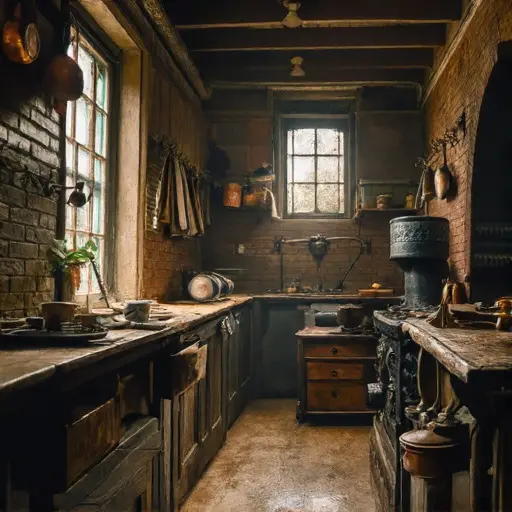
The Rivermarch Mill Cottage was constructed in 1901 along a quiet bend of a rural river, designed originally for a mill overseer and his family. It was occupied by the Calder family—Henry Calder, his wife Agnes, and their two sons, William and Peter. Henry worked in grain processing at a nearby watermill complex, and the house’s unusual integration with an iron bridge allowed direct access across the stream to the mill structures on the opposite bank.
The cottage was built as a hybrid of residence and infrastructure, its iron bridge forming both passageway and foundation extension over water. For its early decades, it functioned efficiently within the local milling economy, with the river providing both power and transportation routes for goods.
Life in the house followed the rhythm of water flow and mill activity. The structure’s linear design made it narrow but practical, with each room aligned along the river’s edge, allowing constant awareness of water levels and seasonal changes.
EARLY SIGNS OF INDUSTRIAL DECLINE AND WATERWAY CHANGE
By 1928, the regional milling industry had begun to consolidate, redirecting operations toward larger industrial centers with more modern infrastructure. The small watermill connected to Rivermarch Cottage was gradually decommissioned, reducing Henry Calder’s employment stability.
As the mill’s activity declined, so too did the importance of the riverside infrastructure that supported it. Water levels became less regulated due to upstream modifications, occasionally exposing structural supports beneath the house’s iron bridge. Minor flooding events alternated with unusually low water periods, both of which began to stress the building’s foundations.
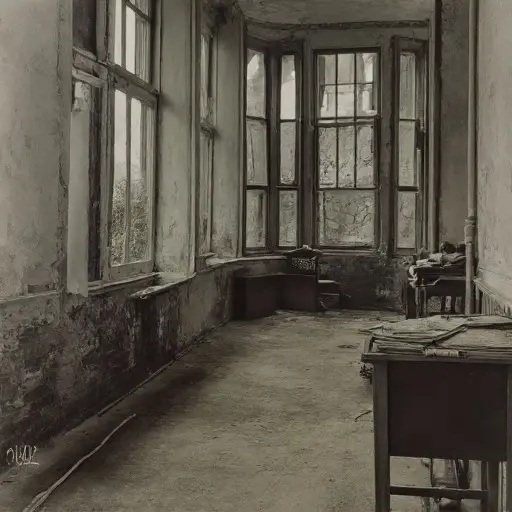
Inside the cottage, maintenance became increasingly irregular. Agnes Calder attempted to preserve domestic order, but dampness from the river accelerated wear on wooden surfaces. Rooms closest to the water were gradually abandoned during colder months due to persistent humidity and drafts.
By the early 1930s, correspondence from mill administrators confirmed the permanent closure of operations. The bridge, once a vital passage, now led to unused industrial grounds.
FINAL OCCUPATION AND SLOW ABANDONMENT
By the early 1940s, the Calder family had fully left Rivermarch Cottage. Henry Calder passed away shortly after the mill’s closure, and Agnes relocated to relatives inland. Their sons had already moved to industrial cities in search of employment, never returning to the riverside structure.
With the mill decommissioned and river traffic diminished, the house lost its functional purpose entirely. The integrated iron bridge, once essential for crossing between home and workplace, now led only to abandoned industrial land reclaimed slowly by vegetation and erosion.
No redevelopment proposals were pursued, as the structure’s unusual position over the water made modification impractical. Gradually, municipal oversight ceased, and the cottage slipped into administrative neglect.
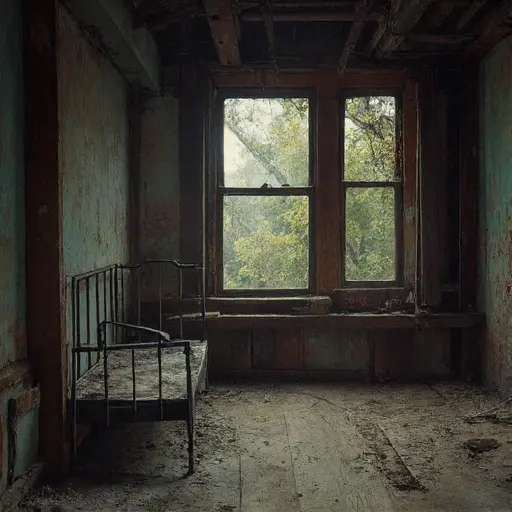
By 1948, the Rivermarch Mill Cottage was officially recorded as vacant. The building was never restored or repurposed. It remains suspended above the slow river, its rooms empty, its bridge rusting quietly, and its structure continuing a gradual decline shaped by water, time, and abandonment without return.