The Wrenbridge Viaduct House Left Vacant After Debt Collapse
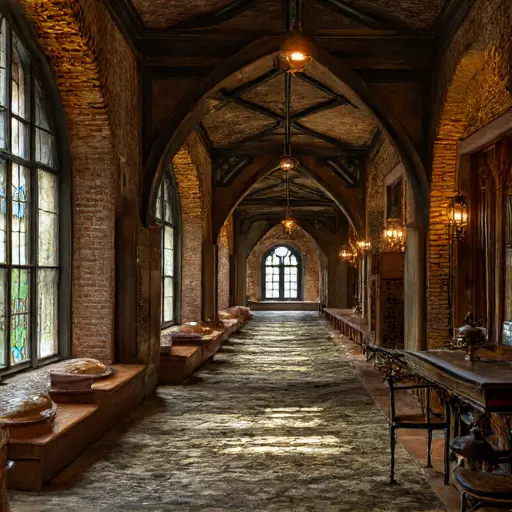
The Wrenbridge Viaduct House was completed in 1904 by engineer-architect Samuel Wrenbridge, who envisioned a residence that followed the natural curve of a shallow English valley rather than resisting it. By 1908, the structure was sold to the Halford family: Thomas Halford, a civil surveyor, his wife Miriam, and their daughter Eleanor. They moved in during a period of regional infrastructure expansion, believing the unusual home symbolized progress and permanence.
For its first two decades, the house functioned as intended—a continuous interior street of domestic life. Each arched segment contained a different purpose: dining spaces widened into communal rooms, narrow passages became reading alcoves, and stairwells rose like vertical pauses between sections of the valley. Though unusual, the structure was meticulously maintained, its stone cleaned annually and its iron supports regularly treated against rust.
But the very design that made it remarkable also made it expensive to sustain. Heating such an elongated structure required constant fuel, and repairs multiplied with every winter flood that swelled the stream below. Still, the Halford family remained committed, bound as much to the house as to its symbolic identity.
EARLY SIGNS OF STRUCTURAL AND FINANCIAL STRAIN
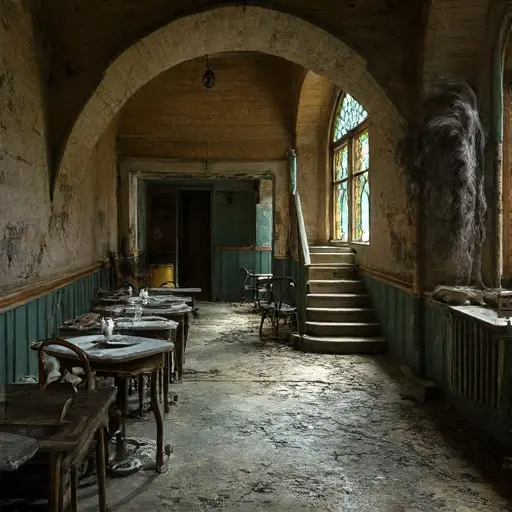
By 1931, the Wrenbridge Viaduct House was no longer financially sustainable under the Halford family’s reduced income following the post-war economic downturn. Thomas Halford had retired earlier than expected due to declining health, and maintenance costs exceeded what the family’s investments could support. The elongated structure, once a marvel of design, became a liability measured in leaking roofs and failing mortar joints.
Rooms began to close off incrementally. Entire arches were left unheated during winter, their doors sealed with temporary wooden panels to reduce fuel consumption. Eleanor Halford, now an adult, attempted to document expenses in the central corridor, transforming part of the interior street into an accounting space filled with ledgers and correspondence from creditors.
The stream below the house, once a picturesque feature, began to erode sections of the supporting stonework. Small structural shifts were noticed but not immediately repaired. The house still functioned, but its rhythm had changed—less like a flowing residence and more like a segmented structure slowly losing cohesion.
FINAL OCCUPATION AND COMPLETE ABANDONMENT
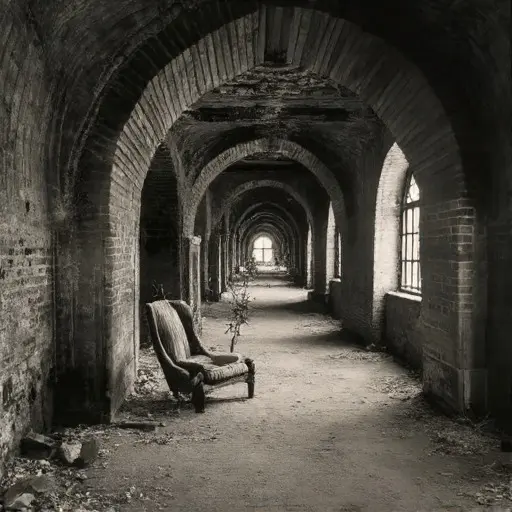
The final years of occupancy came during the early 1940s, when Eleanor Halford briefly returned after working in London during the wartime mobilization. She found portions of the house already abandoned, with entire arches unreachable due to structural settling along the valley supports. The family did not have the resources to restore it, and wartime rationing made large-scale repair impossible.
Within a few years, the Halford family dispersed entirely. Thomas had passed away, Miriam relocated to relatives in another county, and Eleanor left for employment tied to wartime administration. No legal effort was made to retain the property, as its maintenance exceeded any practical use.
By 1946, the Wrenbridge Viaduct House was formally recorded as uninhabited. The structure was never restored or repurposed. The long interior street, once alive with domestic movement, remained frozen in progressive decay—its arches slowly overtaken by damp, vegetation, and structural fatigue.
The house still stands across the valley, its interior corridors empty and uninterrupted, its ownership unresolved, and its architecture left to age without intervention or return.“`