The House at Willow Promenade
Abandoned Victorian house, soft buttercream-painted brickwork faded by decades of sunlight, rich cranberry-red trim worn to dusty rose in places, and elegant black wrought iron railings wrapped with flowering vines. A compact Victorian family home sits beside a forgotten lakeside promenade in a small town that no longer exists, where the shoreline curves gently around a glass-still freshwater lake surrounded by mature trees and rolling green hills. Unlike isolated frontier homes or industrial structures, this house was built for comfort, beauty, and everyday life—a place where generations gathered on summer evenings to watch the lake shimmer beneath the setting sun.
The architecture is unmistakably Victorian but intimate in scale. The home rises only two stories, with a steep multi-gabled roof clad in weathered slate tiles that range naturally from charcoal to faded blue-gray.
A rounded corner turret with tall stained-glass windows anchors one side of the house, while a wide wraparound veranda stretches across the front façade, supported by ornate spindlework columns and decorative wooden brackets handcrafted with remarkable detail. Every proportion feels human and welcoming rather than grand. It is the sort of house that once greeted visitors with warm lamplight in the windows and the scent of flowers drifting from the garden after rain.
The façade is fully exterior and emotionally resonant. Buttercream brick walls retain their warmth despite abandonment, while cranberry-red trim frames every window, porch post, and roofline with faded elegance. Delicate stained-glass panels remain in several upper windows, casting faint fragments of ruby, amber, emerald, and sapphire reflections onto surrounding surfaces whenever sunlight breaks through the clouds. The wrought iron railings are not heavily rusted but softened by time, partially hidden beneath climbing roses and flowering ivy that seem determined to keep decorating the home long after its owners disappeared.
The grounds are extraordinarily beautiful in a way that feels authentic and heartbreaking. The grass surrounding the property is lush, vibrant emerald-green, thick from years without mowing but still healthy and inviting. Flower gardens originally planted by the home’s owners continue to bloom without human care. Massive hydrangea bushes in shades of pale blue and lavender surround the veranda. Climbing roses cover trellises in soft pink, ivory, and crimson blossoms. Wild daisies scatter naturally through the lawn, blending seamlessly with the original landscaping. Every flowerbed appears less abandoned than gently inherited by nature itself.
A stone pathway winds from the front porch to the lakeshore. Moss has softened its edges, but every curve remains visible, suggesting countless walks taken between house and water over the years. Along the path stand several antique cast-iron lamp posts, now unlit, wrapped in flowering vines and surrounded by clusters of foxgloves and lavender. Small puddles from a recent rainstorm reflect fragments of flowers, sky, and the colorful house, creating tiny mirrors scattered across the landscape.
Near the water rests a small Victorian boathouse painted in the same faded buttercream and cranberry colors as the main residence. Its doors hang slightly open, revealing the faint outline of an abandoned wooden rowboat inside. A weathered dock extends into the lake, its planks silvered by age but structurally intact. Water lilies float peacefully nearby, their blossoms reflecting against the calm surface. The lake itself is almost perfectly still, disturbed only occasionally by a ripple from a fish beneath the surface or a breeze moving across the water.
A circular fountain occupies the center of the front garden. Though no water flows, rain has filled the basin, creating a mirror-like reflection of clouds, flowers, and the colorful house. Around it stand marble statues of children playing, their details softened by moss and lichen but still full of character and life. Fallen magnolia petals drift across the water’s surface like forgotten notes from another time.
The mature trees surrounding the property are magnificent. Flowering magnolias bloom in pale pink and white. Old maples provide broad canopies of green leaves that cast moving shadows across the veranda. A massive willow tree near the shoreline drapes its branches toward the water, creating a quiet place where someone once placed a wooden swing that still hangs beneath the leaves. The ropes have weathered, but they remain intact, swaying gently whenever the breeze arrives from across the lake.
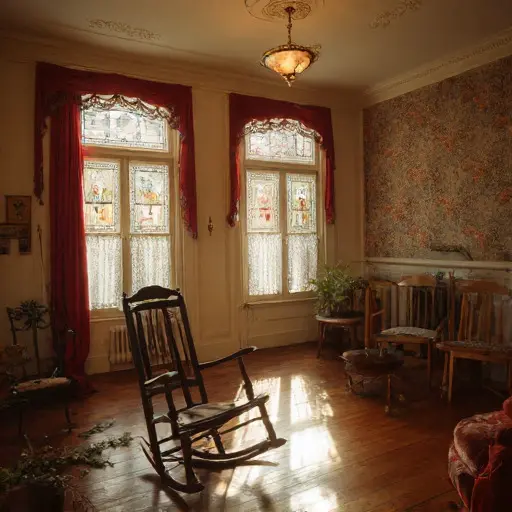
Inside the house, traces of ordinary life remain preserved with remarkable tenderness. Dust lies lightly upon surfaces, yet nothing appears disturbed. Family photographs still occupy mantelpieces. Books remain arranged neatly on shelves. A piano stands quietly beside a bay window overlooking the lake, as though waiting for someone to finish a song interrupted decades ago.
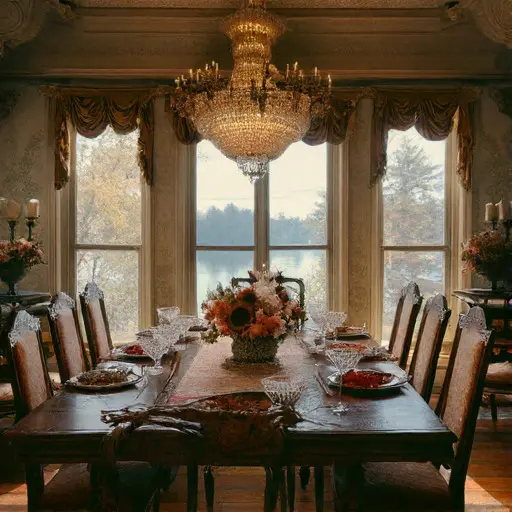
Along the veranda, several wicker chairs remain positioned toward the water exactly as they were left. One small side table still holds a forgotten teacup stained by time. Nearby, overflowing flower boxes spill lavender, daisies, and climbing roses across the railings. The arrangement feels less like abandonment and more like a paused afternoon that somehow lasted for generations.
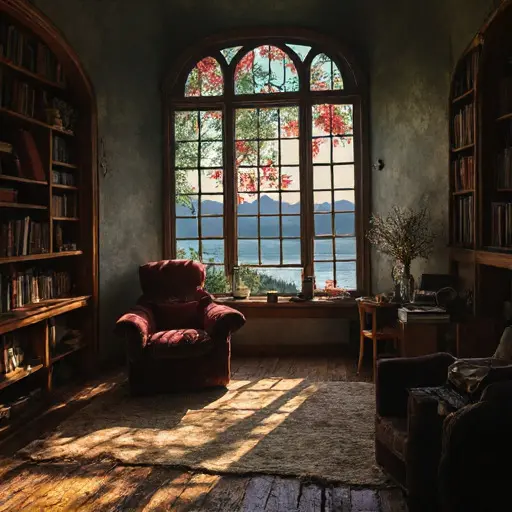
The abandonment feels profoundly emotional because the house remains so beautiful. Nothing suggests violence, disaster, or ruin. Instead, every detail—from the flower-filled gardens to the open veranda chairs and lakeside path—suggests decades of birthdays, family dinners, quiet mornings, children’s laughter, and ordinary happiness. Nature has not consumed the property; it has preserved it. The flowers continue blooming. The lake continues reflecting the sky. The willow still shelters its swing.
The entire scene reads like an ultra-realistic architectural photograph captured on a high-end full-frame DSLR during a calm summer afternoon after light rain. Rich natural colors, authentic materials, realistic weathering, subtle reflections, and emotionally powerful environmental storytelling create the impression of a real place that once held countless memories and was somehow left behind. Viewers cannot help but wonder who lived here, who last walked the lakeside path, and why such a beautiful home was ever abandoned at all.