The Florists Cottage Left Empty Above the Sea

The seaside florists cottage was completed in 1906 on a low coastal hill overlooking a broad stretch of ocean. It was built by Arthur and Eleanor Finch, a husband-and-wife team who operated one of the region’s most respected flower-growing businesses. Arthur managed cultivation while Eleanor designed floral arrangements for hotels, churches, and seasonal celebrations throughout the coast.
Although modest in size, the cottage was designed with extraordinary care. Every room was oriented toward either the sea or the gardens that flowed down the hillside in terraces of color. The rounded turret provided panoramic views of the coastline, while the projecting sunroom served as both a family gathering space and a greenhouse for delicate plants.
The property quickly became known for its extensive gardens. Roses, hydrangeas, foxgloves, lavender, and dozens of seasonal varieties were cultivated across carefully planned terraces. Visitors often traveled considerable distances to purchase plants, attend garden events, or simply admire the remarkable display.
For more than twenty years the business prospered. Family photographs later recovered from the house showed birthdays celebrated beneath flower-covered pergolas, children playing near the fountain, and summer evenings spent watching the sunset from the veranda overlooking the sea.
The First Signs of Decline
The first difficulties emerged during the late 1920s. Several years of severe coastal storms damaged portions of the lower terraces and destroyed large sections of commercial flower production. Repairs proved costly, and profits declined significantly.
At the same time, transportation routes changed. New suppliers located closer to growing urban centers began providing flowers at lower prices. The Finch family found it increasingly difficult to compete with larger operations.
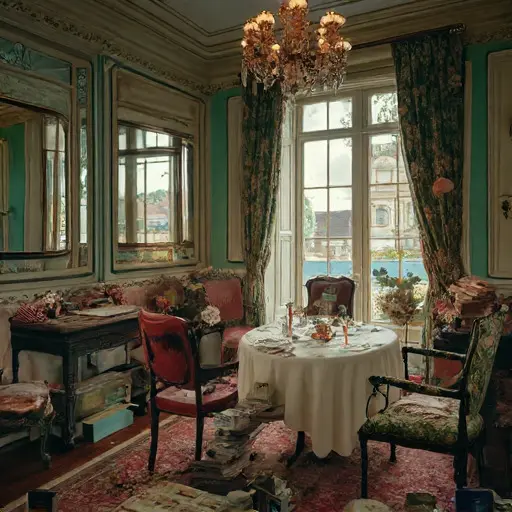
Business ledgers from the period reveal steadily declining revenue. Orders became less frequent, while maintenance expenses increased. Stone retaining walls required repairs after heavy rainfall. Glass panels in the conservatory suffered storm damage. Roof work was repeatedly postponed to preserve cash reserves.
By 1932 unpaid invoices had begun accumulating. The family reduced staff and gradually closed portions of the property that could no longer be maintained. Several guest rooms were left unused. Decorative painting projects were abandoned midway through completion.
When Arthur died unexpectedly in 1934, the burden of maintaining both the business and the house fell entirely upon Eleanor. Though she continued operating the gardens for several years, production decreased substantially. Former flower beds remained beautiful but increasingly unmanaged. Nature began reshaping the landscape according to its own rhythm.
The Final Departure
During the early 1940s Eleanor’s health deteriorated, making it impossible for her to manage the extensive grounds alone. One daughter had relocated inland after marriage. A son entered military service and later settled far from the coast. None were able to assume responsibility for the property.
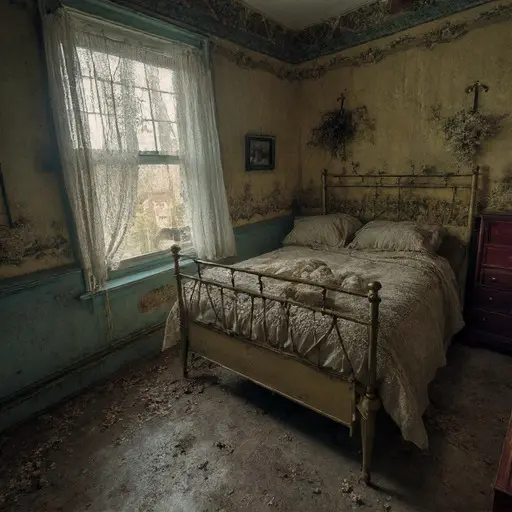
In 1946 Eleanor left the cottage to live with relatives. Letters written during her final years suggested she hoped to return once circumstances improved. That return never occurred.
Following her departure, ownership became fragmented among heirs with differing priorities. Legal questions regarding inheritance remained unresolved for years. Property taxes went unpaid intermittently, and no coordinated maintenance effort was organized.
Yet unlike many abandoned homes, the cottage never suffered dramatic ruin. The gardens simply continued growing. Roses climbed structures once maintained by careful hands. Wildflowers expanded into formal beds. The fountain collected rainwater. Vines embraced the conservatory and pergolas. Flower boxes remained full through self-seeding plants that flourished without assistance.
Today the florists cottage still stands above the sea. Its turquoise-opal siding, raspberry-cream trim, and champagne-brass ornamentation remain visible beneath decades of gentle weathering. The terraces continue blooming each season, preserving traces of the family that once shaped them. No restoration has occurred, no heirs have returned to reclaim the property, and its ownership remains unresolved. The cottage endures in quiet abandonment above the ocean, beautiful, empty, and slowly fading into the garden landscape it once created.