The Lakeside Butterfly-Roof Cottage Left in Quiet Reflection
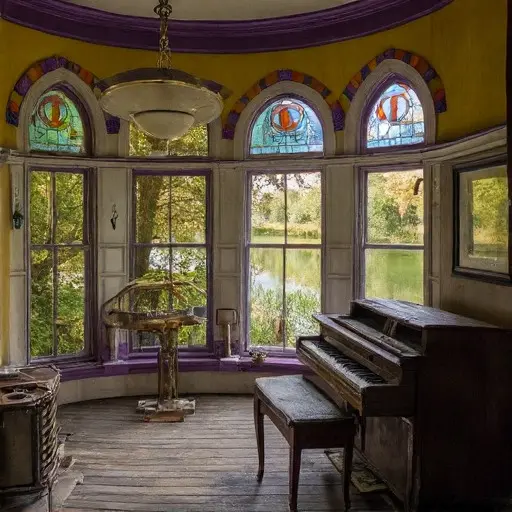
The lakeside cottage on Willowmere Peninsula was completed in 1912 as a seasonal residence for the Harrowfield family, known locally for their patronage of music and landscape painting. Positioned on a narrow spit of land extending into a sheltered freshwater lake, the house was designed to emphasize harmony between domestic architecture and natural surroundings. Its butterfly-shaped roof, with twin steep gables angling outward from a central ridge, became a recognizable feature of the shoreline, visible from both water and distant walking paths.
The structure was modest in scale but highly refined in detail. A broad veranda wrapped the front façade, offering uninterrupted views of the lake, while a rounded music-room bay served as the emotional and acoustic center of the home. The family spent summers here, hosting small gatherings of musicians and artists who would perform in the music room or paint along the shoreline. Garden paths were carefully arranged to frame views of the water, with wildflowers planted in dense, colorful clusters that softened the transition between architecture and landscape.
Gradual Withdrawal and Seasonal Abandonment
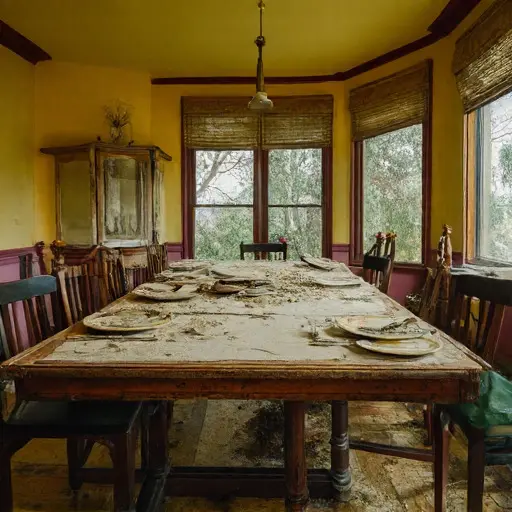
By the late 1930s, the Harrowfield family began to reduce their seasonal visits due to changing financial circumstances and shifting artistic patronage networks. The cottage, once occupied throughout much of the warmer months, became increasingly intermittent in use. Maintenance schedules were delayed, and minor repairs to roofing and exterior woodwork were postponed as priorities shifted toward urban residences.
After the death of the family’s matriarch in 1941, the property saw only occasional occupancy. Without regular care, the gardens began to evolve naturally. Willow branches extended further over pathways, and wildflowers began overtaking carefully arranged beds. The swimming pond along the garden edge accumulated fallen leaves and aquatic growth, while the once-crisp geometry of the landscaping softened into organic irregularity.
Weather exposure from the lakeside environment accelerated material aging. Wooden railings along the veranda showed early signs of warping, stained-glass panels developed minor fractures, and roof crests gradually lost their sharp definition under repeated seasonal cycles. Despite these changes, the house remained structurally sound, retaining its identity as a carefully crafted Victorian retreat.
Final Vacancy and Lakeside Quiet
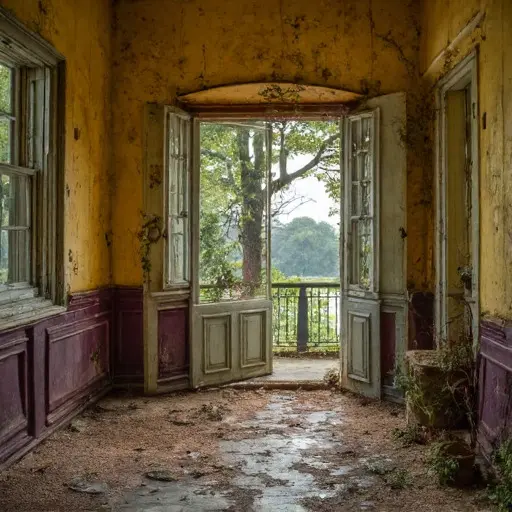
By 1948 the lakeside cottage was officially recorded as unoccupied following estate consolidation proceedings. No permanent return to the property occurred, and ownership was gradually absorbed into extended family trusts that never reactivated residential use. Seasonal maintenance ceased entirely, leaving the structure exposed to uninterrupted environmental aging.
In the decades that followed, the cottage became part of the landscape itself. Garden paths dissolved into meadow growth, and the shoreline softened as reeds and grasses expanded along the peninsula. The butterfly roof and veranda remain intact, though weathered by time and lake air. Inside, furnishings remain in place, slowly fading under dust and filtered light.
Today the lakeside cottage still stands on its peninsula, surrounded by quiet water and overgrown gardens. No restoration has been undertaken, no descendants have returned, and the property remains in a state of enduring abandonment. The house continues to reflect the lake in still conditions, preserved only by its isolation and the slow patience of time.