The Hill-Garden House Abandoned After Family Losses
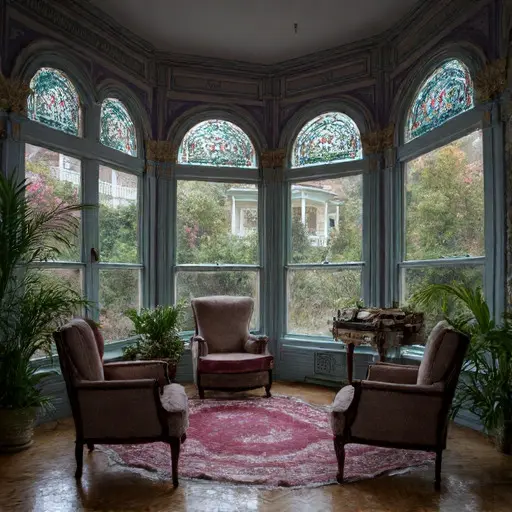
The hill-garden house was completed in 1908 on the outskirts of Wrenford, a small market town whose prosperity depended largely upon regional agriculture and railway trade. Built for horticultural supplier Thomas Everly, the residence occupied a terraced slope overlooking the valley below. Though not a mansion, the house was considered one of the most distinctive homes in the district.
Its octagonal parlor, wraparound veranda, clustered gables, and modest turret reflected the decorative tastes of the late Victorian period while remaining practical for family life.
Thomas lived there with his wife Eleanor and their three children. The surrounding terraces were gradually transformed into elaborate flower gardens filled with roses, hydrangeas, foxgloves, delphiniums, and seasonal borders. Family records described weekend gatherings on the veranda and summer evenings spent beside the marble fountain at the center terrace. For nearly two decades the property remained carefully maintained, its gardens becoming locally admired for their color and design.
Decline During Economic Hardship
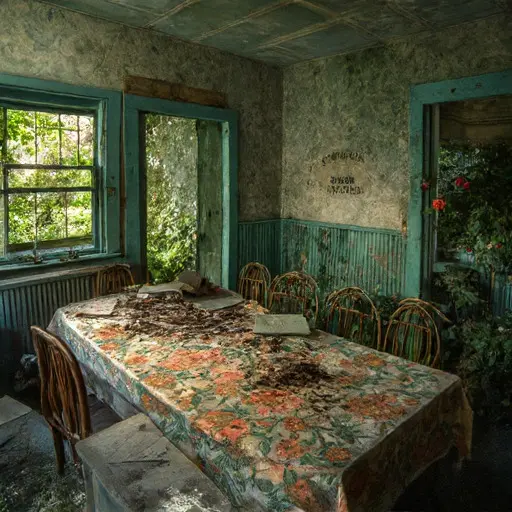
The first serious difficulties emerged during the early 1930s. Agricultural prices declined sharply, reducing demand for Everly’s nursery business and forcing significant financial adjustments. Maintenance budgets were reduced, and several sections of the garden were left unattended. Household accounts from the period show increasing debt and delayed payments for repairs.
The family attempted to preserve the property by closing seldom-used rooms and limiting expenditures. However, the situation worsened after Thomas suffered a prolonged illness that reduced his ability to manage the business. Two of the children left Wrenford in search of employment elsewhere, while a third married and relocated to another county.
As income declined, visible deterioration slowly appeared. Exterior paint faded. Roof repairs were postponed. Several stained-glass veranda panels cracked during storms and were never replaced. The once-celebrated flower terraces remained beautiful but increasingly unmanaged, their carefully planned arrangements gradually dissolving into overgrown masses of vegetation.
The Final Years of Occupancy
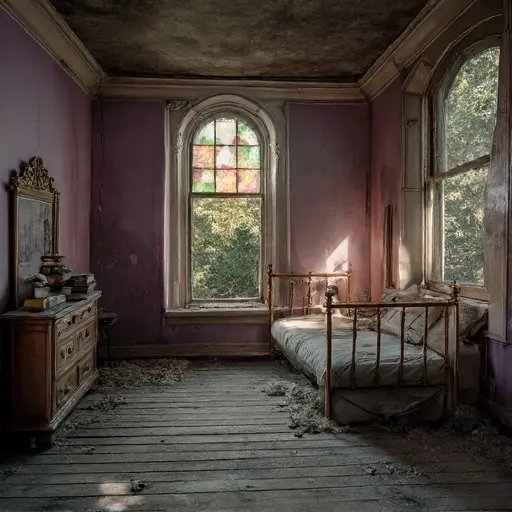
Eleanor Everly remained in the house after her husband’s death in 1939. By then much of the property had become difficult to maintain. Several bedrooms were permanently closed, and portions of the veranda were no longer considered safe. Tax arrears accumulated, and correspondence found years later revealed repeated warnings regarding unpaid obligations and deferred maintenance.
When Eleanor moved to live with relatives in 1946, the house was left vacant. Probate proceedings became complicated by scattered heirs and unresolved financial claims. No purchaser emerged, and no family member returned to occupy the property. The gardens continued growing unchecked across the terraces. Roses overwhelmed sections of the pergola, hedges expanded beyond pathways, and fallen leaves accumulated around the cracked fountain basin.
Over the following decades, weather and neglect slowly erased signs of daily life. Broken windows were boarded. Interior furnishings remained where they had been left. The once-celebrated hill-garden became a dense landscape of self-seeded flowers, vines, and shrubs reclaiming the grounds.
Today the hill-garden house remains abandoned on its terraced slope. No restoration has taken place, no descendants have returned to reclaim it, and ownership questions were never fully resolved. The residence still stands among the overgrown gardens that once defined it, slowly deteriorating while the hillside continues its quiet reclamation of the property.