The Bramblebrook Carpenter’s House Left Behind the Footbridge
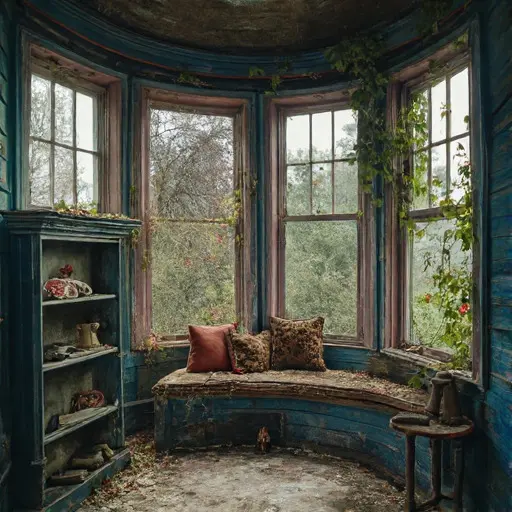
The Bramblebrook Carpenter’s House was completed in 1904 by Edwin Mercer, a local carpenter and joiner whose workshop supplied custom woodwork to farms and village homes throughout the surrounding countryside. Situated beside a narrow creek crossing, the house was designed not only as a family residence but also as a demonstration of Mercer’s craftsmanship. The asymmetrical structure featured a steep front gable, a rounded reading nook, a covered wraparound porch, and a small side workshop where he produced cabinetry, window frames, and decorative trim.
Mercer lived in the house with his wife Clara and their two children. The family cultivated extensive flower gardens around the property, gradually transforming the creekside lot into a colorful landscape of roses, hydrangeas, lavender, foxgloves, and ornamental hedges. A stone footbridge connected the road to the front garden, while a small reflecting pool and marble botanist statue became focal points of the grounds. For many years the property remained one of the most admired homes in the district, known for its craftsmanship rather than its size.
Economic Difficulties and Family Departures
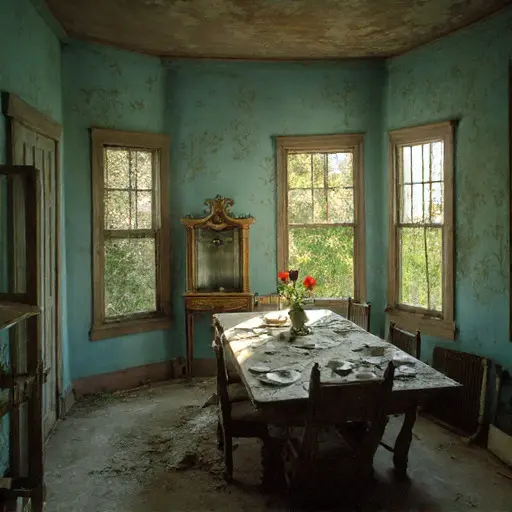
The first signs of decline appeared during the early 1930s. Regional construction activity slowed significantly, reducing demand for custom carpentry. Mercer’s workshop received fewer commissions each year, forcing the family to rely increasingly on savings. Maintenance of the gardens became more difficult as resources diminished. Beds that had once been carefully managed began to grow unevenly, and portions of the grounds were left untended.
Financial records discovered decades later indicated mounting property taxes and deferred repairs. The side workshop, once the center of household income, operated only intermittently. When Mercer’s son left for industrial work in a larger town and his daughter married and relocated, the household shrank considerably. Clara’s health declined during the same period, limiting her ability to maintain the gardens that had defined the property for decades.
After Clara’s death in 1938, several rooms were closed to reduce heating expenses. The reading nook remained in use, but guest bedrooms were shuttered. Rainwater damage from aging roof sections went unrepaired. The reflecting pool became clogged with leaves, and climbing roses spread unchecked across sections of the porch. What had once been a carefully managed family landscape slowly transitioned into a partially abandoned garden.
Final Years and Permanent Vacancy
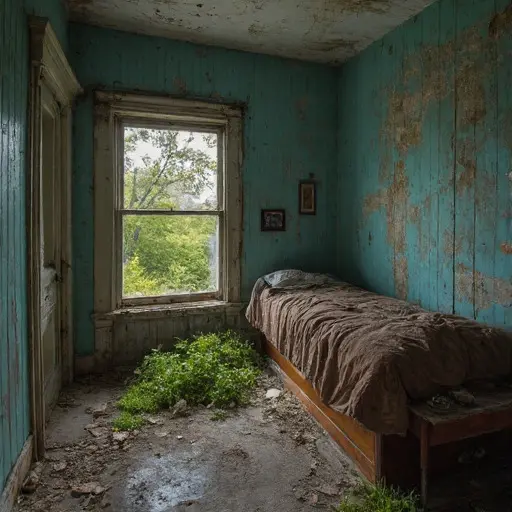
Edwin Mercer left the property in 1944 to live with relatives after a severe injury prevented him from continuing carpentry work. The house stood vacant thereafter. Probate complications delayed any sale of the property, and disagreements among surviving heirs prevented a clear transfer of ownership. During the late 1940s, occasional inspections noted increasing deterioration but no plans for restoration.
As years passed, the gardens reclaimed much of the grounds. Window boxes collapsed beneath dense growth. The footbridge remained standing, though rarely crossed. The workshop retained many of its tools, while household furnishings remained largely undisturbed. The creek continued flowing beside the property exactly as it had during the family’s years of occupancy.
Today the Bramblebrook Carpenter’s House remains abandoned beside the narrow creek crossing. No restoration has occurred, no heirs have returned to occupy it, and ownership questions were never fully resolved. The house still stands among overgrown flowers and aging trees, gradually deteriorating as the garden that once defined it slowly absorbs the last traces of family life.