Hollow amphitheater manor
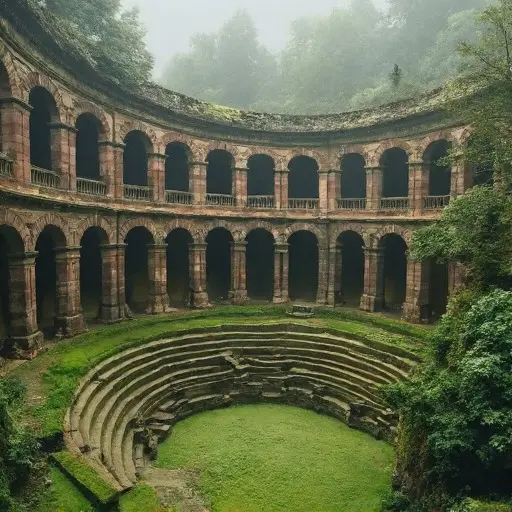
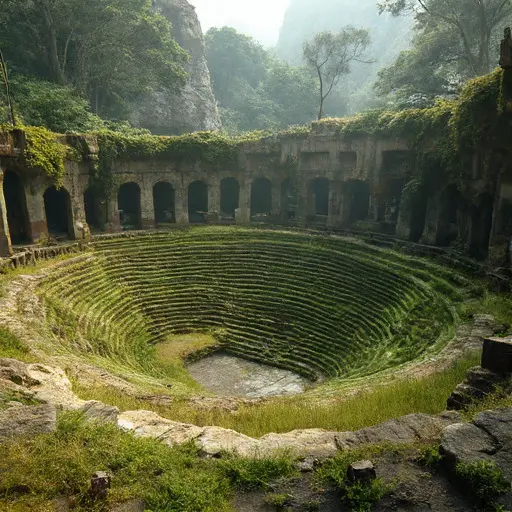
Abandoned Victorian mansion, aurora-quince, cobalt-bark, rose-basalt, a compact terraced crater-side manor built as a low circular Victorian residence embedded into a shallow volcanic basin, where the architecture forms a continuous stepped ring of arched exterior galleries surrounding a sunken central courtyard floor of packed earth and wild grass. The silhouette is radial and grounded, with a single uninterrupted curved façade that wraps the basin like a refined civic enclosure, creating the impression of architecture grown from the land rather than placed upon it.
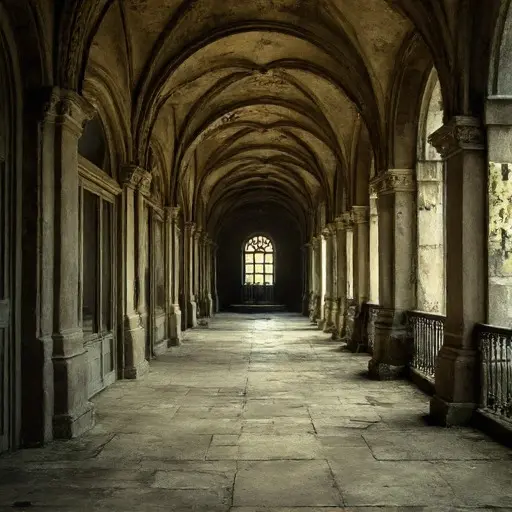
Rooflines are segmented and circular, formed from concentric slate bands, thin oxidized copper drainage rims, and evenly spaced vent chimneys that follow the amphitheater geometry with disciplined repetition. The façade is fully exterior and sculpted: aurora-quince plaster walls softened by mineral weathering, cobalt-bark stone arch ribs reinforcing each arcade opening, and rose-basalt wrought iron latticework weaving through every balcony and passage like ornamental structural veins.
The sky hangs in a pale volcanic-cyan overcast, naturally lit and matte, casting even diffuse daylight into the crater so that every arc, terrace, and stone texture is legible without dramatic shadow or artificial glow.
The surrounding biome is a quiet ash-meadow field where resilient grasses grow in circular seating bands along the amphitheater tiers and spread outward into sparse wild terrain.
At the lowest arc of the ring rests a broken basalt ceremonial bench fragment, cracked cleanly and half-sunk into soil, once part of a continuous viewing circle now interrupted by time.