Cliff-carved manor of the quarry light
Abandoned Victorian mansion, aurora-bloodstone, cobalt-nectar, jade-flint
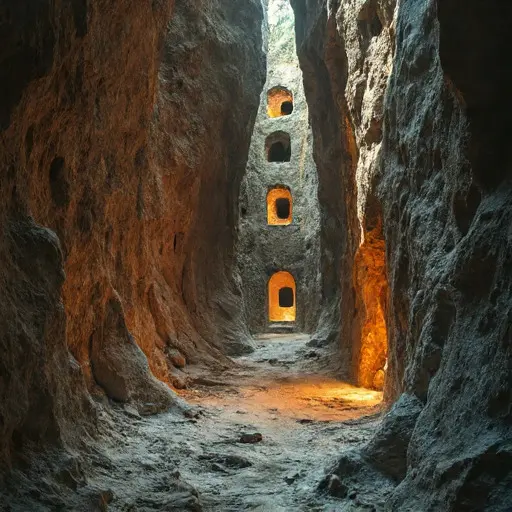
A compact quarry-edge manor designed as a low sculptural Victorian residence carved directly into a sheer stone escarpment, where the architecture reads as an excavation of aristocratic intent rather than a freestanding structure. The silhouette is heavily grounded and horizontally dominant, with the entire façade embedded into the cliff face and only subtle projections of bay forms breaking the stone plane, as if rooms were carefully revealed from within geology itself.
Rooflines are subdued and adaptive, formed from thin slate ledges, recessed copper drainage channels, and low protective ridge caps that follow the irregular contour of the quarry edge. The façade is fully exterior and materially fused with the rock: aurora-bloodstone masonry blending seamlessly into the surrounding cliff strata, cobalt-nectar carved stone frames defining deep-set windows, and jade-flint iron reinforcements embedded into the stone like structural veins running through the building.
The sky hangs in a clear high-noon cerulean overcast, naturally lit and crisp, producing even illumination that sharpens the contrast between carved stone, iron detailing, and weathered Victorian surfaces without harsh shadow or atmospheric softness.
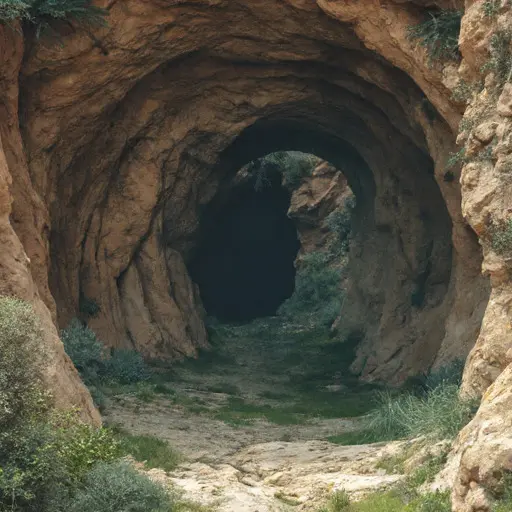
The estate sits in a quarry meadow biome where grass grows in sparse reclaimed terraces along the cliff base and spreads across fractured stone platforms below, suggesting slow ecological return to an industrial landscape.
At the quarry floor rests a fractured stone winch gear assembly, half-buried in gravel and dust, once used for lifting materials along the cliff face during construction or extraction, now frozen in abandonment.
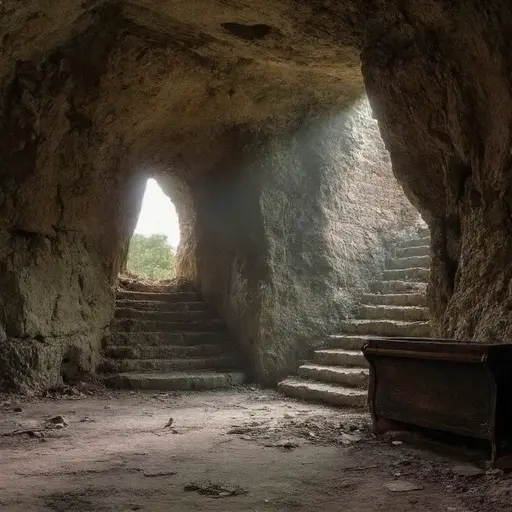
Inside, the manor remains intact yet silent, with interiors shaped by depth, stone, and embedded architectural stillness.