The Seaside Villa Left to Coastal Winds
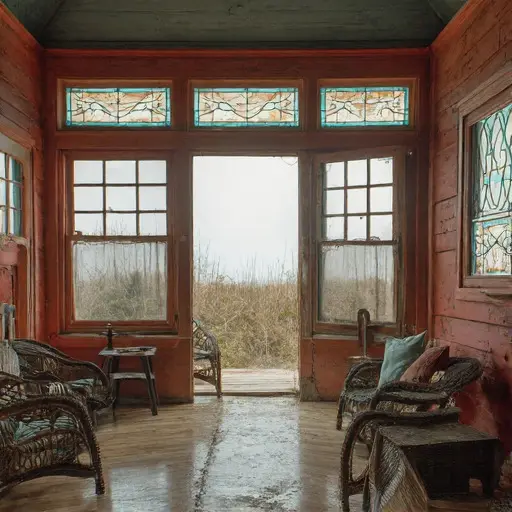
Built along a sheltered stretch of coastline in the late 19th century, the villa was designed as a seasonal retreat for a family of maritime merchants. Unlike inland Victorian homes, its architecture emphasized openness to wind, light, and sea air. The two-story veranda wrapped around the southern and western façades, offering uninterrupted views of dunes and water.
The square belvedere tower served as a private observation point, used for watching incoming ships and tracking weather changes across the horizon.
For decades, the property functioned as a summer residence. Records describe long periods of occupancy during warmer months, when the family hosted small gatherings and maintained a relaxed coastal routine. The interiors were furnished for comfort rather than formality, blending Victorian craftsmanship with a lighter, seaside sensibility. The stained-glass accents in sapphire-rose tones were specifically chosen to soften the intense coastal light while preserving visibility toward the sea.
The first signs of decline were subtle and environmental. Salt air gradually weathered exposed wood surfaces, and windborne sand began to accumulate along porch edges. Maintenance cycles were shortened as the family’s financial situation shifted inland. Seasonal visits became less frequent. Eventually, entire years passed without full occupancy.
The Beginning of Coastal Abandonment
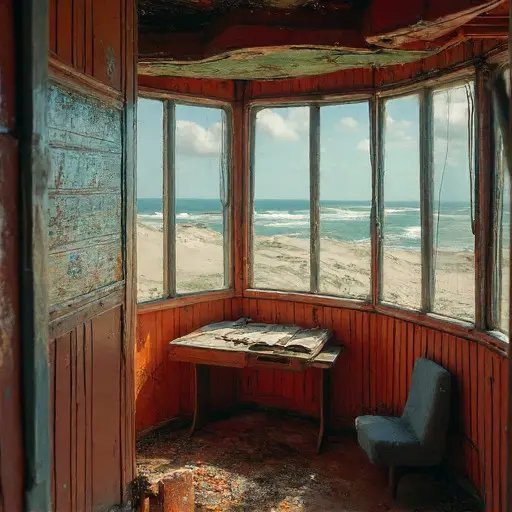
By the early 20th century, the villa’s role as a family retreat had effectively ended. Economic pressures and changing travel habits reduced the necessity of maintaining a dedicated seaside residence. Repairs to roofing and porch structures were delayed, then deferred indefinitely. The cross-gabled rooflines, though structurally sound, began to show signs of weather fatigue. Chimney stacks remained intact but darkened with soot and sea damp.
As abandonment progressed, nature began reclaiming the property in slow, non-destructive ways. Seaside grass spread across former garden paths, weaving through sand and stone. Winds reshaped the dunes around the villa’s foundations without disturbing its structural integrity. The broken silver-gilt nautical sundial near the front walk became partially buried in shifting vegetation, its tilted face gradually losing legibility as salt erosion softened its engraved markings.
Interior spaces remained largely untouched during this period. Furniture was not removed; it simply stopped being maintained. Curtains hung undisturbed. Table settings remained in place for seasons at a time before dust accumulation made their use impractical. The house did not collapse into ruin—it simply stopped participating in active life.
A Residence Preserved by Absence
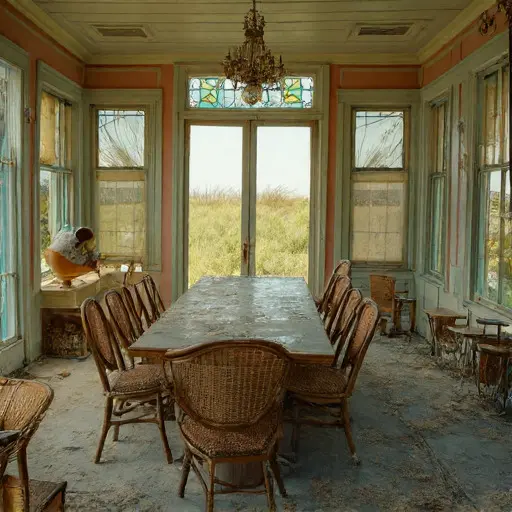
By mid-century, the villa stood fully vacant. No heirs returned to claim it as a primary residence, and no restoration efforts were initiated. The structure remained stable despite decades of exposure, its materials weathering gracefully under salt air and coastal wind. The veranda still wrapped around the house as intended, though now framed by overgrown dunes and silent garden remnants.
Today, the seaside villa persists as a quiet architectural memory along the coast. The broken sundial remains among the grasses, the belvedere tower still watches an empty horizon, and the stained-glass windows continue to catch muted ocean light. No redevelopment has occurred, no new ownership has been established, and no return has been recorded. The house endures in stillness, preserved between sea and sky, slowly softened by time but never erased.