The Queen Anne Manor Forgotten After Inheritance Disputes
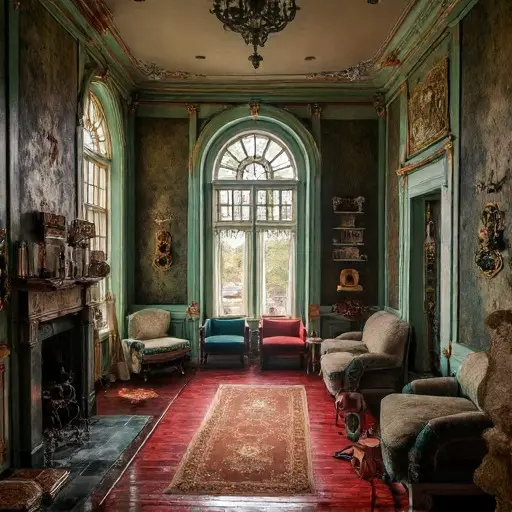
Completed in 1896, the manor was regarded as one of the finest residences in its district. Though modest compared to country estates, its craftsmanship attracted attention throughout the neighborhood. The offset three-story turret, layered bays, and broad front porch reflected the prosperity of the Whitaker family, merchants whose business interests had expanded steadily during the final decades of the nineteenth century.
The property occupied a carefully maintained rose garden bordered by stone pathways and ornamental shrubs. A decorative pavilion once stood near the southern edge of the grounds, topped by a jade-glass finial that caught daylight above the flowerbeds. Family records describe garden parties, seasonal gatherings, and regular maintenance performed by hired staff who kept both house and grounds in excellent condition.
For nearly thirty years, the residence remained fully occupied by three generations. The house functioned as a stable family center where children were raised and elderly relatives cared for. Financial records from the period show routine repairs, roof maintenance, repainting schedules, and extensive gardening expenses.
The first signs of decline emerged during the early 1930s. Business revenues fell during broader economic difficulties, forcing reductions in household spending. Servants were dismissed, landscaping contracts were cancelled, and nonessential repairs were delayed. While the structure remained sound, subtle evidence of neglect began to appear. Exterior paint weathered longer before renewal. Porch railings required attention that never came. Garden pathways became increasingly difficult to distinguish beneath spreading grass.
Rooms Closed One by One
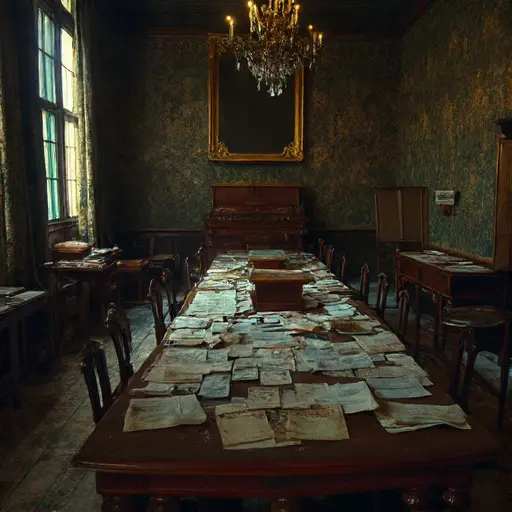
After the death of the family patriarch in 1938, the situation worsened. Ownership of the property passed jointly to several heirs who disagreed on its future. Some favored selling the residence, while others insisted on retaining it despite mounting expenses.
The dispute delayed every major decision. Property taxes accumulated. Roof repairs were postponed. Water intrusion damaged sections of the upper floor. Rooms in the turret were closed after leaks stained ceilings and warped decorative woodwork. Correspondence preserved from the period reveals growing frustration among family members over maintenance costs and legal responsibilities.
As financial pressures increased during the war years, younger relatives relocated elsewhere for employment. The number of occupants steadily declined. Entire portions of the house fell out of use. Furniture remained in place but was covered with sheets. Formal entertaining ceased completely.
Outside, the once-celebrated rose garden entered a long period of neglect. Shrubs expanded beyond their borders. Stone paths disappeared beneath grass. The garden pavilion deteriorated and was eventually dismantled after storm damage. Its jade-glass finial fell into the overgrowth beside the porch, where it remained undisturbed.
A House Without Resolution
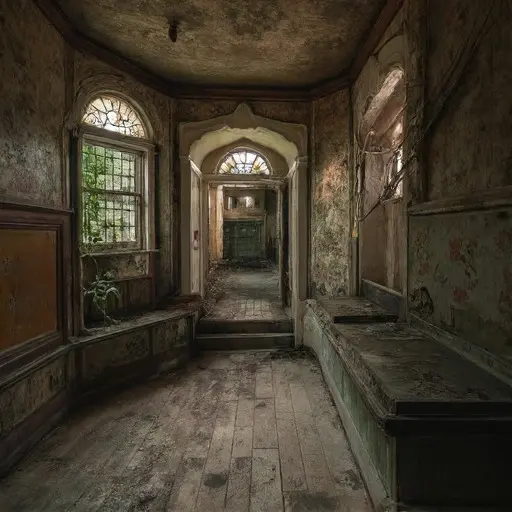
By the late 1940s, the final resident departed. No formal closure occurred. Utilities were disconnected, correspondence accumulated unanswered, and the legal disagreements surrounding ownership remained unresolved.
Decades passed without meaningful intervention. The imperial-coral siding faded beneath weather exposure, lagoon-violet trim weathered and cracked, and stained-glass panels collected dust behind aging frames. Yet the structure itself endured. Its turret still rose above the neighborhood, and its intricate craftsmanship remained visible despite neglect.
Today the manor stands abandoned within the remnants of its Victorian garden. The broken jade-glass finial remains partially hidden among tall grass beside the porch. No restoration project has been undertaken, no heir has returned to claim responsibility, and no definitive settlement has resolved ownership. The house continues to deteriorate slowly, empty and silent, preserving the memory of a once-celebrated family residence that time gradually left behind.