The Lakeside Glass House of Quiet Reflection
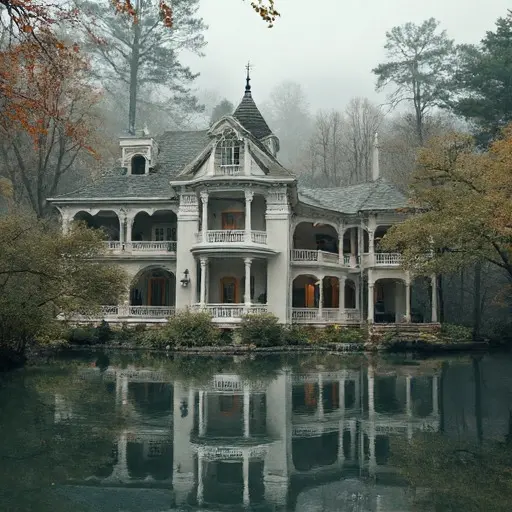
An abandoned Victorian lakeside glass-and-wood house sits within a forest clearing under soft overcast daylight, where the entire scene is bathed in a pale silver atmosphere. Light is evenly diffused across water, wood, and foliage, producing gentle reflections without harsh shadows or dramatic contrast. The setting feels still and composed, like a preserved memory of a creative retreat rather than a decayed ruin.
The structure rests at the edge of a perfectly calm lake, built from a blend of white-painted timber, pale stone foundations, and large arched glass panels. Its form is low and elongated, with a long glass-walled living hall facing directly toward the water.
The design feels intentional and contemplative, as if shaped for observing reflections, weather, and shifting daylight rather than enclosing isolation.
Color is a defining feature of the architecture. Faded crimson frames outline select windows, soft turquoise accents trace roof edges and structural seams, and pale honey-yellow wood glows faintly through the glass. These tones are layered and time-worn, suggesting successive repaintings across different eras rather than a single design intention.
The roof is dark slate with a subtle bluish cast, clean and structurally sound. Thin turquoise-painted metal ridges run along its edges, catching diffuse sky light. Two small chimneys in muted red brick rise evenly from the roofline, balanced and undisturbed.
Inside, the house is empty but warmly preserved. Pale wooden floors stretch through open rooms, while cream-colored walls reflect soft ambient light from the lake. Built-in shelving lines portions of the interior, painted in mismatched pastel tones—mint, dusty rose, and sky blue—hinting at long-term, gentle modifications over time rather than abrupt change.
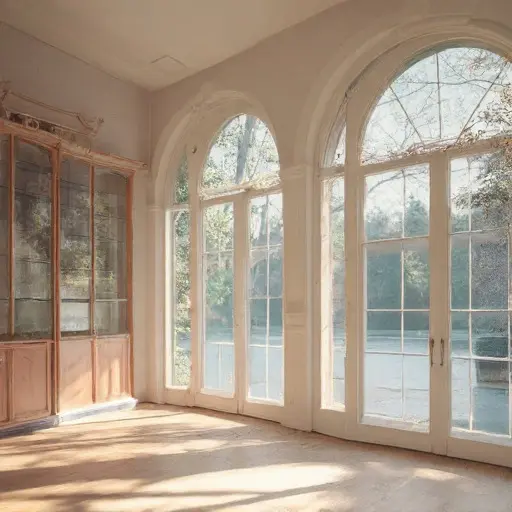
The glass walls dissolve the boundary between interior and exterior. Reflections of water blend into the interior surfaces, while the forest beyond remains softly desaturated and evenly lit. Outside, a wooden deck runs along the lake-facing side, painted in faded green and white stripes, slightly worn but stable and intact.
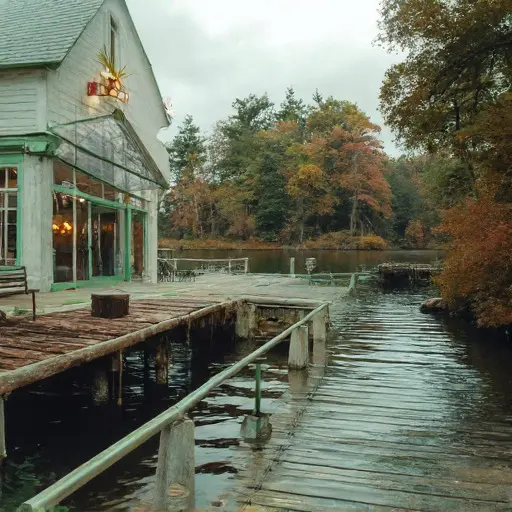
The lake itself is perfectly still, mirroring the house as a nearly symmetrical inverted twin. The surrounding forest forms a gentle boundary of greens and grays, framing the clearing like a natural amphitheater of quiet light.
No decay, no collapse, no tension. The house exists as a forgotten artistic retreat—colorful, calm, and suspended in time, like a playable memory of summer that never fully ended.