The Flooded Valley House Left Empty After Family Decline
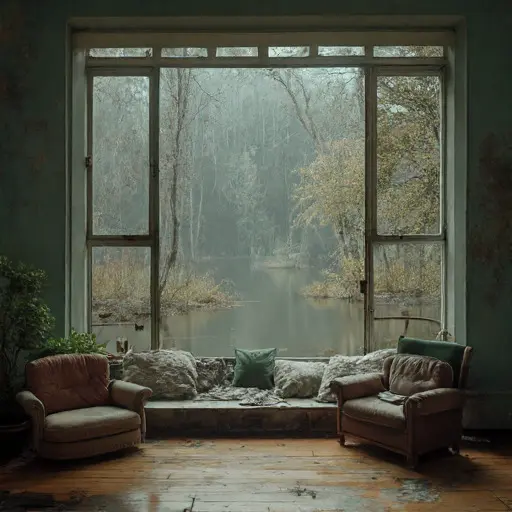
The house emerged gradually rather than through a single construction campaign. The original cottage was built in 1906 on a stone terrace overlooking a narrow stream in a remote forest valley. Over the following decades, the family expanded the residence whenever circumstances allowed.
New bedrooms were added above older rooms, enclosed porches became permanent living areas, and small observation chambers were constructed to overlook the surrounding woodland.
By the 1920s the structure had become an unusual vertical family home housing three generations under one roof. Its pale sage plaster walls and blue-green shutters reflected regional tastes, while its irregular profile revealed a history of practical additions rather than formal architectural planning. The house served as both residence and family legacy, each expansion marking a new chapter in its occupation.
The first signs of decline appeared during the 1930s. Economic conditions changed throughout the region, and younger family members increasingly sought employment in distant towns. Bedrooms that once accommodated growing households stood empty for longer periods. Maintenance became less consistent. Exterior paint weathered without renewal, and minor repairs were postponed indefinitely.
Water Rising Around the Foundations
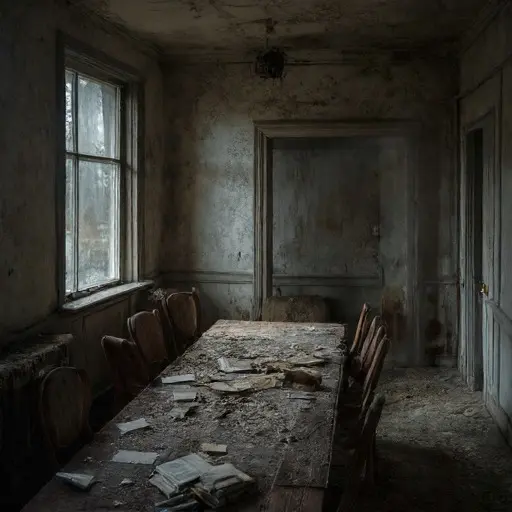
During the late 1930s and early 1940s, natural changes in the valley accelerated the house’s isolation. Drainage channels that had once carried seasonal runoff became obstructed by years of neglect. Water slowly accumulated in low areas surrounding the property. What had been damp woodland gradually transformed into a shallow flooded basin, creating the still pond that now surrounds portions of the terraces.
The flooding itself did not force an immediate departure. Instead, it compounded existing financial strain. Access routes became increasingly difficult to maintain. Supplies required longer transport, and repairs grew more expensive. Family correspondence from the period referenced unpaid maintenance invoices and concerns regarding deteriorating access bridges.
As older family members passed away and younger heirs established lives elsewhere, entire sections of the house were closed. Conservatories remained unheated. Upper rooms were used only occasionally. Dust accumulated on furniture that had once been part of daily family life.
The Forgotten Conservatory Above the Water
The final abandonment occurred shortly after the Second World War. By then, the house had become too costly and impractical for the dispersed heirs to maintain. Legal ownership remained fragmented among several family branches, preventing coordinated action regarding repairs or sale.
The last occupants removed only essential personal belongings. Most furniture remained exactly where it had stood for decades. Books stayed on shelves, curtains remained hanging, and household objects were left in drawers and cabinets. There was no single closing event. Instead, the house simply ceased receiving visitors.
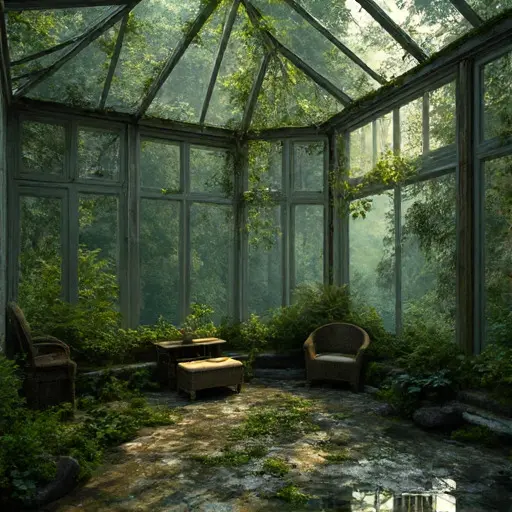
Over subsequent decades, the flooded valley continued its slow transformation. Water reflected the rising structure, while birch trees adapted to the saturated landscape. Moss spread along terraces, and ferns colonized humid corners beneath conservatory glass. Yet the house never collapsed. The layered additions, though aging, remained coherent and structurally sound.
No restoration effort was ever undertaken. No descendants returned to reoccupy the property, and ownership questions remained unresolved. Today the house still rises above the flooded forest on its aging terraces, surrounded by still water, mist, and trees. Untouched furniture remains inside, the rooms preserved in quiet suspension. The family home stands abandoned, unreclaimed and deteriorating slowly, its future uncertain as the forest and water continue their patient advance.