The Periwinkle Cottage Left Empty After Winter Migration
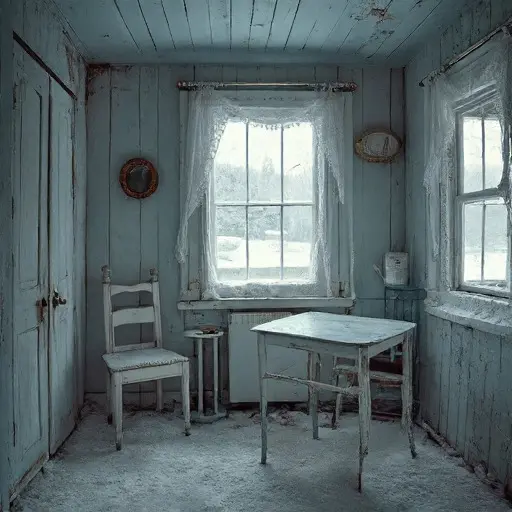
The small cottage stood at the edge of a northern pine forest, built in the first decade of the 20th century when a growing timber settlement expanded into the region. The house belonged to the Karlsen family, who arrived in 1908 seeking seasonal forestry work and a permanent place to raise their three children. Constructed from local timber and elevated on stone footings to withstand spring meltwater, the cottage was modest but dependable.
For many years, the family balanced work in the forests with small-scale farming during the brief summers. Winters were long but manageable. The steep roof shed snow effectively, and the compact rooms retained heat from a central stove. Family records later found in local archives suggest the cottage remained continuously occupied through the 1920s and much of the 1930s.
The first signs of decline appeared gradually. Younger family members left for larger towns where industrial employment offered more reliable wages. Letters arriving from distant cities began replacing conversations around the dining table. By the late 1930s, only the aging parents remained in the house year-round. Maintenance slowed. Exterior paint was no longer renewed regularly, and repairs were postponed from one season to the next.
Rooms Closed Against the Cold
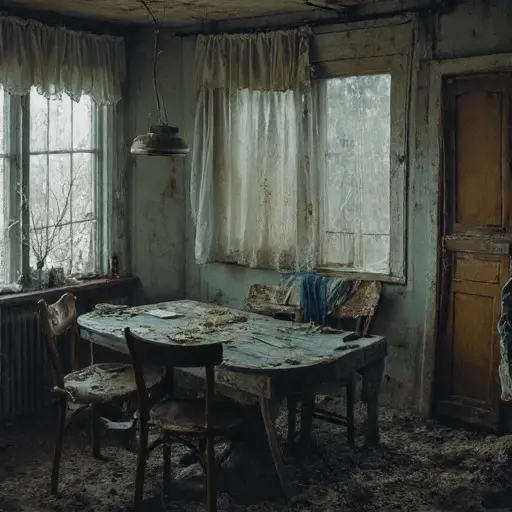
Economic conditions worsened during the early 1940s. Transportation routes shifted, forestry operations contracted, and supplies became more difficult to obtain. Several rooms were closed off during winter to reduce heating costs. Curtains remained drawn over unused windows, and furniture was consolidated into a smaller portion of the house.
Evidence of this period remained visible for decades. Unpaid delivery invoices were later discovered beneath a stack of account books in the kitchen. A repair estimate for roof work had never been acted upon. Snow loads became increasingly difficult for the elderly owners to manage, and sections of the porch began to sag slightly beneath repeated freeze-thaw cycles.
After the death of the father in 1944, the burden of maintaining the property became overwhelming. The remaining family members visited periodically, but none intended to return permanently. Ownership became divided among several heirs living far away. The cottage remained legally occupied on paper, yet in practice it spent longer stretches standing empty between visits.
The Last Winter Bedroom
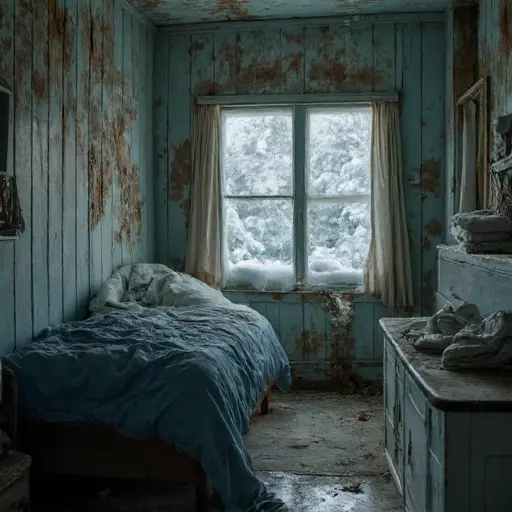
The final abandonment occurred quietly in the late 1940s. No dramatic event forced the family out. Instead, distance, age, and economic change combined into an inevitable withdrawal. The last occupant locked the door at the beginning of winter and never returned for another season.
Over the following decades, the cottage remained remarkably intact. Snow accumulated around its foundations each winter, while frost etched delicate patterns across the interior windows. The surrounding forest neither overwhelmed nor destroyed the structure. Pines continued to grow nearby, and lichen spread slowly along the porch railings, but the house retained its form.
No restoration efforts were ever organized. The heirs dispersed across different regions and eventually lost active involvement with the property. The ownership status became increasingly uncertain, with records remaining unresolved and no clear claimant assuming responsibility.
Today, the periwinkle cottage still stands at the forest edge beneath long northern winters. Its rooms remain furnished, its windows dark, and its doors closed. No family members returned to reclaim it, no renovation was undertaken, and the house continues to endure in silence—preserved by cold, abandoned by circumstance, and slowly fading into the snowy landscape that surrounds it.