The Windmill Farmhouse Left in Reclaimed Meadow Silence
The farmhouse was built in the late 19th century as part of a small agricultural settlement that once occupied the edge of a fertile rural valley The original structure followed a straightforward vernacular design: timber framing, a steep pitched roof for seasonal snow and rain runoff, and a long veranda that wrapped around the front façade to provide shade and transitional outdoor space It served as the central residence for a multi-generational farming family whose livelihood depended on the surrounding fields, stone-lined irrigation channels, and carefully maintained crop rotations Over time, the house became both a domestic center and a functional anchor for the surrounding farmland, which was organized in neat geometric parcels that extended outward from the property like measured grids of cultivated land
As the mid-20th century progressed, agricultural consolidation and rural depopulation gradually reduced the farm’s viability Fields that were once actively cultivated began to lie fallow, and maintenance of irrigation systems declined slowly rather than abruptly The land responded predictably but persistently, with grasses and wildflowers overtaking former crop rows and birch groves establishing themselves along drainage lines and boundary stones The farmhouse itself remained structurally intact, though subtle changes accumulated over decades The central roof beam settled slightly under long-term load redistribution, producing a gentle sag that gave the structure a visibly tired posture rather than any sense of sudden failure Paint layers on the exterior weatherboards began to peel in thin sheets, revealing the layered history of repainting cycles beneath
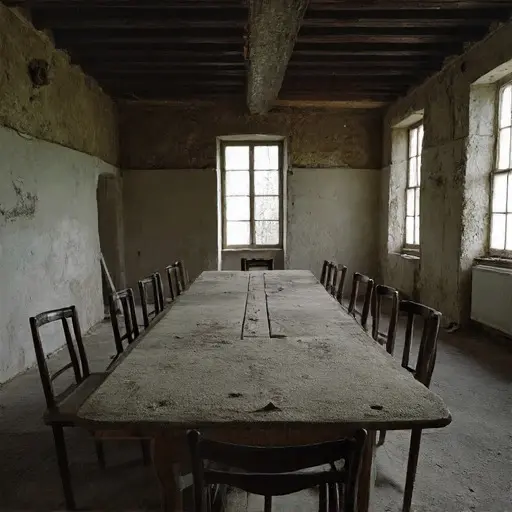
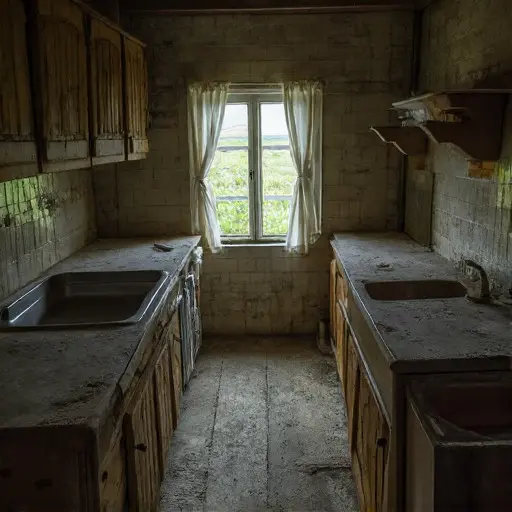
Despite abandonment, the interior remained largely undisturbed in its arrangement The dining table stayed in place, surrounded by chairs that appeared to have been pushed back and left without further attention The kitchen retained its ceramic tile surfaces, now stained by time and humidity rather than damage Curtains remained hanging in open windows, filtering soft daylight into interior rooms where dust accumulated in thin, even layers rather than chaotic disruption This preservation of order contributed to the quiet psychological weight of the abandonment, suggesting a departure that was gradual and unforced rather than abrupt
Gradual Abandonment of Agricultural Geometry
By the late 1970s the surrounding farmland had fully transitioned into unmanaged meadowland as active cultivation ceased and ownership responsibilities diminished over successive generations Irrigation channels that once structured water flow through the fields became partially blocked and overgrown, their geometric lines still faintly visible beneath vegetation but no longer functional Low stone boundary markers remained in place, acting as subtle historical traces of former land division rather than active agricultural infrastructure The farmhouse itself was no longer used as a permanent residence, though it was occasionally visited for inspection or storage purposes during transitional years before complete abandonment
Final State of Rural Abandonment
<img src=”https://beyondvisit.
com/wp-content/imagecontent/uploads/abandoned victorian house 32393525.webp” alt=”” />
By the early 1990s the farmhouse was officially classified as a non-operational rural property with no active agricultural function or permanent residency The land was left to natural succession, and no restoration or redevelopment efforts were undertaken due to its low economic viability and increasing ecological rewilding stability Ownership records remained technically intact but functionally inactive, with no recorded habitation or maintenance activity for decades The farmhouse remains in place as a quiet rural relic, gradually absorbed into the surrounding meadow landscape
The countryside farmhouse persists as a silent witness to the slow return of nature Its weathered timber frame and sagging roof remain intact despite long abandonment No return has occurred, and no reconstruction has been attempted The house endures as a quiet convergence of rural architecture and ecological reclamation, resting in stillness at the edge of fields turned meadow under soft diffuse light