The Hillcrest Victorian House That Leaned Into the Light
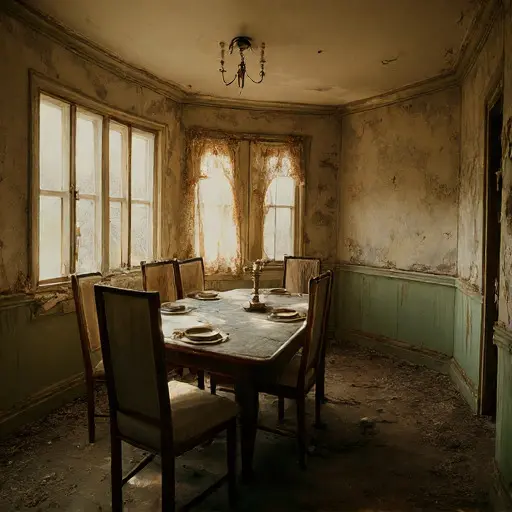
An abandoned surreal Victorian rural hilltop house sits under a bright, calm afternoon sky, surrounded by open grassland and distant tree lines. The atmosphere is serene and untroubled—no storms, no wind disturbances beyond a gentle rural breeze, and no sense of urgency in the landscape. The house feels less like a ruin and more like a preserved domestic moment placed carefully into the hillside and left untouched.
The architecture is modest and grounded in traditional Victorian country design, but shaped by slow generational expansion. The main structure is a two-story residence with a steep slate roof and a central chimney, flanked by later additions that subtly shift its balance. A glass sunroom extends from one side, catching daylight in soft reflections, while small attic dormer windows appear irregularly spaced, each belonging to a different renovation period. The foundation has gently settled into the hillside over time, producing a slight tilt that remains stable and believable rather than damaged or unstable.
Materials throughout the structure reflect long, quiet exposure to rural weather. Weathered cream-painted wooden siding forms the primary exterior surface, softened by faded pale sage trim that has dulled with age. The slate roof is light gray, composed of mixed aging tiles that subtly vary in tone. An aged oak porch frames the entrance, its boards slightly warped but still solid underfoot. Brass door hardware carries a soft patina, while iron guttering shows light rust without failure. Through the glass windows, warm interior tones are visible—wood furniture, fabric curtains in muted colors, and lived-in domestic arrangements frozen in time.
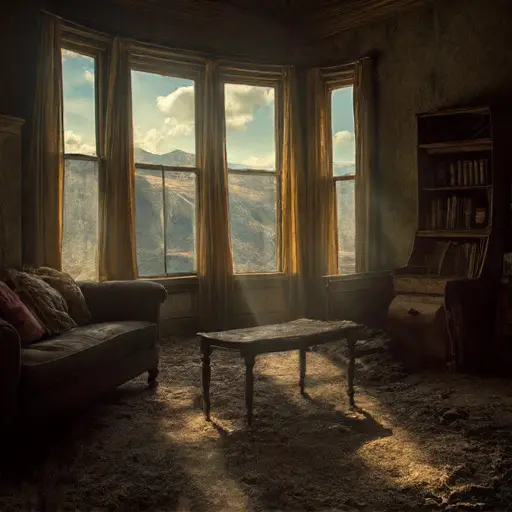
The state of decay is minimal and peaceful. The house has been abandoned for a long time, yet it shows no collapse, vandalism, or catastrophic deterioration. Furniture remains in place throughout the interior—beds are made with folded blankets, sofas remain arranged toward fireplaces or windows, and household objects sit exactly where they were last used. Dust has accumulated softly rather than heavily, and wallpaper peels in small, controlled sections that suggest time rather than damage. The wooden porch shows slight warping, but it remains structurally sound and safe.
Inside, the sense of frozen domestic life is consistent across all rooms. Kitchens retain arranged cookware and wooden cabinets. Bedrooms hold neatly positioned beds and side tables. Hallways remain clear, with framed photographs still hanging on walls, their images softened by dust and light. Every space feels inhabited only by memory and still air.
Outside, the rural environment is open and calm. Tall grass moves gently in the breeze, catching warm sunlight that stretches long shadows across the hillside. A small overgrown garden still outlines old flower beds near the house, while a winding dirt path leads toward the front porch. Scattered apple trees nearby have grown slightly wild but remain recognizable as cultivated remnants of past care. The surrounding fields and distant forest remain unchanged and undisturbed.
The camera perspective is a cinematic wide shot from a slightly elevated hillside angle, looking down across the slope toward the house. The composition emphasizes the natural incline of the land and how the structure has subtly settled into it. The 35mm lens captures fine architectural detail while maintaining a soft depth of field, allowing the house to sit clearly against the rural expanse.
The overall impression is one of quiet continuity. The Hillcrest Victorian House has not collapsed or decayed into ruin—it has simply remained still, gently leaning into the light of an afternoon that never changed.