THE LINTON STREET ROWHOUSE STILL FILLED WITH AFTERNOON LIGHT
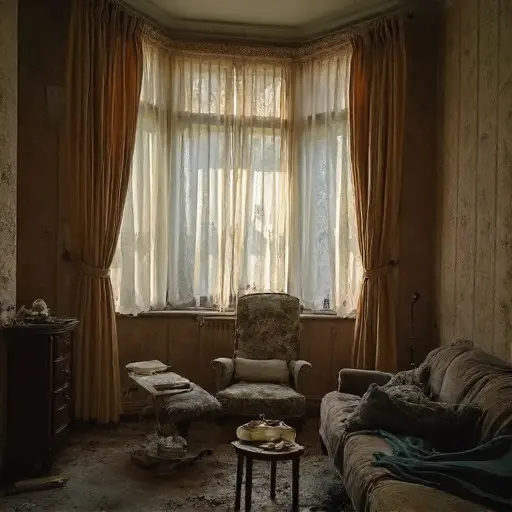
Linton Street developed in the late 1870s as a continuous terrace of working family homes built for clerks and railway laborers. Each house followed a near-identical blueprint, but over decades, individual ownership introduced subtle variations—extensions added at the rear, attic conversions inserted into unused roof space, and minor façade alterations that gradually broke the strict uniformity of the original design.
No.
14 Linton Street, the house at the center of this record, followed this same pattern of incremental change. A rear kitchen extension was added in the 1920s, slightly shifting internal proportions. Later, the attic was converted into a small sleeping room with an off-center dormer window that disrupted the roofline rhythm shared by its neighbors.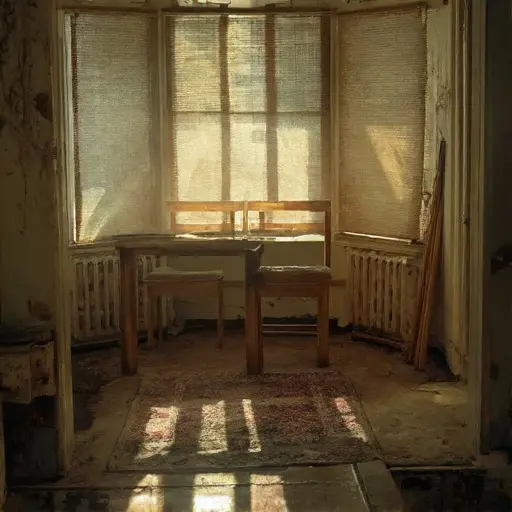
The house was last occupied in the early 2000s, when its final resident gradually ceased regular presence rather than formally vacating. Utility records show a slow decline in usage over several years, suggesting extended absence rather than a sudden departure. Neighbors reported that lights occasionally remained on for short periods, but no consistent activity was observed after 2008.
Unlike derelict properties that fall into rapid decay, Linton Street’s construction has allowed it to remain structurally stable. The brick façade, though painted and repainted over generations, still holds firm beneath its layered surfaces. Iron drainpipes show only mild rust streaking, and the slate roof retains most of its original pattern despite scattered replacements.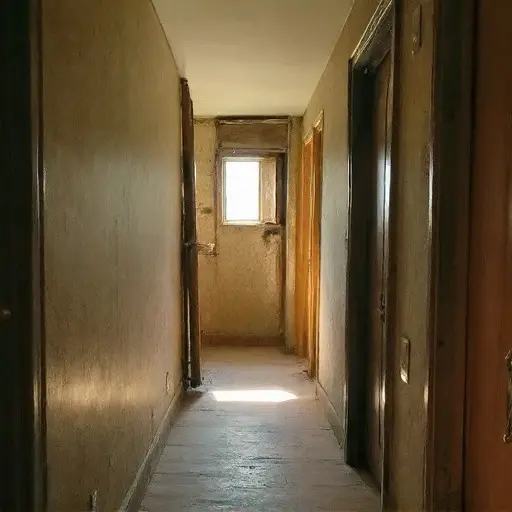
The street itself remains lightly maintained, with occasional overgrowth pushing through pavement cracks and soft tree shadows stretching across the façades in the afternoon light. Yet the rowhouse at No. 14 has never been renovated, sold, or reclaimed.
It stands today in a state of suspended domesticity—abandoned but complete, its interior still arranged as if life simply paused rather than ended, holding its final ordinary afternoon in place behind the glass.