THE MAPLE ROW TOWNHOUSE LEFT QUIET ON A SUNDAY AFTERNOON
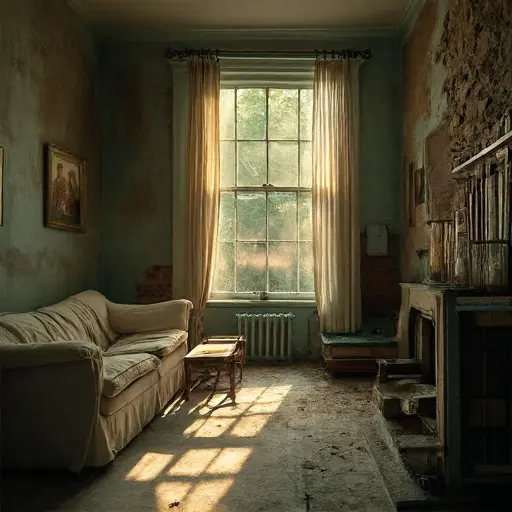
The townhouse on Maple Row was last continuously occupied in the early 1980s by the Halden family, who had lived there in incremental stages for nearly seventy years. Unlike larger estates or purpose-built homes, this structure evolved slowly—room by room, repair by repair—reflecting the changing needs of multiple generations rather than a single architectural vision.
The front façade still carries traces of its earliest Victorian construction, but layers of renovation are visible in the mismatched brick patches and softened plaster repairs.
The upper bay windows were added at different times, slightly misaligned but carefully integrated, giving the house a subtle vertical irregularity that becomes more noticeable only in still light.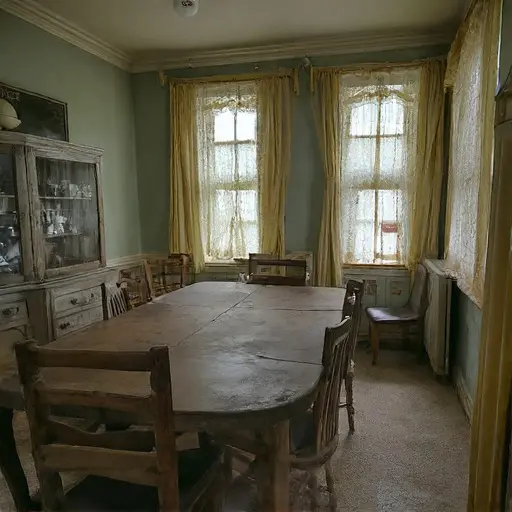
The first signs of abandonment were not dramatic. Utility records show a gradual reduction in energy usage, followed by sporadic occupancy patterns as the last resident, Margaret Halden, aged and eventually moved to live with relatives elsewhere. The house was never formally vacated in a single moment; instead, presence simply thinned over time until it ceased entirely.
By the late 1990s, the property had entered a state of quiet suspension. Mail accumulated behind the front door. Curtains remained drawn in some rooms and half-open in others. Indoor plants died and were never replaced, leaving faint impressions of pots on window ledges.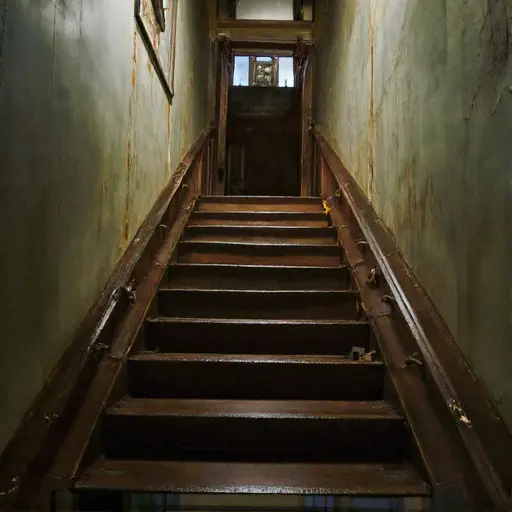
Despite decades of vacancy, the townhouse has remained structurally sound. The slate roof has been patched unevenly over time but continues to hold. The porch shows a slight sag, though it remains stable. Interior furnishings remain largely intact, softened by dust and time rather than damage or collapse.
No redevelopment has taken place, and no formal restoration has been attempted. The house remains part of the residential rhythm of Maple Row, quietly enduring between occupied homes, holding its last decade of domestic life in suspended stillness.